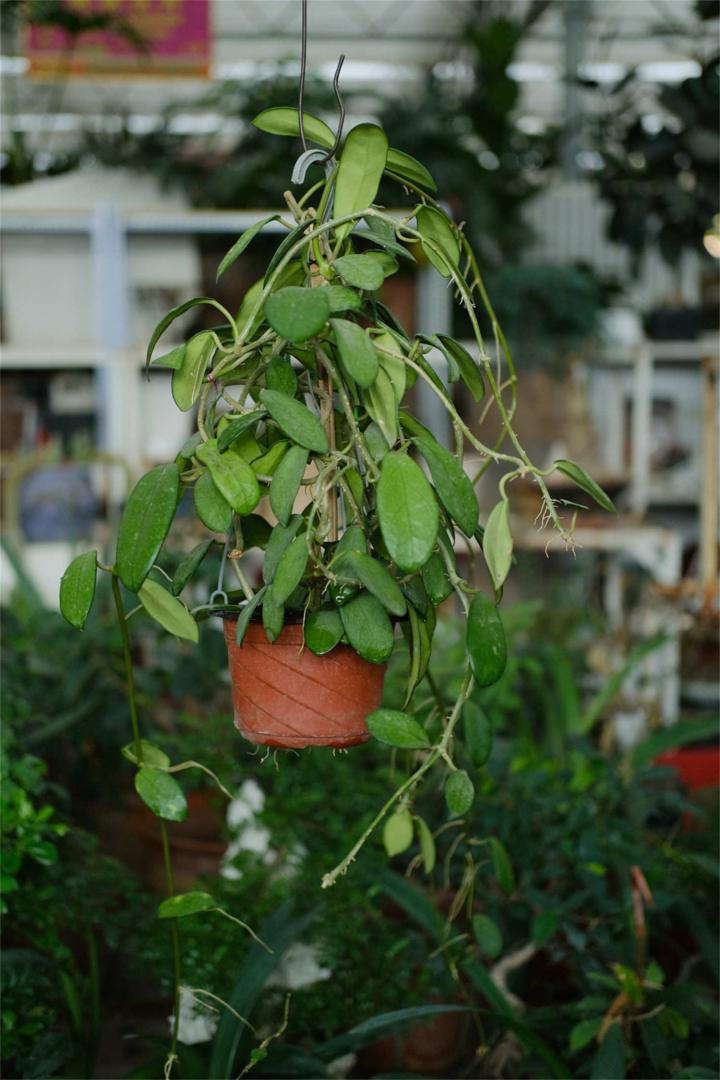
First, a naming problem worth clearing up, because it leads people to the wrong care sheet. The plant sold as a “ball orchid” or wax plant is a Hoya. It is not an orchid. It is a climbing apocynad, related to periwinkle, and it grows in the canopy rather than in leaf litter. That single fact explains most of what follows: thick fleshy leaves for storing water, aerial roots for gripping, and an absolute refusal to sit in wet compost.
Everything else is seasonal adjustment on top of that.
Spring: the wake-up
This is when a hoya starts pushing again, and it is the season with the most decisions. Put it in the brightest spot it can take. A south-facing sill works in spring because the sun is still low enough not to cook the leaves, and that light is what keeps the foliage thick and green rather than pale and stretched, and it is what the plant will draw on to flower later.
Water when the mix has partly dried and then water properly, so it runs right through and out of the drainage holes. Never leave the pot standing in a saucer of water. Two hours after watering, tip the saucer out. Soggy roots are the single commonest cause of a hoya that loses leaves from the base of its stems.
Spring is also the repotting window, and only young plants need it. A hoya in its third or fourth year should be left alone in the same pot, because a plant that is comfortable with its roots packed tight flowers far more freely than one with room to explore. When you do repot a young plant, cut away some of the oldest roots as you go and use a fresh airy mix. Take the chance to pinch the growing tips of young shoots if you want a bushy plant rather than two bare ropes, and put a trellis or moss pole in now, because a mature stem that has already committed to hanging somewhere else is difficult to redirect.
Summer: pull it back from the sun
The same sill that was perfect in April will scorch the plant in July. Hoya grows in dappled light, and in summer it wants shade from the direct midday sun. Move it back from the glass or behind a curtain. The signs you have left it too bright are unmistakable: leaves yellowing, then shrinking and going papery, usually starting at the side facing the window.
Two or three hours of gentle morning sun is still useful, so don’t send it into a dark corner for the whole summer.
Watering goes up, not down. Summer is when the plant is growing hardest, and a hoya that dries completely every few days will stall. Water freely, and spray the foliage or stand the pot on a tray of damp pebbles so the air around it holds some moisture. A humid air space makes a visible difference to leaf plumpness and to how readily the plant produces flower spurs.
Autumn: feed for flowers, then leave it alone
Once the heat breaks, switch the fertiliser towards phosphorus and potassium rather than nitrogen, and increase it slightly in the weeks before buds form. A potassium dihydrogen phosphate solution at about 0.1 per cent, applied as a water-through every two or three weeks, is the traditional push and it does work on a healthy plant.
Bring the light back up. Three to four hours of direct autumn sun is ideal and it is the light level that decides whether the buds the plant is setting actually mature.
And here is the rule that costs more flowers than any other mistake on this page: once you can see flower buds or an open cluster, do not move the pot. Not to another window, not outside for the weekend, not to show a visitor. Buds abort when the direction of the light changes, because the plant reallocates. Turn the pot a quarter of a rotation every week if you want an even shape, but do it before buds appear, not after. The same applies to the dried flower stalks after a cluster finishes. Leave the stub in place. Hoyas re-bloom from the same spur, and cutting it off because it looks untidy removes next year’s flowers.
Winter: warmth matters more than light
Hoyas have no cold tolerance to speak of. Comfortable growth sits between 15 and 25 °C. In winter, keep the room above 10 °C. Below 5 °C the plant takes chilling damage and drops its leaves, and a plant that loses most of its foliage to cold often does not come back.
Water much less through winter, and always in the morning so the mix is not sitting damp overnight in a cold room. Stop feeding entirely unless the plant is visibly still growing under lights. A cold, wet hoya in December is the one that arrives in February with a bare stem and a soft, dark base.
Keep it away from the path of any draught, and away from a radiator. Both extremes do the same damage from different directions.
Year-round, the parts that don’t change
- Airy mix. Chunky bark, perlite and a little peat or coir, never ordinary potting compost packed tight.
- Water from the top, drain completely, empty the saucer.
- Bright light without hot summer sun on the glass.
- Do not cut the flower spurs.
- Do not repot a plant that is already flowering well.
Thick leaves and old stems do attract scale and aphids, and because a hoya cannot be drenched in strong insecticide without damaging the roots in the mix, the gentle approach is the right one: rinse, isolate, and repeat every few days until the colony is gone.
If your hoya has been happy for two years and then stops, the answer is almost never water or food. It is light. Move it brighter in autumn, before the buds would have set, and give it a season.
Pingback: Pine Needle Soil: How to Recognise It and Use It Safely
Comments are closed.