Hoyas are not orchids, despite names such as ball orchid. Establish which hoya you own before adopting seasonal advice or removing stems that may flower again.
Keep the hoya identity
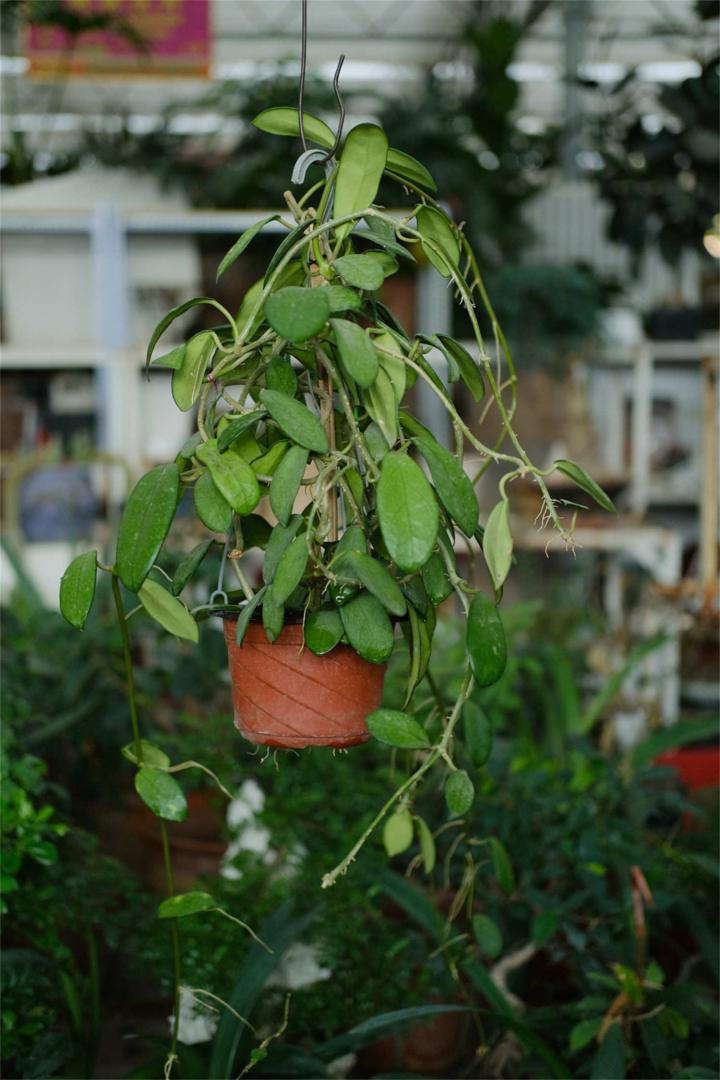
A hoya is a wax plant, not a true orchid. Species and cultivars differ in leaf thickness, growth rate and preferred seasonal conditions. Keep the full label before applying one watering or winter routine to every plant sold under the common name.
Give vines a workable support
Provide a stable hoop, trellis or hanging space and guide stems without tightly binding them. A bare-looking searching shoot may later develop leaves. Do not cut every long stem simply because it extends beyond the existing foliage.
Use an airy root environment
Choose a draining container and an open medium appropriate to the identified hoya. Water as the root zone dries sufficiently, then let surplus escape. A dense plug inside the pot can retain moisture differently from surrounding bark or potting mix.
Preserve useful flower spurs
Many familiar hoyas flower again from established peduncles, so avoid removing them automatically after blooms fade. Provide useful filtered light and modest feeding during active growth. Follow the species' seasonal needs rather than forcing flowers with heavy fertilizer or repeated disturbance.
Related reading
rinse, isolate, and repeat every few days
Phalaenopsis at Home: Light, Roots and Watering
Pingback: Pine Needle Soil: How to Recognise It and Use It Safely
Comments are closed.