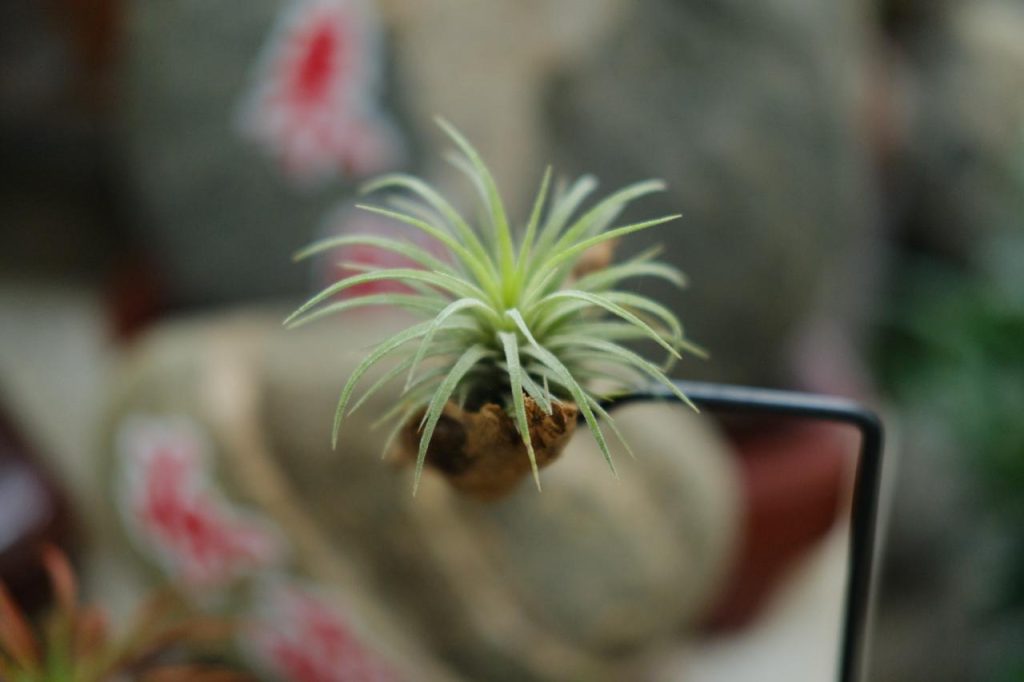
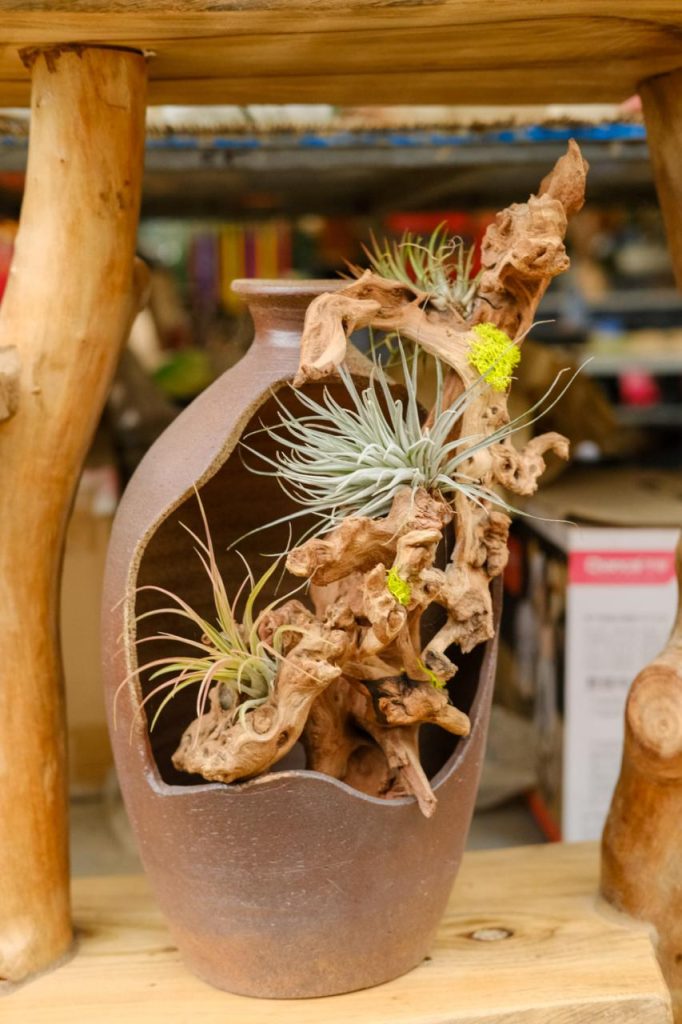
Air plants can be displayed without ordinary potting soil. Choose a support that allows watering and drying rather than trapping moisture around the base.
Air plants still need water and nutrients
Tillandsia use their leaves to take up much of their water, while their roots often serve for attachment. The name does not mean that an indoor plant lives on room air alone. Different species also vary in their preferred moisture and exposure.
Make the display removable or accessible
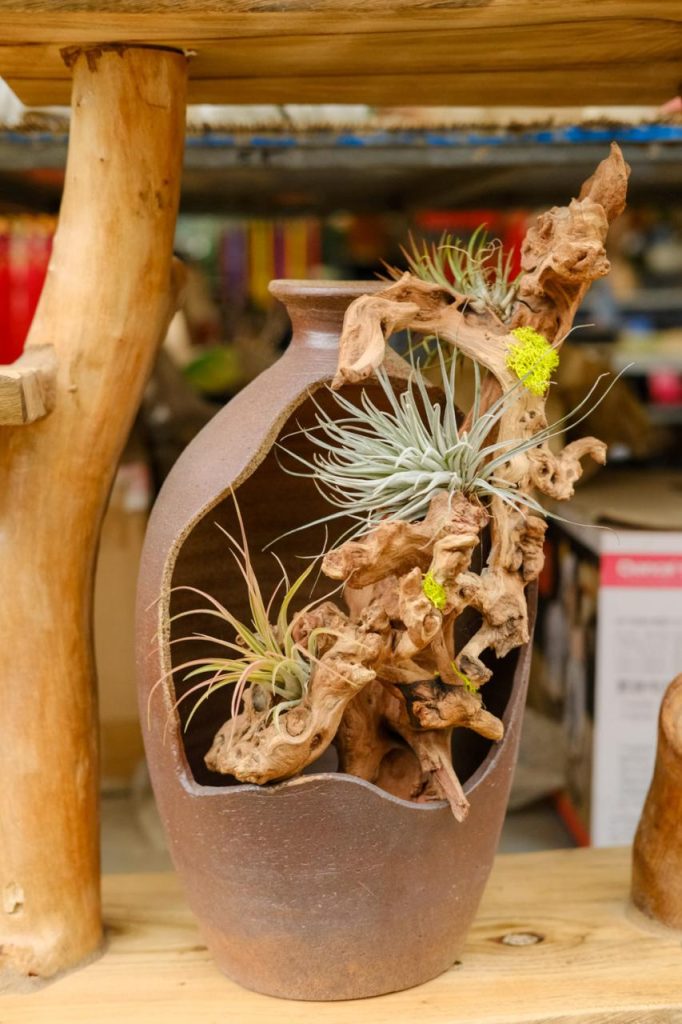
Choose a support that holds the plant without crushing its base. Allow room for maintenance and airflow. A sealed decorative vessel or tight mounting can trap moisture where it is difficult to inspect.
Water appropriately and let the plant dry
Use a suitable wetting or soaking approach for the identified plant and your conditions. Drain it afterward, taking care not to leave water trapped in its base. A display that stays wet and stagnant is different from a plant receiving a proper watering then drying with air movement.
Provide useful filtered light
Avoid both a dark ornament shelf and abrupt scorching sun. Check heat near glass and drying from heating outlets. Use suitable nutrition only as directed; stronger fertilizer is not a replacement for water, light or ventilation.
Related reading
Air Plants After Flowering: Rosettes and Offsets