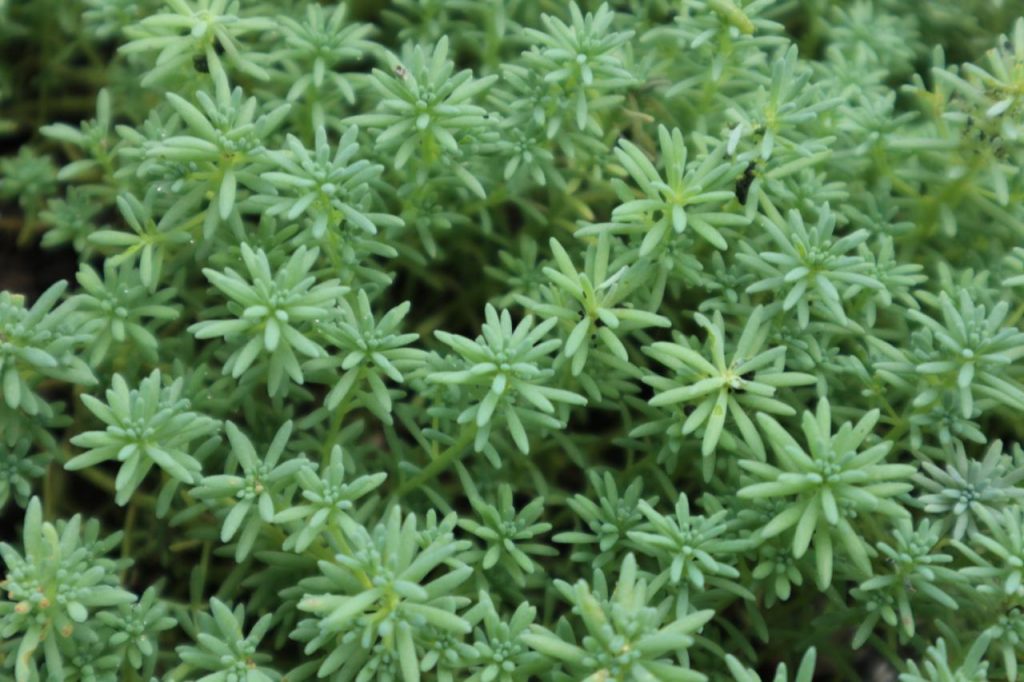
Thin-snow sedum is the fine, blue-green carpeting stonecrop that fills a pot in a season and turns the whole cushion pink if the weather cooperates. Grown in shade it is a sorry plant: open, pale, stretched, and easy to rot. Grown hard and bright it is one of the most forgiving things in the collection.
Light decides everything else
Full sun in every season except the worst of high summer. More light and a real swing between day and night temperatures are what produce the pink flush, and a plant that looks weedy is a plant standing in the wrong place, not one that needs feeding. In half shade it survives, but the leaf arrangement goes loose and the internodes lengthen, and once the cushion is open it never looks tight again.
The rot risk lives in the same sentence as light. A shaded, damp pot of thin-snow sedum goes down to black stem rot that spreads across the surface and kills whole sections overnight, and the cause is almost always weak light combined with wet compost and no movement of air.
Water, and the value of neglect
This is a drought-tolerant plant and it is happiest when slightly dry. Water deeply, then let the pot come back to dry. If the cushion looks a little soft and the leaves lose their plumpness, one drink restores it fully, which is the plant's way of telling you the schedule is working. Where growth has gone loose and pale, do not reach for fertilizer; increase the sun and cut the watering instead.
Summer at thirty-five degrees needs a little management: light shade, better ventilation and less water, so the compost dries instead of steaming. In winter, once temperatures drop below five degrees, water is restricted hard, and if it goes much colder the pot comes inside to the brightest, coolest place available.
Soil, air and feeding
Any open, gritty, fast-draining mix suits it. Grit is not an optional extra here but the main ingredient, and the reasons are set out at what granular soil is. Ventilation matters as much as the mix: moving air across the surface dries the foliage after watering and stops the fungal problems that a crowded, still shelf produces. Feed hardly at all; a plant grown in full sun in a gritty mix that gets too much nitrogen goes soft and loose, exactly the look you are trying to avoid.
Making more, and keeping it tight
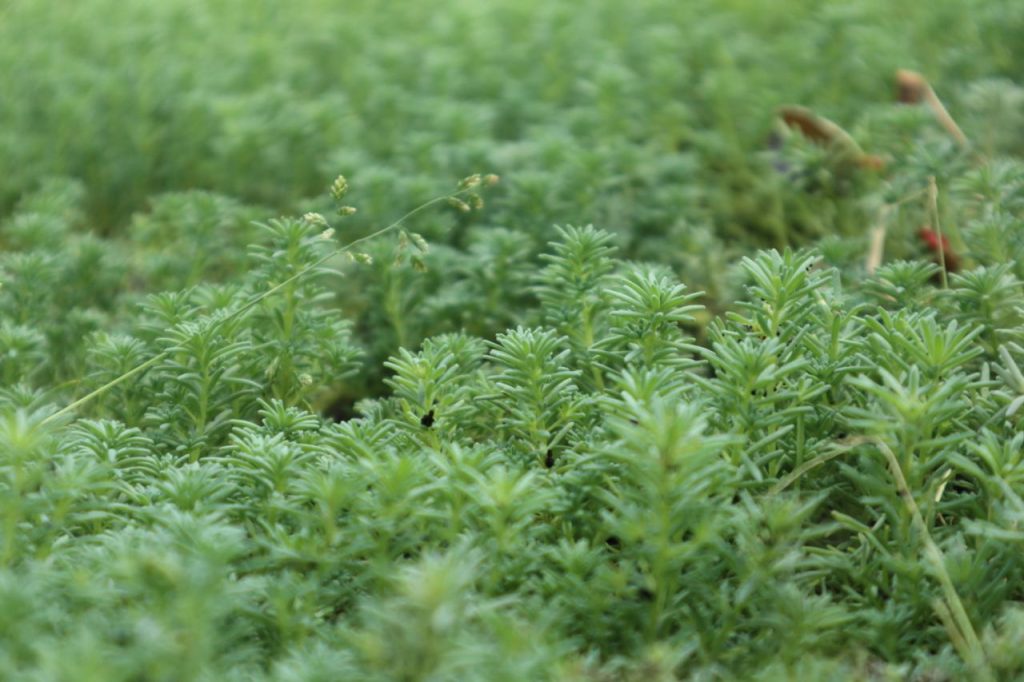
Propagation is a by-product of pruning. Any shoot pinched off in the growth season will root where it lies, and the fastest way to fill a new pot is to scatter trimmed sprigs over gritty mix and mist them until they hold. Timing, and the reason a cutting taken in active growth roots faster than one taken during dormancy, is covered at the best season for succulents. The same mix works for the rooted pieces; cutting compost is the leaner version of the same argument.
Maintain it by cutting back rather than by repotting. A cushion that has flowered or gone woody in the middle comes back from a hard trim and a fresh top dressing of grit, and a section that has rotted is removed at once, along with the compost underneath it, before the rest follows.