Nandina is the plant sold as sacred bamboo, which is a name worth ignoring because it is not a bamboo and does not want what bamboo wants. It is an upright, finely divided shrub that colours in winter, and in a pot it is content with very ordinary attention provided the soil is right and the water tracks the weather.
Soil and water
Fertile, sandy, draining freely, and on the acid side. A mix of leaf mould with sandy loam, and a little well-rotted manure worked in as a base, covers it. Heavy compost that holds water is the wrong direction entirely.
Watering is judged by the climate rather than by a rota. In dry, windy weather water often and keep the pot moist through the growing season; in summer that can mean a drink every day, with a spray over the foliage when the air is parched. Winter is the opposite. The plant is dormant, it is not drinking, and a pot kept sodden in cold weather is how a nandina is lost. Flowering is the one exception, when more water keeps the pot evenly moist and the flower panicles last longer.
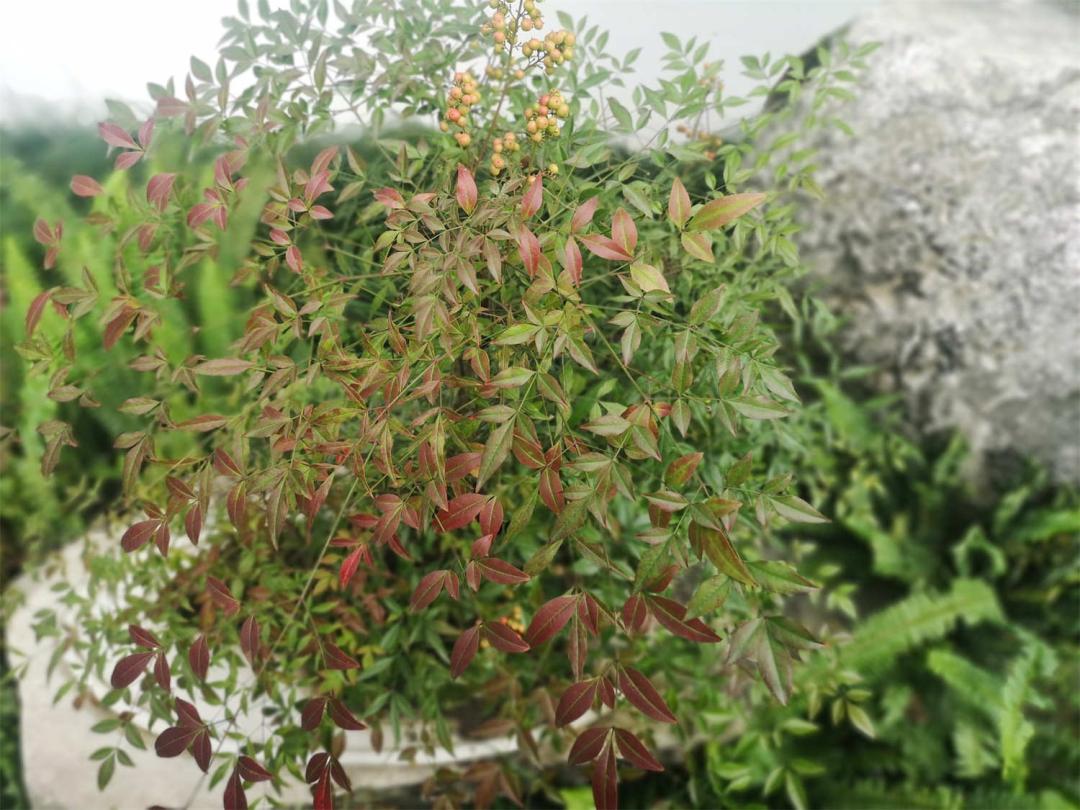
Light and temperature
Light needs to be generous. Spring light suits it well enough to keep the plant outdoors, and the growth that follows is short-jointed and dense. Summer is the season to pull back: strong sun scorches, so shade it and keep the air moving. Winter wants the brightest position available, indoors or out.
Growth prefers warmth around 20 °C. The winter requirement is simply not to let it freeze: keep it above 8 °C and it comes through. Where the plant is being pushed into flower under cover, 24 to 26 °C is the working temperature, and that is also the point at which the difference between a bud and a dropped truss is decided by water rather than by heat.
Feeding and pruning
A charge of complete fertilizer goes in at potting, and from there one feed a month through the growing season is the routine. May is worth singling out, when a potassium feed does more good than a nitrogen one, since it stiffens the season's growth that will carry next year's colour.
Pruning is regular rather than severe. Cut out the suckers rising from the roots, then the thin, dense and over-long branches, leaving one or two lower stems to carry the shape. That combination of thinning and low branching is what keeps a pot nandina looking like a plant rather than a broom, and it is also what encourages flowering on the wood that matters.
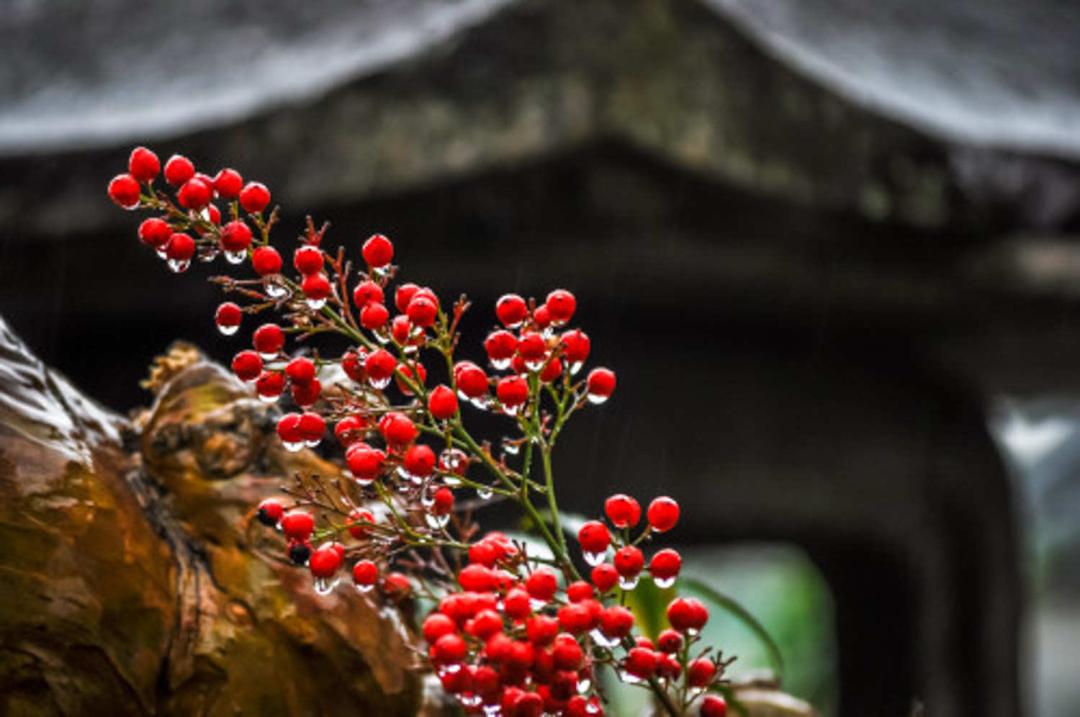
Potting on and the winter room
Repotting goes in early spring, before growth starts, because a disturbed root system recovering into fresh growth is a different proposition from one recovering into a cold spell. The same rule argues for pot choice in any woody plant, and it is set out at potted daphne.
Once a pot is brought inside for winter it wants a sunny position, not a warm dark hall, and the leaves need wiping with water about once a week. Dust on a nandina leaf is visible from across the room, and indoors it also blocks the light the plant is being kept for. How strong a feed should be mixed is the same question as at feeding potted plants, and which pot actually suits a woody plant is argued at pot materials.