Variegated daphne is a poor first container plant, and its reputation for being difficult comes from a short list of avoidable choices. The pot, the mix, and the timing of a repot account for almost every failure that gets described, and all three are easy to get right once you know what the plant is doing.
Pot: clay, and only slightly big
A porous clay pot is the default for a reason. Daphne roots are shallow, fine and extremely sensitive to a mix that stays wet, and terracotta lets the surface of that mix dry between waterings in a way plastic never does. Pot size matters as much as material: not too large and not too small. Too large leaves a volume of soil the root system cannot work through, which then sours; too small dries out faster than you can keep up with.
There is one legitimate exception. While the plant is in flower, a plastic or glazed bowl is fine as a display pot, since you are not asking it to be anyone’s permanent home. Move it into clay after flowering, and do that move on the repotting schedule below rather than as a separate piece of disturbance.
Mix: acid, humus-rich, open
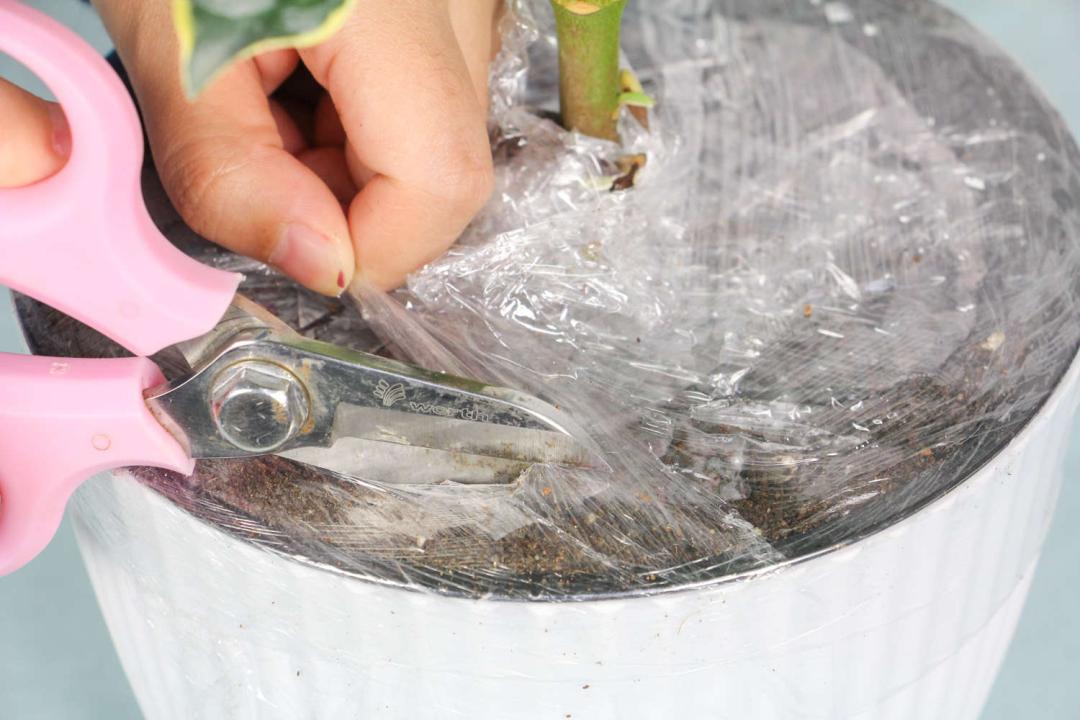
Use a loose, fertile, humus mix with an acid reaction, the kind of leaf-mould-based compost daphne grows in naturally. Two amendments make it pot-worthy: coarse river sand to hold it open, and a modest amount of well-rotted fertiliser worked through the mix rather than concentrated in one layer. Do not use ordinary garden earth on its own; it compacts into a solid mass around those shallow roots.
Used or homemade compost should be sterilised before it goes near a daphne, since root problems are the main way this plant dies and you do not want to introduce the organisms that cause them. The methods worth the trouble are set out in how to disinfect potting soil.
Repotting: every two years, early spring, never in bud
Two years is the working interval for a plant that is growing well. Timing is early spring, in practice February into March, before growth restarts. Do not repot a plant that is in bud, and do not do it in winter; the root disturbance at those moments costs you flowers, and on an established plant it can cost the plant.
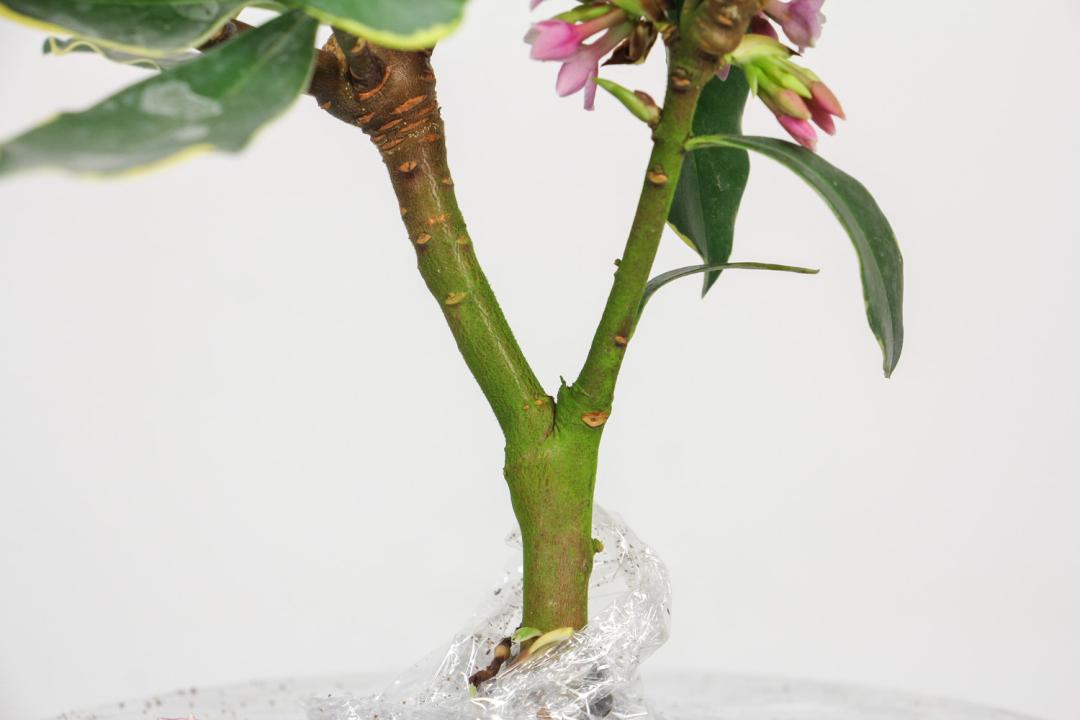
The technique is short and it is the part people get wrong by being too enthusiastic. Tip the plant out, remove only the outer ring of old soil, and leave the central mass around the roots intact. Daphne does not want its root system dismantled. Choose the new pot by the size of the plant, set it in fresh mix, and keep the burial depth the same as it was growing before. Planting a daphne deeper than it sat previously is a reliable way to lose the stem base.
Water once, thoroughly, after the pot is filled, then keep the plant in a cool, ventilated spot for the first stretch, out of strong sun, until it is moving again. Normal care resumes from there. Feeding should wait a while after a repot. The reason, along with the schedule, is in feeding potted plants after repotting.
What the pot is really deciding
Everything above is one argument in three places: daphne wants drainage, surface drying and acid. Get those and it is an evergreen shrub with variegated leaves, a winter flower and a scent that fills a room, needing very little else. A plant that drops inner leaves, yellows and then dies from the base up has been kept too wet in too big a pot in too heavy a mix, and by the time the leaves report it the roots are gone.