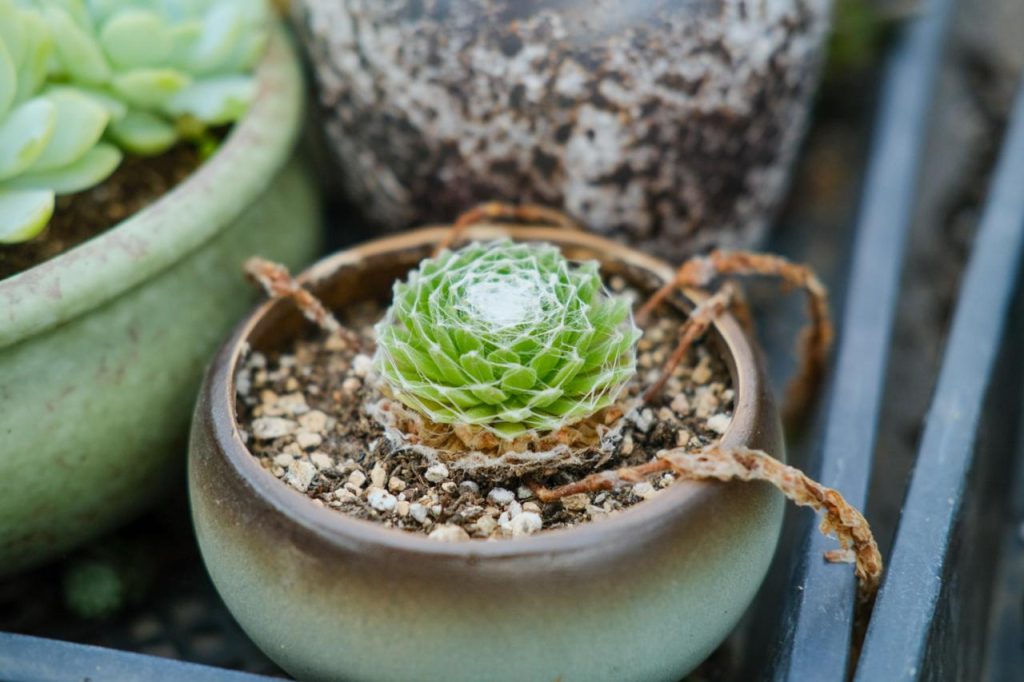
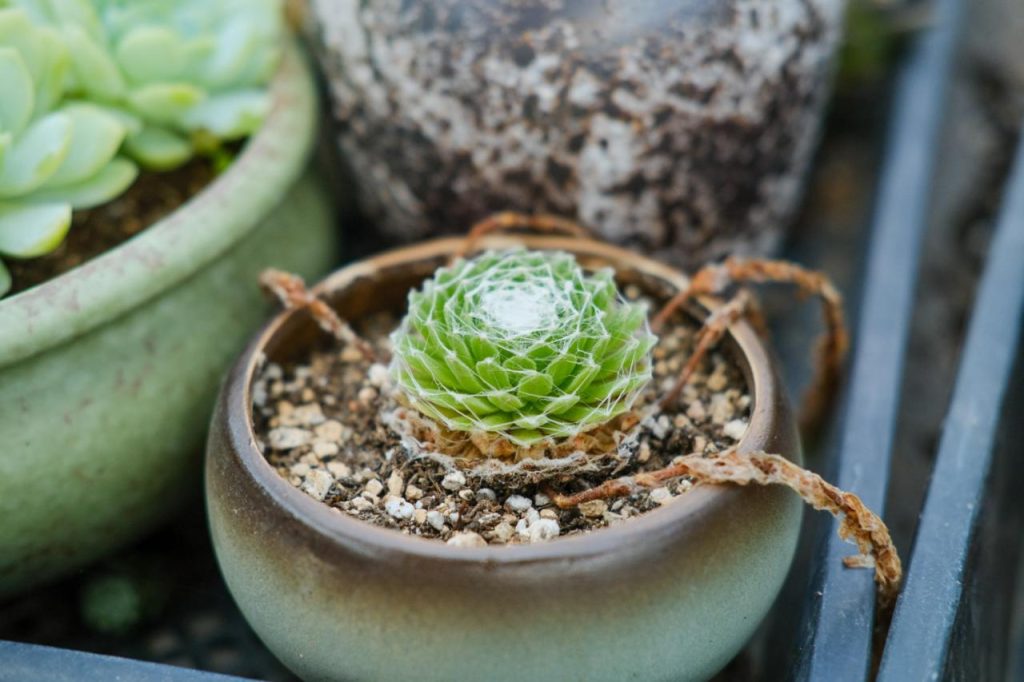
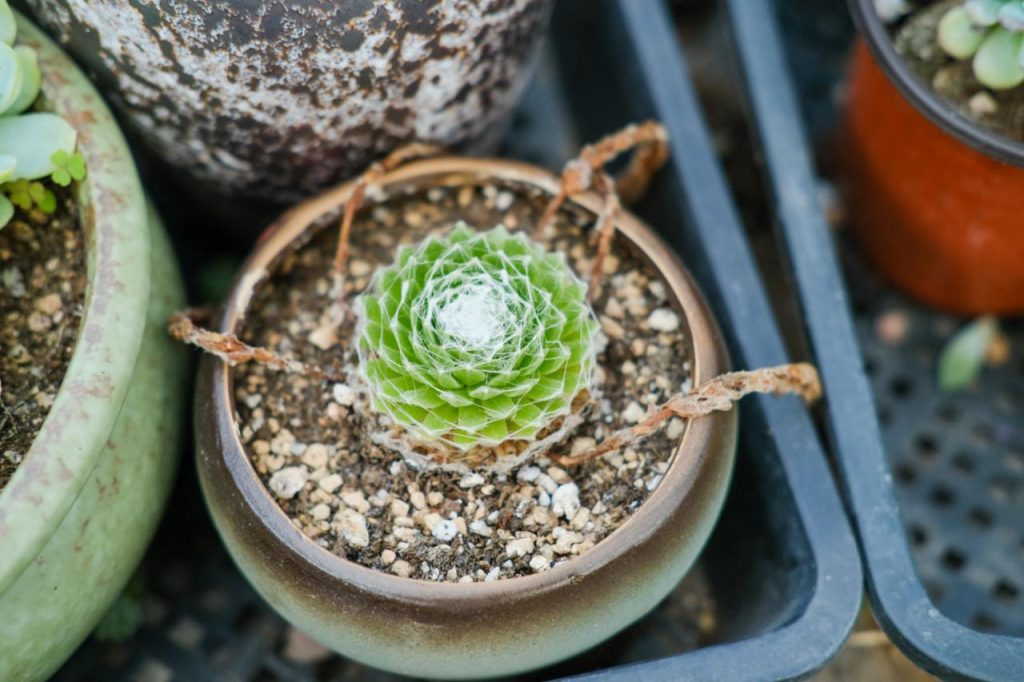
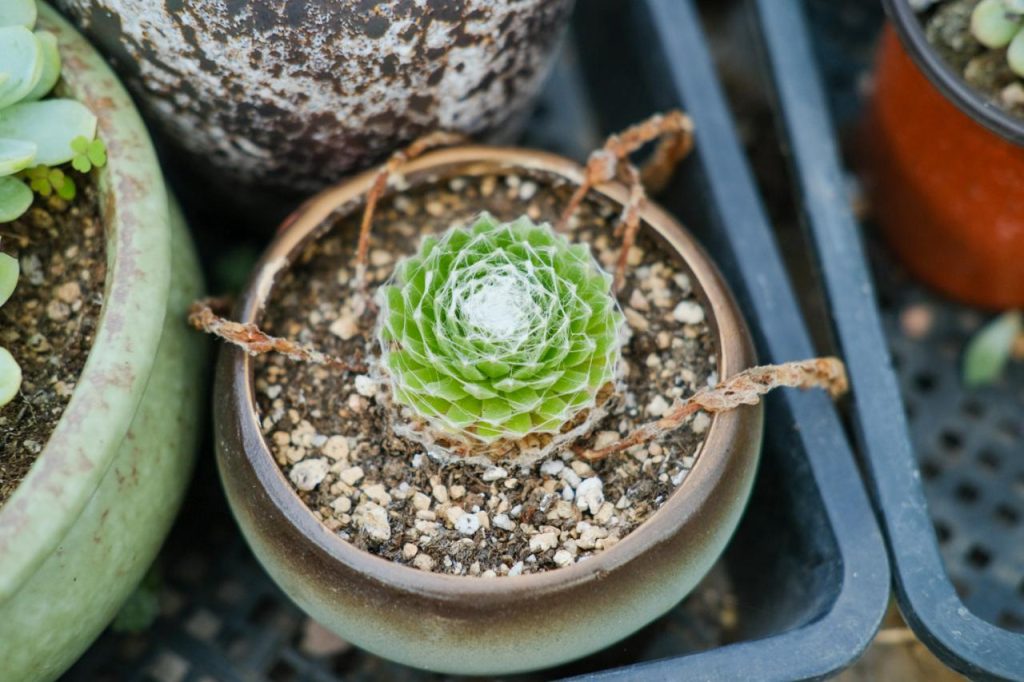
Cobweb houseleeks form clusters of small rosettes. Keep their crowns clear of standing water and leave room for offsets around the parent plant.
Cobweb houseleek is not an indoor tropical succulent
Sempervivum arachnoideum is generally grown outdoors where light and seasonal conditions suit it. Its fine web-like threads are a natural feature. Do not wipe them away or treat them as pests without closer inspection.
Put drainage first
A sunny rock-garden position or suitable draining container allows water to leave around the roots. Keep the rosette from sitting in a constantly wet depression. Hardiness does not make a small pot immune to poor winter drainage.
Separate offsets when they are ready
Young rosettes develop beside the parent. Use substantial healthy offsets where propagation is wanted, giving them contact with an appropriate medium and time to establish. Avoid forcing every small rosette off immediately.
Understand flowering
An individual rosette dies after flowering, while offsets can maintain the colony. That cycle differs from the collapse of a wet, non-flowering crown. Inspect the whole group before discarding it, and avoid forcing growth with frequent heavy feeding.
Related reading
Cobweb Houseleeks: Comparing Hair and Rosette Shape