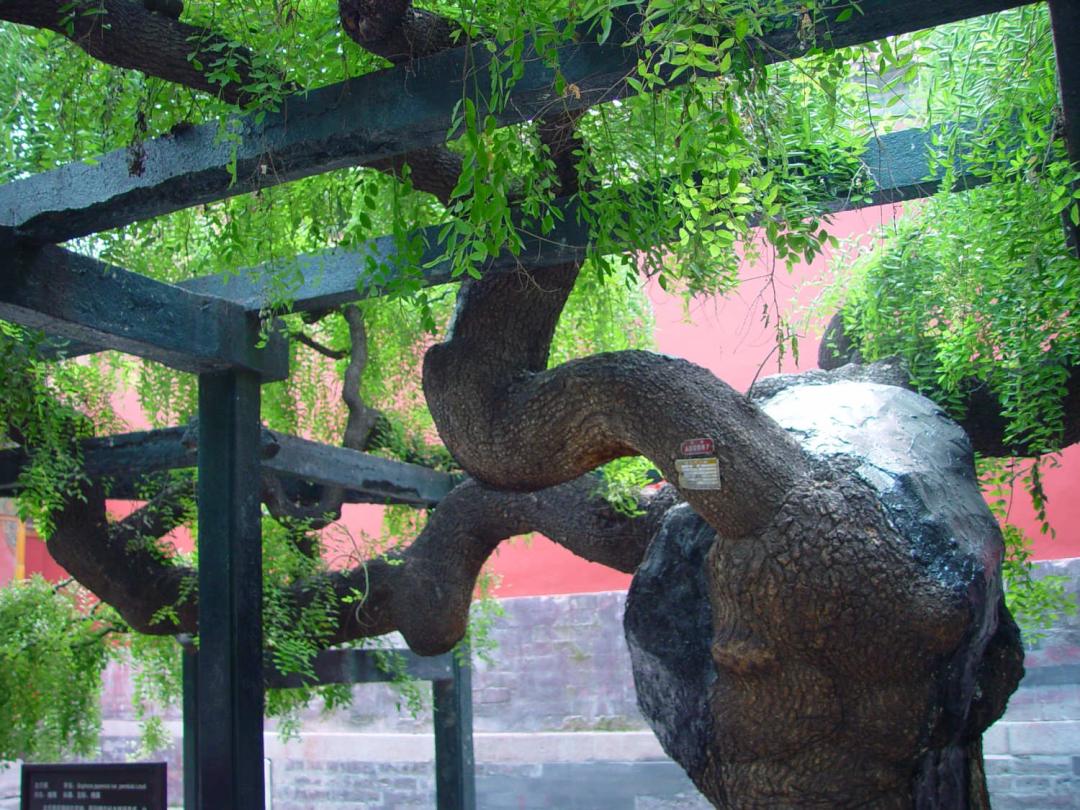
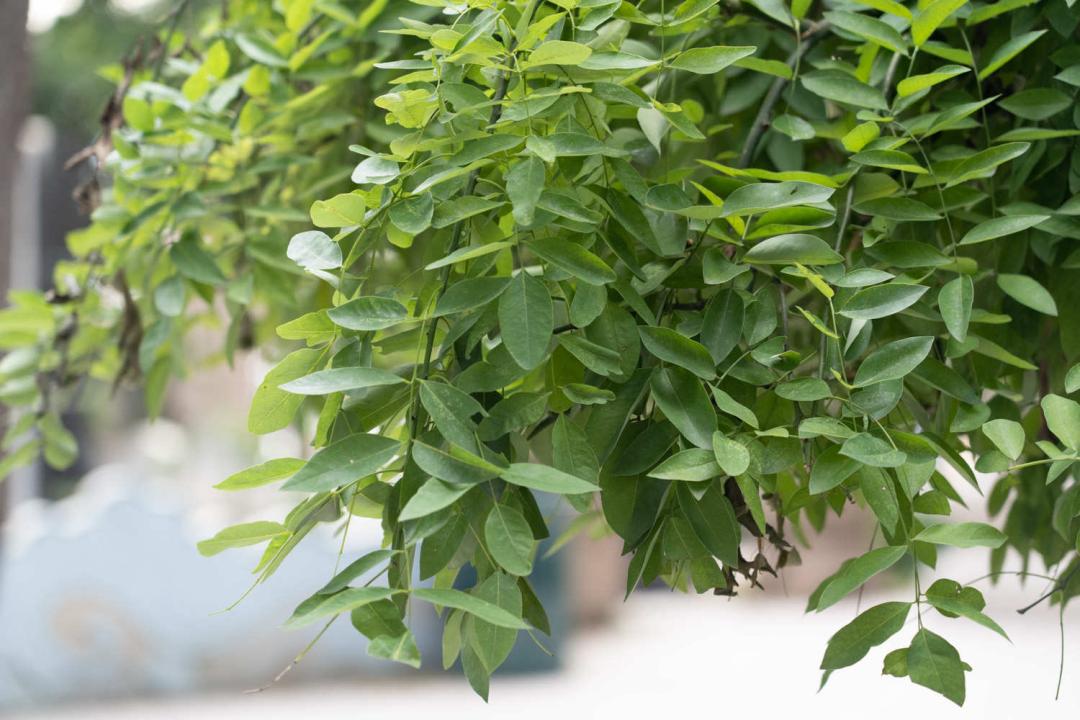
A weeping pagoda tree needs space for its crown and roots. Check the cultivar and intended shape before making structural pruning cuts.
Understand the weeping framework
A weeping pagoda tree is usually a trained or grafted ornamental form. Check the label and locate any graft union before pruning. Upright shoots arising below that point may belong to the rootstock rather than the weeping crown.
Leave clearance around the canopy
Allow room for hanging branches and access beneath or around them. Plant without burying the root flare, keeping mulch away from the trunk. Avoid placing a developing crown where every season requires heavy cutting to clear a path.
Establish roots carefully
Check the original root ball during dry weather, watering deeply when needed. Newly planted trees need monitoring even if mature specimens in the area are resilient. Adjust ties as the trunk grows so they do not rub or constrict bark.
Prune for structure
Remove dead, damaged and crossing branches selectively. Preserve the main weeping framework instead of shearing it into a tight shell. Large cuts, damaged grafts or uncertain structural problems should be assessed before further shaping.