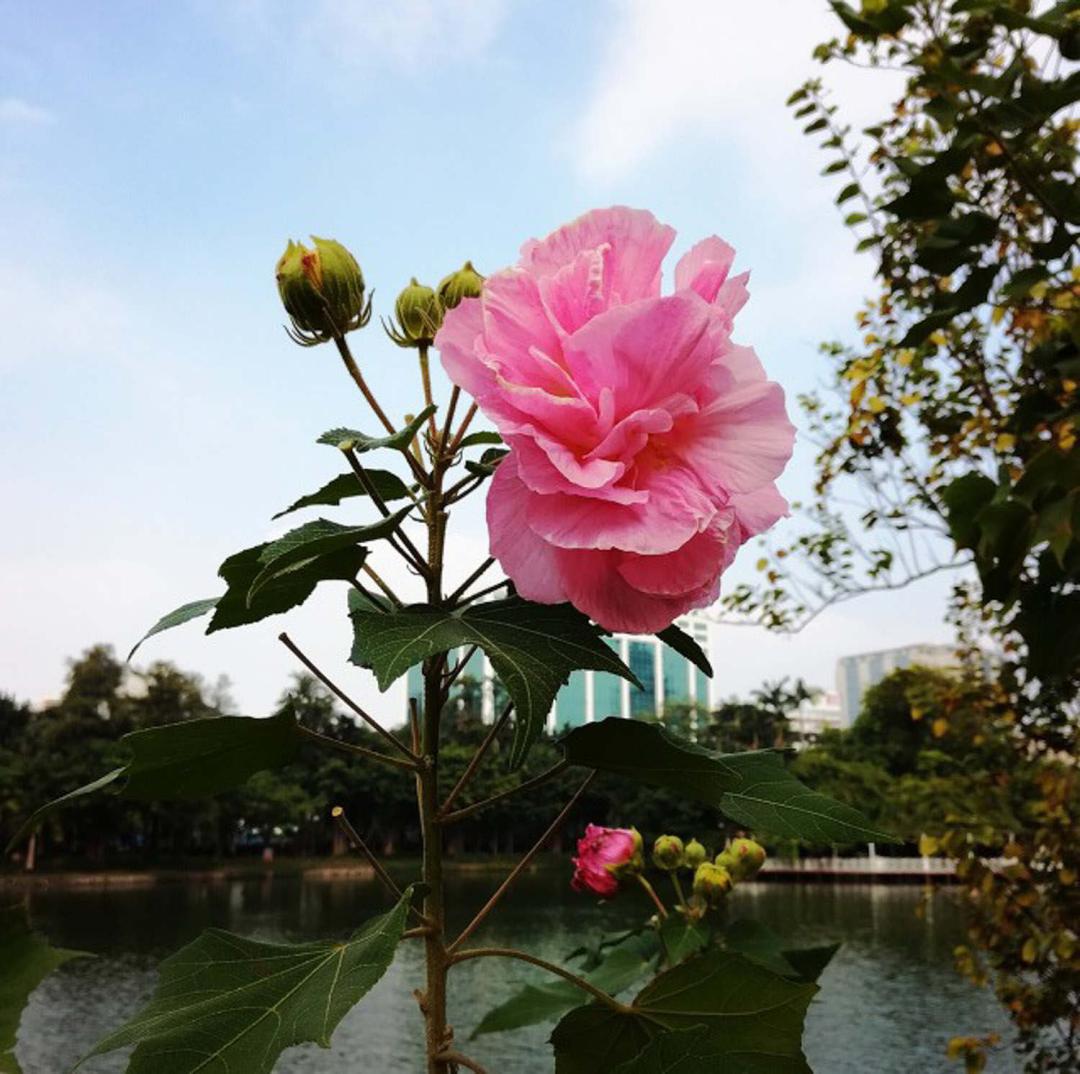
Mutabilis is the autumn flowering hedge shrub of southern China, big leaved, quick growing, and generous enough to bloom on the growth it makes each year. In a pot it becomes a small standard or a bushy shrub, and it behaves exactly as the ground grown plant does with one difference: everything depends on you for water, because the root run that a hedge enjoys is confined to a container.
Pot and soil
Go larger than seems necessary. A big porcelain or clay pot suits a plant that will push several metres of stem in a season, and the mix wants to be loose, fertile and full of air rather than fine and moisture holding. Garden loam with leaf mould and a third of grit or coal cinder keeps it open. The surface should dry between waterings; the rootball should not dry out.
Water and feed
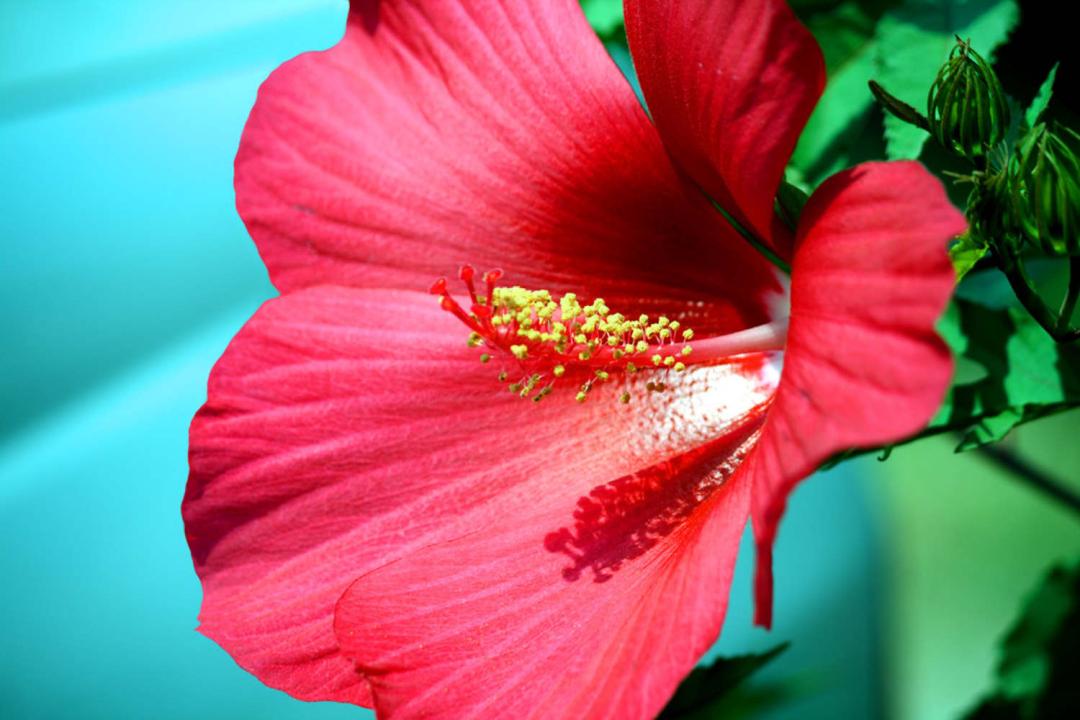
Spring growth is where the appetite starts. The plant pulls hard on the pot as soon as it leafs out and needs watering more or less daily through a hot summer, ideally in the morning and evening so the compost stays moist and the pot itself is cooled. Before the buds form, a phosphate feed along with the extra water is what makes the flowers large and the colour clean; a plant that runs short here drops buds and opens small, faded ones.
Do not let the pot dry out during flowering. That is the single most common complaint against this shrub in containers, and the fix is routine rather than clever. Mulching the surface with a layer of grit buys a day of moisture on a heat wave.
Light and winter
Mutabilis wants full light, and it needs it through the autumn flowering period as well as in spring. In summer the strongest afternoon sun can be filtered, particularly for a pot sitting against a hot wall where the roots would bake, but a shaded position gives soft stems and a poor display.
The shrub is reasonably hardy in the ground, and much less so in a pot, where the rootball freezes long before surrounding soil would. Winter it somewhere bright and keep it above ten degrees; a cold greenhouse, a porch or a cool room all work. Expect it to lose most of its leaves, water it sparingly through that rest, and take the hard pruning now rather than in autumn.
Pruning after the flush
Cut back once flowering ends. Decide then whether you are keeping a small tree or a bush, and prune to that shape: shorten the previous season's stems by roughly half, remove anything dead or diseased, and clear out the middle so light and air reach the inner branches. A dense mutabilis canopy is a hotel for the pests listed below, and no spray programme compensates for a crowded plant.
Pests, disease and making more
Aphids collect on the growing tips. The red spider mites that stipple the leaves appear in hot dry air, and caterpillars skeletonise the big leaves. Powdery mildew coats the foliage when the days are warm, the nights turn cool, and the air stays still. Most of that list is discouraged by spacing, airflow and watering the compost rather than the leaves. The sap sucker end of it is dealt with at aphid control.
Propagation is not difficult. Cuttings taken from firm summer wood root readily, layers make a plant with roots while still attached to the parent, and a mature clump can be divided in spring. Choose whichever matches the season; the cuttings route is explained at types of cutting, and the mix a split clump goes into is the argument laid out at pot soil for potted shrubs.