Molan is commonly identified as Cymbidium sinense. Large-flowered shop hybrids are not automatically the same plant, and their care should not be copied solely from a shared genus name.
Leaves: stance, substance, colour
A hybrid cymbidium carries its leaves in two rows, and each leaf is a long, broad lance, stiff enough to hold its own weight, arching from a tall pseudobulb. Colour is variable and depends heavily on how much light the plant has grown under, anywhere from yellow-green through to deep green, which is why colour alone is not a test on this one.
Molan leaves are narrower and thinner in substance, dark green and, importantly, stable: they stay dark whatever the light. They also stand more upright in the classic Chinese style rather than splaying open. The contrast is easy to see with the two pots side by side, and the hybrid always looks the coarser, bigger-boned plant.

Flowers: structure is shared, size is not
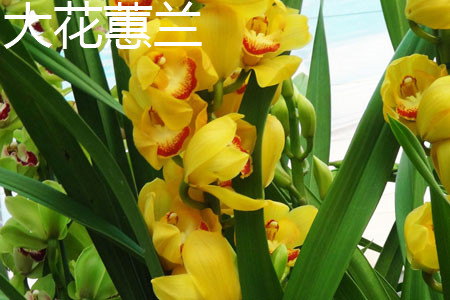
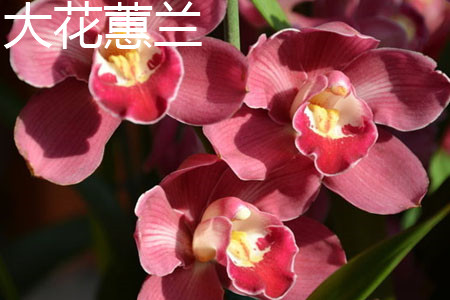
Both flowers are built the same way, because they are the same genus. Three outer sepals, two inner petals, and one of the inner petals modified into a lip. The colour range is where the family tree shows. A hybrid flower can be white, yellow, green, purple-red or blended, and it is large, often 8 cm across or more, carried on a long, strong spike with many blooms.
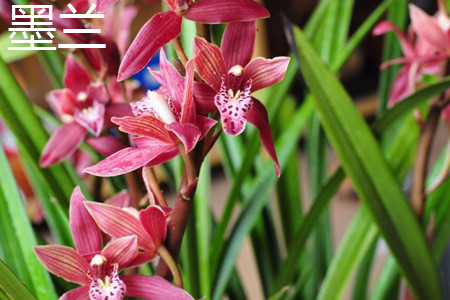
Molan flowers are small, densely crowded on the spike, and run to a narrow palette: deep purplish-brown and maroon, frequently with lighter, yellowish-green or pinkish-white lips and occasionally flecking on it. Set a molan flower next to a hybrid one and the molan sepals and petals look dramatically narrower and longer. That proportion is the quickest single giveaway.
The month is the real answer
Cymbidium sinense and large-flowered hybrids can be brought into flower under different growing systems. Compare the identified selection and its history rather than ranking every plant by one fixed seasonal sequence.
So the practical distinction at the point of purchase is: a hybrid in a shop is bought in flower, and it will not repeat that performance easily indoors. A molan is bought in bud and opens for you.
What the difference means once it is home
Neither of them grows in soil, and neither tolerates a pot that stays wet. Both want a coarse, open medium with air reaching the roots. The same argument, aimed at a different orchid, is in what to pot a phalaenopsis in. The difference is in the plant's size and appetite: a hybrid has a large root system and a heavy flowering cost, so it wants more light, more water in active growth, and dividing after flowering when the pot is full. Molan is content with brighter shade, dries between waterings sooner, and does not need to be forced into a big container.
Related reading: Cymbidium Faberi and Goeringii: Comparing Plant Features.