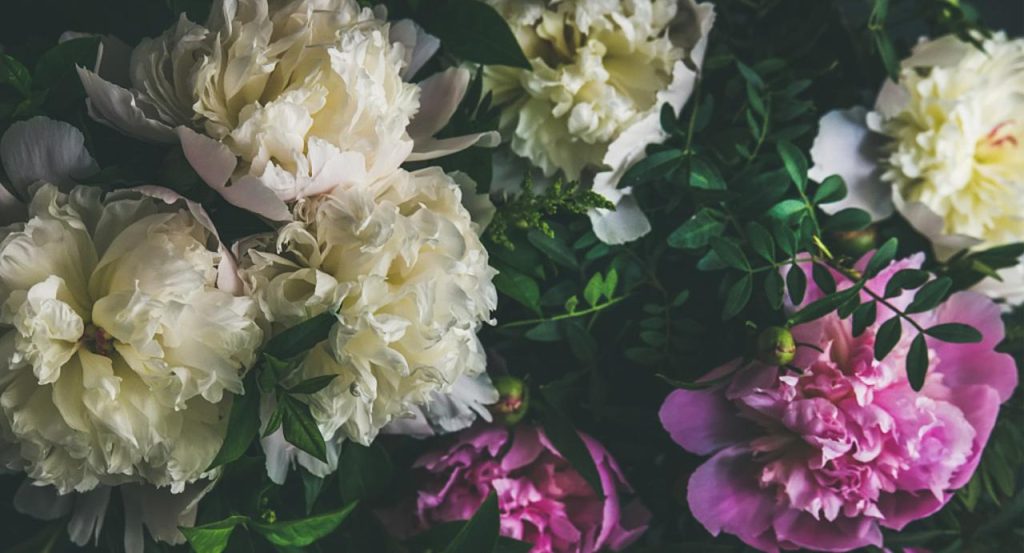
Peony flower forms describe the arrangement of petals and the flower centre. They help explain why one bloom looks open and another looks densely packed, but they are not cultivar names or a complete guide to plant care.
Six commonly used forms
New York Botanical Garden lists six standard forms recognised by the American Peony Society: Single, Japanese, Anemone, Bomb, Semi-double and Full Double. These names concern herbaceous peony flowers.
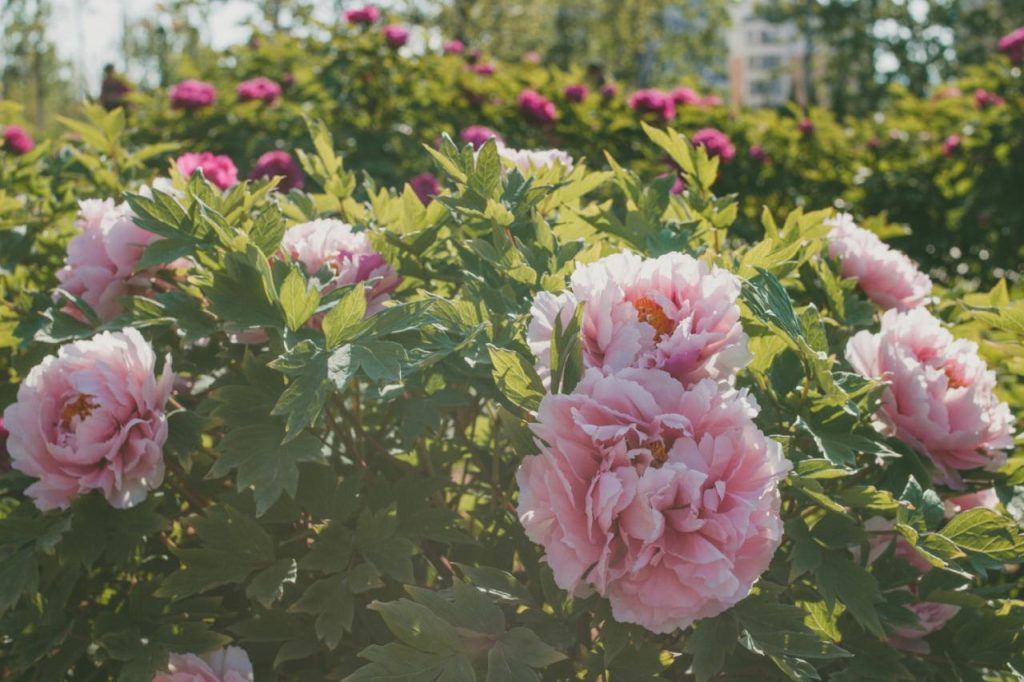
The differences reflect petal formation and changes in stamens into petal-like structures. Start by looking at whether the centre remains open, whether narrow structures fill it, and how densely petals occupy the bloom. A fresh, fully opened flower is easier to compare than a tight bud or a rain-damaged head.
Use form as one part of identification
Two cultivars can share a flower form and colour while differing in height, flowering time or stem strength. Keep the cultivar label when selecting or sharing a plant. Do not assign a precise name from a single image.
For a border, consider support as well as appearance. NYBG recommends putting supports around herbaceous peonies early, before the foliage becomes bulky. A support that accommodates the plant's growth is easier to conceal than a tight bundle tied around fallen flowers.
Related reading: Comparing peony plant types.
References
Horticultural references checked on 29 October 2026.