Large-flowered cymbidiums need an airy orchid medium and enough room for roots. Check the plant's growth stage before changing watering or feeding.
Choose a cymbidium that fits the space
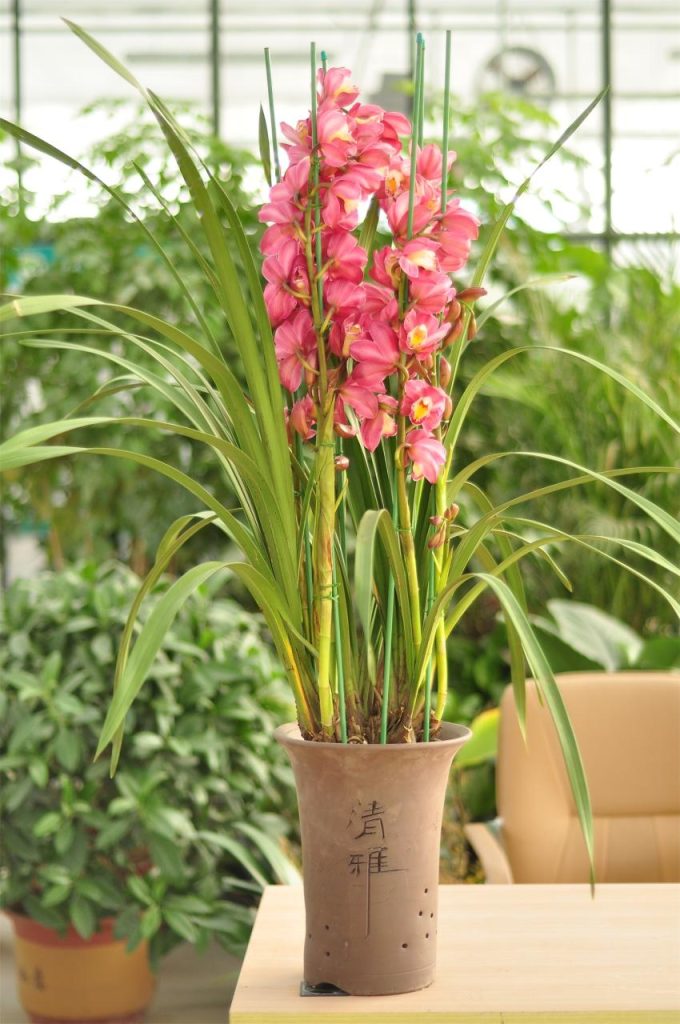
Large-flowered cymbidiums can develop substantial leaves, pseudobulbs and arching flower stems. Read the cultivar information before selecting a small windowsill pot. Flower size alone does not establish the orchid's exact temperature requirements.
Use an appropriate orchid medium
Provide an open root environment with working drainage. Check the center before watering, since bark near the surface can dry while material below remains moist. Replace broken-down medium at a suitable growth stage rather than repeatedly disturbing sound roots.
Balance seasonal light and temperature
Give bright conditions with protection from harsh exposure. Many common hybrids respond to seasonal temperature changes, but do not use a single night-temperature rule for every species or selection. Protect buds and roots from damaging cold.
Support growth and flowers
Retain healthy leaves and connected pseudobulbs when dividing. Support flower stems gently where needed. Feed appropriately during active growth; an orchid without flowers may need maturity or better seasonal conditions rather than a concentrated fertilizer dose.
Related reading
Cymbidium sinense Care in Containers