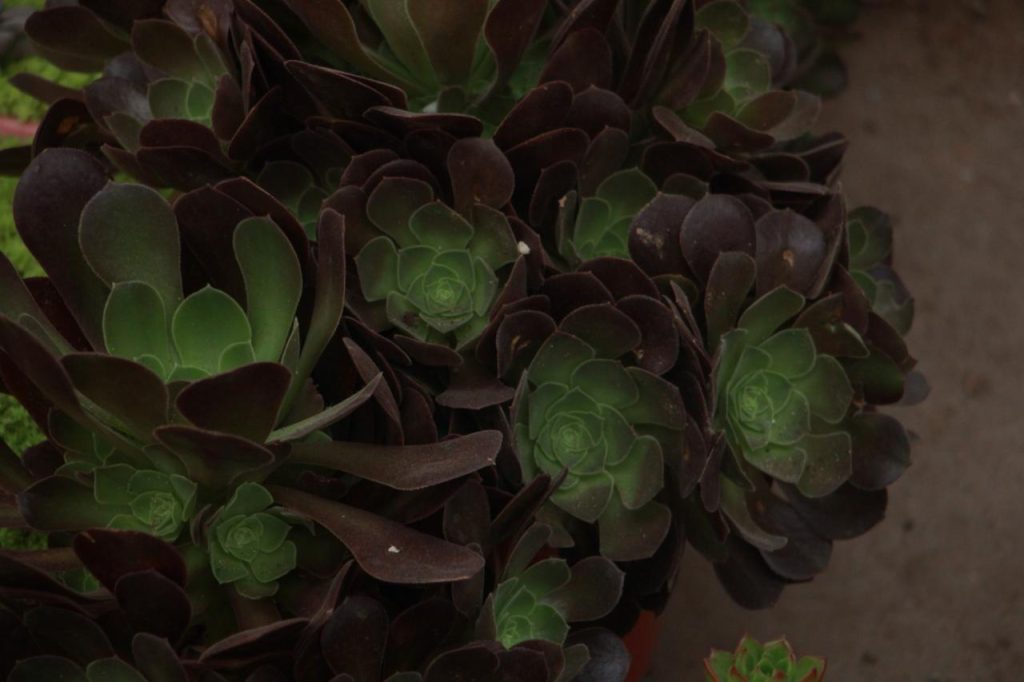
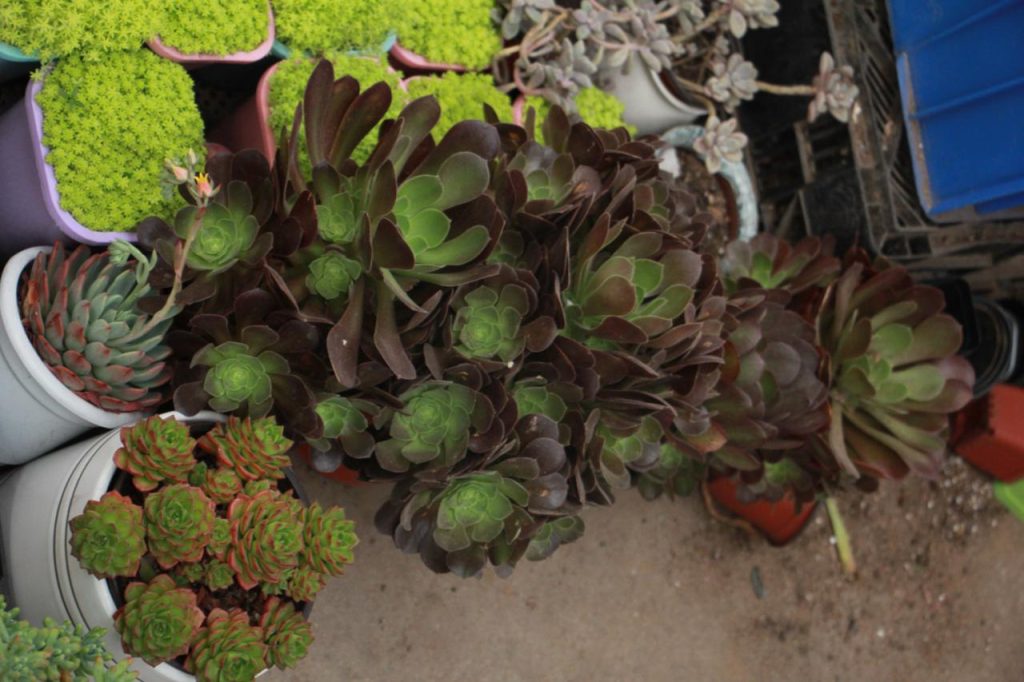
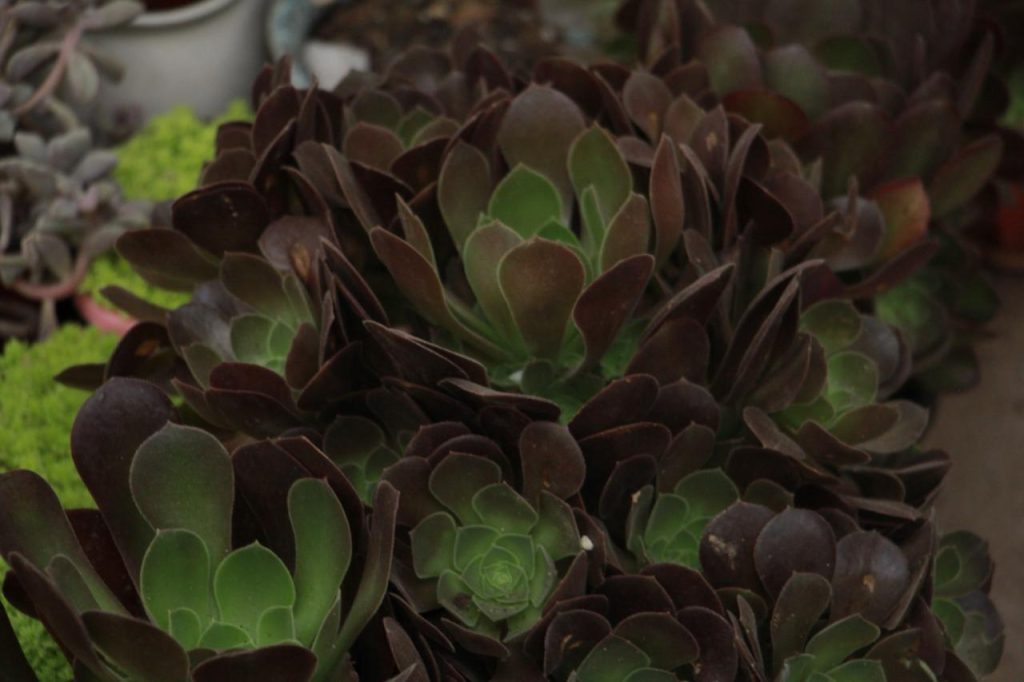
Aeoniums are often sold with names based on leaf colour. Those names are useful shopping clues, but they do not always identify a species, cultivar or parentage.
Record three separate features
- Rosettes: note their outline, size and position on the stem.
- Branching: compare the whole plant, not only a cropped photograph of one head.
- Leaf markings: record the pattern on mature leaves alongside the original label.
Compare plants at similar stages where possible. Keep observations separate from a proposed name: “pale margin” is an observation; assigning an unknown plant to a named cultivar requires more evidence.
Use a documented name as a starting point
The RHS lists Aeonium ‘Zwartkop’ with dark rosettes and records alternative names used for it. That is a traceable naming example. It does not establish the identity or ancestry of every plant sold under a translated black-aeonium name.
What photographs cannot settle
Colour in a listing is affected by the photograph and the plant’s conditions. Ask the supplier for the full label and, where relevant, how the plant was propagated. Keep an uncertain identification recorded as uncertain rather than converting a familiar appearance into a permanent name.
The photographs here are comparison material, not newly authenticated cultivar records. For a practical purchase checklist, see Choosing a Black Aeonium: Size and Plant Condition.
Photographs for comparison