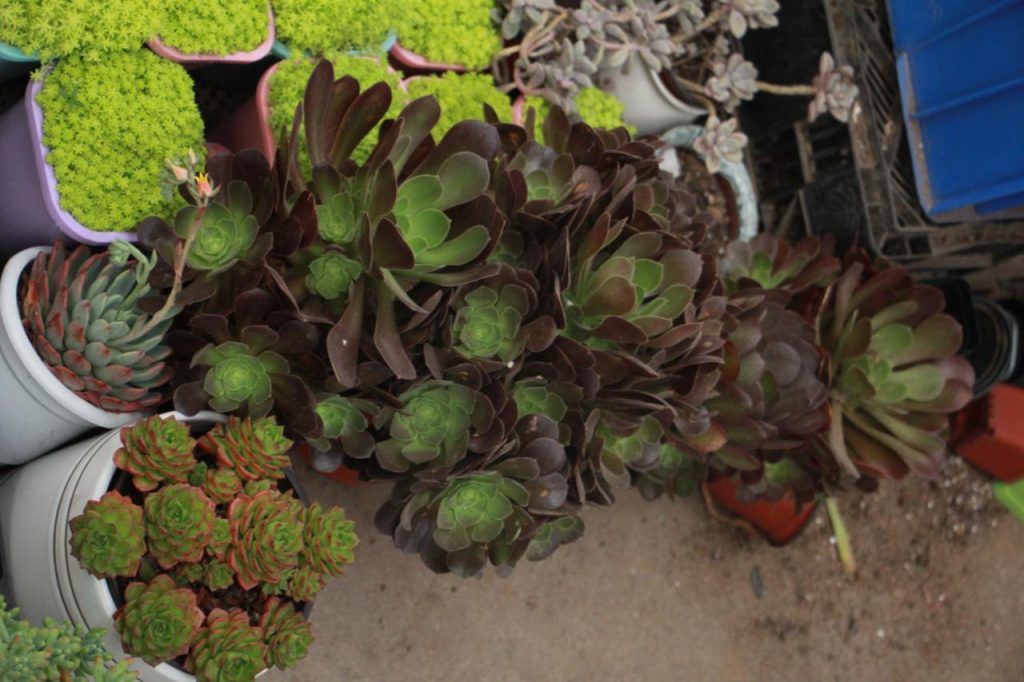
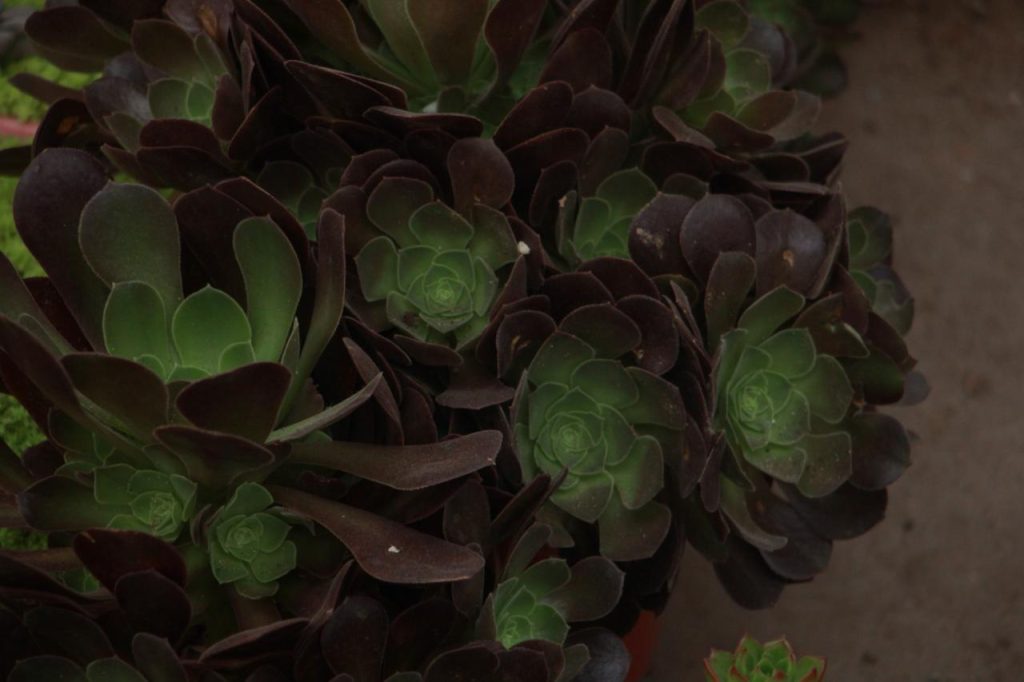
A small black aeonium cutting and an established branched plant are different purchases. Compare the plants in front of you before deciding whether a price is reasonable. For a stemmed display, see training an aeonium's tree-shaped form.
Find out what is being sold
Ask whether the listing is for an unrooted cutting, a rooted young plant or an established specimen. Check the botanical or cultivar label and whether the photographed pot is included. A dark rosette alone does not authenticate a named cultivar.
The RHS profile of Aeonium ‘Zwartkop’ describes an open-growing succulent with dark leaf rosettes. Use that named example to check a label, not to assign every black aeonium the same identity.
Inspect condition, not just height
Look at the stem base, the attachment of the rosettes and any damaged tissue. Ask about rooting and recent growing conditions. A tall stem is not automatically a well-established plant, and a large decorative container can conceal a small growing pot.
Compare several current offers on the same basis: plant size, rooting, identity, condition and delivery. A price quoted years ago in another region cannot answer that comparison.
Choose a plant you can accommodate
Decide where the plant will grow and how it will be handled as it branches. Keep the label and a purchase photograph; they are more useful later than a vague description such as “rare black variety”. For the features to record, see Aeonium Forms: Rosettes, Color and Branching.
Photographs for comparison