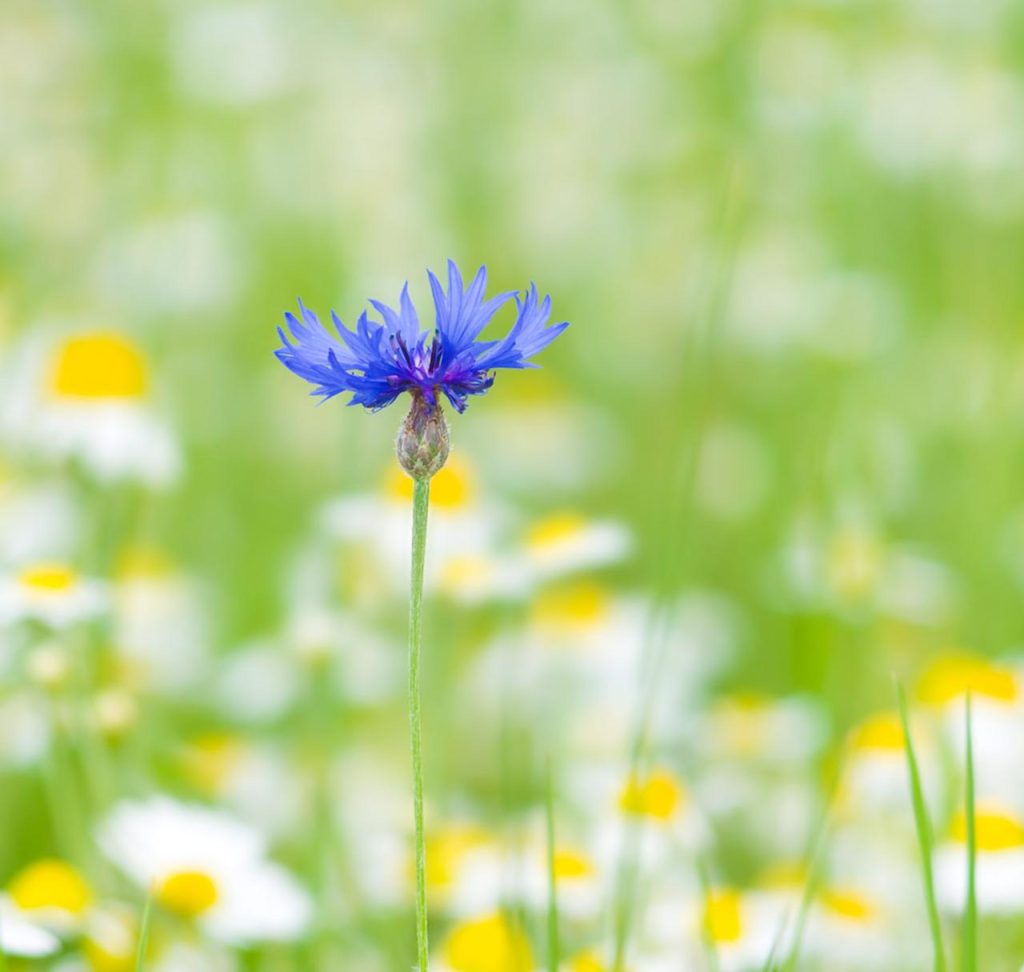
Cornflower, Centaurea cyanus, is an annual grown for its distinctive flower heads. Cultivars differ in colour and height, so keep the seed-packet name rather than assuming every plant will fit a small pot.
Choose a sunny position and well-drained soil. The RHS lists propagation by seed sown directly in spring or autumn; the suitable local sowing window depends on climate and the variety supplied.
Start with the packet instructions
Prepare a fine, manageable sowing surface and follow the stated depth and spacing. Label each batch before sowing. Thin or move seedlings as appropriate instead of keeping an overcrowded tray simply because it looks full.
For containers, use a suitable growing medium and check the drainage outlet. Do not add unidentified roadside soil or wood ash as an automatic recipe: the mix should suit the plant and container you actually have.
Water and stem growth
Check the root area before watering. A fixed instruction to soak every pot daily, or twice daily in summer, ignores differences in weather, container size and the growing medium.
If stems lean or become weak, review light, spacing, cultivar height and recent feeding. Add support where needed without tightly bundling the whole plant. Existing bent stems may not recover their shape, so look at subsequent growth when assessing a change.
Keep a dated photograph and the cultivar label through flowering. That record helps separate a naturally tall variety from a planting that was too crowded for its position.
Images

Related reading: Sowing flower seeds.
References
Horticultural references checked on 29 October 2026.