A cutting needs a medium that holds a little moisture, drains the rest, and does not rot. Everything else about propagation media is a trade between those three requirements, and the list of what gardeners genuinely use is short enough to cover in one pass.
Sand, perlite and vermiculite
Coarse river sand with no fines or organic matter in it is the traditional answer, and its virtues are physical. It is open, it takes up heat, it warms quickly in sun, and a cutting in it is unlikely to sit wet. Its fault is the mirror image: sand holds almost no water, so a tray of sand cuttings needs attention every day rather than every week, and letting one dry out is the commonest way a good batch is lost. Cacti, succulents and the thick-leaved things root well in it.
Vermiculite and perlite are the two products that fix the sand problem. Perlite is the drainage, vermiculite is the retention, and the two together are the closest thing to an all-purpose cutting medium there is, suitable for most softwood and half-ripe material and for pricking out seedlings. They are light, they are clean, and they do not carry the organisms that anything dug out of a garden will.
The soil-based media
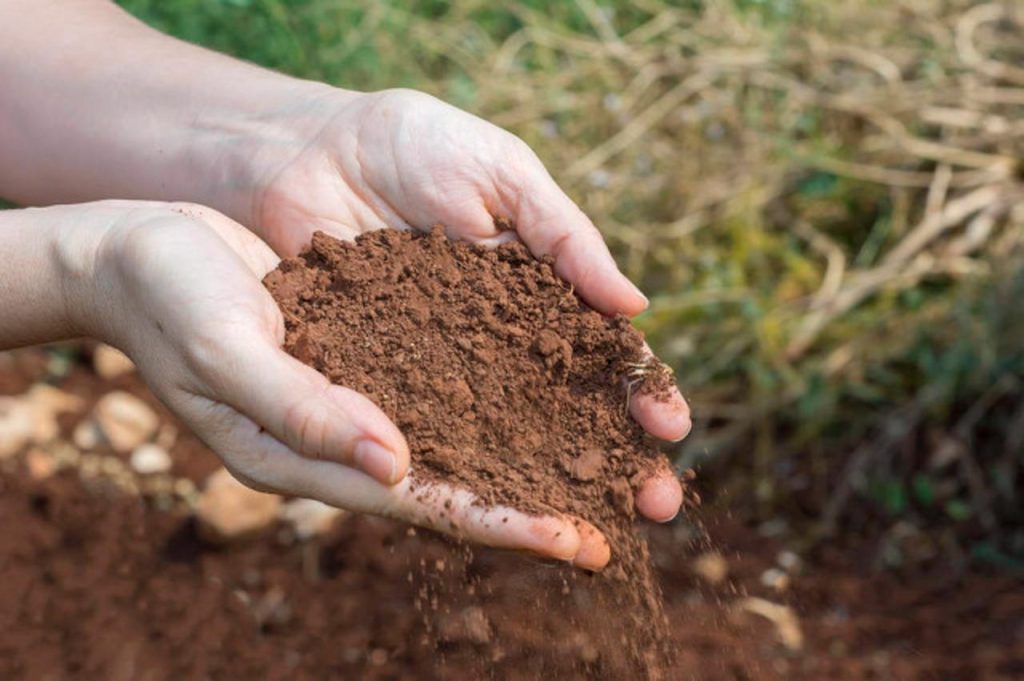
Peat is the opposite of sand: very high in humus, retentive to the point of staying wet, and therefore used cut with sand rather than alone. Leaf mould is loose and airy but mediocre at drainage by itself, so its job is to improve a mix rather than to be the mix. Composted chip soil, the material that accumulates where dead branches and wood chips have broken down, carries real nutrition along with an open structure. Mountain soil gathered under deciduous trees is the same thing produced slowly, and it is a good free stand-in for the bagged versions.
None of those four are sterile. Anything lifted from under a hedge or a tree should be treated before it goes near a cut surface, and the methods that actually work are listed at how to disinfect potting soil.
Three that get misused
Rock wool keeps its shape wet or dry and holds a great deal of water while giving most of it back freely, which makes it suitable for propagation trays and hydroponic benches rather than for a pot you intend to walk away from. Sphagnum is used to pad or wrap cuttings so that the scion cannot dry out, and it is excellent at exactly that and little else; left saturated it becomes a rot medium. Bark and coarse orchid composts hold moisture on the outside of large chunks, which is what an epiphytic root wants and what a stem cutting does not, and the reasoning behind that mix is set out at what to pot a phalaenopsis in.
Which of these you need depends on what is being propagated. The categories themselves are laid out at the types of cutting, with the underlying method explained at what cutting propagation is. For softwood work in early summer the plant list is at what to cut in June, and the soaking and heeling-in that dormant hardwood needs before it goes into any of these media is at dogwood hardwood cuttings.