An African violet needs useful light without prolonged harsh exposure. Check what reaches the leaves throughout the day rather than deciding from the brightness of a nearby wall.
Read light-related signs with care
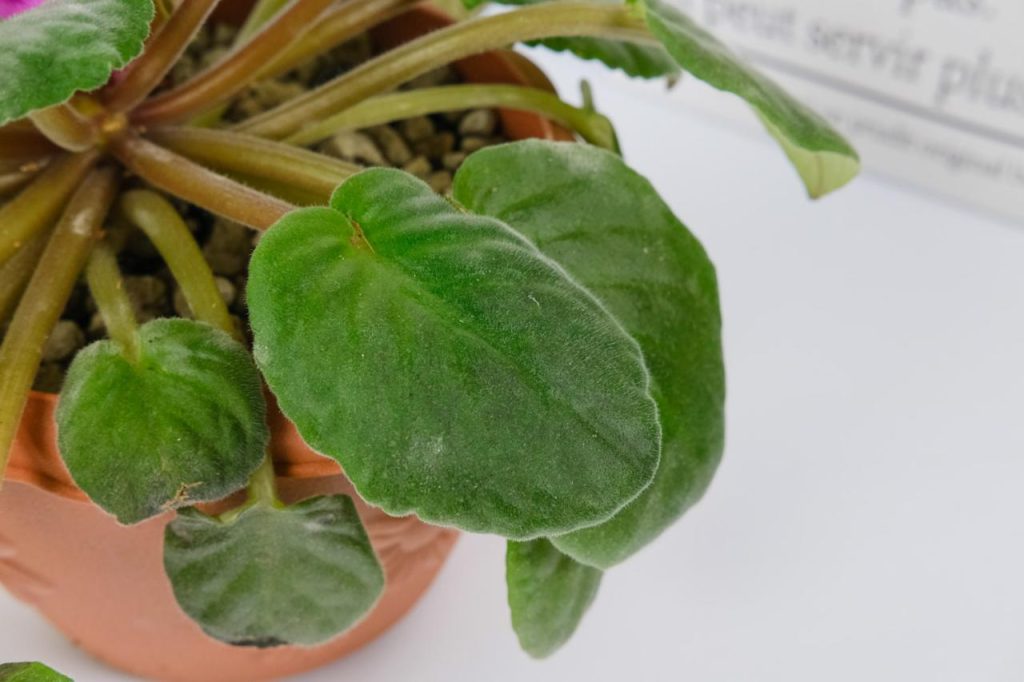
University of Georgia Extension describes weak, elongated leaf stalks and poor flowering under insufficient light, and pale or scorched areas under excessive exposure. These are clues to assess alongside watering and plant history, not a diagnosis from one leaf.
Compare new growth after a correction. Existing damaged tissue is not a reliable measure of whether a better position is working.
Consider the window and the season
Smithsonian Gardens recommends filtered light during brighter conditions and notes that weaker winter light may require a different arrangement. Window orientation is useful context, but nearby buildings, curtains and distance from the glass also matter.
Keep leaves clear of cold glass and avoid repeatedly shifting the plant between extremes. If using a growing light, follow equipment guidance for the actual setup rather than copying a distance given for an unrelated lamp.
Make a simple comparison
Record the chosen position, photograph the rosette and note buds or new leaves. If several care changes were made together, acknowledge that the response cannot be assigned to light alone. For other reasons for a poor display, see African Violet Flowering: Growth, Light and Maturity.
Photographs for comparison