The plants that die in a garden are not usually killed by forgetfulness. They are killed by attention: watered too regularly, fed at every sign of a problem, moved to a better window, and repotted because a new pot was bought. Four habits, all well meant, and together responsible for most of the empty containers on the shelf.
Watering every day
Water on a schedule is the single most destructive act in pot gardening. The correct rule is that a plant that is not dry does not get watered, and a plant that is dry gets watered properly rather than sprinkled. Two working practices follow from that. Push a wooden skewer or a toothpick 2 to 3 cm into the compost, leave it ten minutes, and pull it out: a pick that comes away dry means the pot is ready, and one with damp on it means it is not. Then water slowly at the base until it runs freely out of the drainage hole, and stop. A drink that does not reach the bottom of the pot is worse than no drink, since it wets the surface and leaves the roots parched.
Feeding to fix poor growth
The assumption behind frequent feeding is that a plant growing badly is short of food. Usually it is not. A plant raised in a reasonable compost is not hungry, and fertilizer applied to a plant whose roots are in trouble adds salt to a damaged system and speeds the decline. Feed weakly at intervals of half a month to a month, prefer an organic material such as rotted poultry manure or bean cake, bury a slow solid feed at the bottom of the pot as a base dressing, and dilute liquid fertilizer at roughly 1 part to 50 parts water. That is enough for almost every pot in the house.
Moving it after the sun
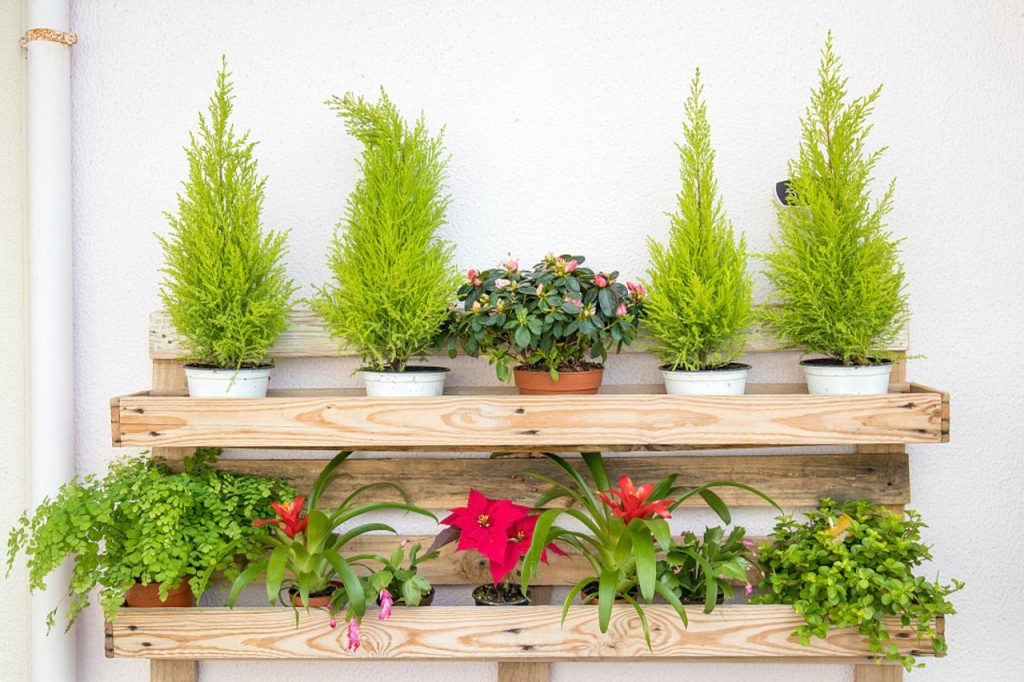
Plants adapt to the position they are in, and every move costs them the adjustment. Choose a place once and leave the pot there: for most indoor plants a south-facing window is the best position available. An east or west balcony with three or four hours of sun suits the plants that flower on short days, including crab cactus, kalanchoe and poinsettia. A north balcony is not a failure, it is simply a constraint, and it means choosing shade-tolerant plants rather than coaxing sun plants through it. Camellia is the plant that proves the rule, since moving it repeatedly is a reliable way to lose every bud. Rotating a pot a quarter turn each week to keep growth even is a different thing from shifting it to another room.
Repotting for the wrong reason
A new pot is not a reason to repot. The right times are spring and autumn, the growing seasons, when a disturbed root system recovers into new growth rather than sitting out a cold or hot spell. Work the roots while the plant is out, cutting back old, dry and damaged growth, and go up one size rather than to the biggest pot that will hold soil. A fresh mix of vermiculite, perlite and compost at 1:1:3, with base fertilizer at the bottom, is a dependable starting point for anything that is not a succulent.
How often to feed, and what to do after a repot, is at feeding potted plants. Pot material is at which pot to use, and the loose open mixes named above are compared at propagation and potting media.