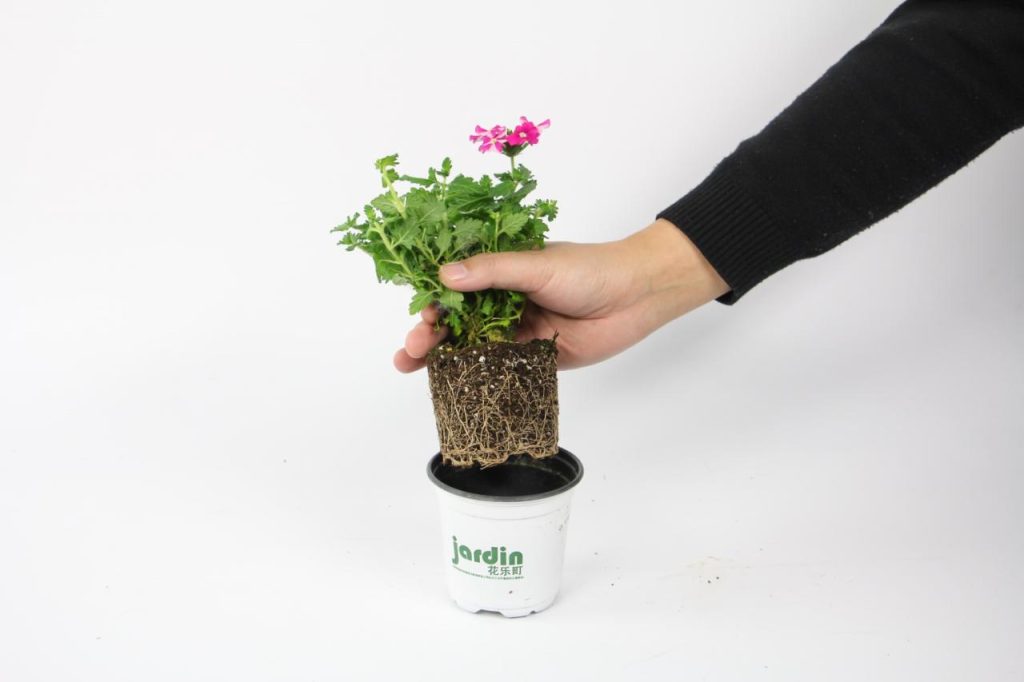
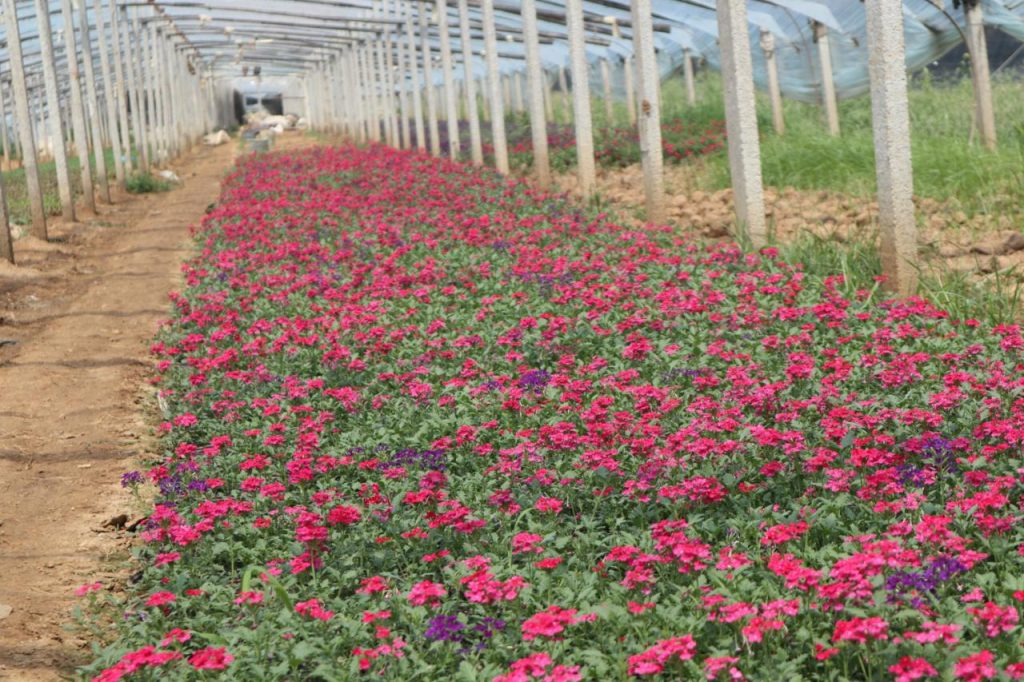
Choose garden verbena for the space its stems will occupy. Flower colour matters, but so does whether the plant makes a mound, spreads over an edge or grows more upright.
Match habit to the planting
NC Extension’s garden-verbena profile lists mounding, trailing and upright hybrids. Its named examples include mounding Aztec plants, trailing Lanai forms and upright-spreading Tuscany forms. Use a label for the particular selection rather than assuming every plant in a mixed tray behaves alike.
For a border, consider access around the plant and neighbouring growth. For a hanging container, check whether stems will extend over the rim and whether the arrangement will remain easy to water and inspect.
A documented spreading series
Suntory describes its Tapien series as spreading, fine-leaved verbena. That is the breeder’s description of a named range, not evidence that every verbena is equally hardy, disease-free or suitable for the same climate.
Questions to take to the nursery
- What is the full series or cultivar name?
- What mature habit and size should be expected locally?
- Is the plant supplied from seed or vegetative propagation?
- What winter treatment is recommended for that selection?
Keep the answer and label together. For an established plant’s display, see Garden Verbena Flowering: Plant Habit and Seasonal Conditions.
Photographs for comparison