Marigolds grow fast and flower for a long season, so they need more feeding than most annuals in a pot. The schedule that works is unglamorous: a base feed at planting, a steady fortnightly liquid through the growing phase, and a deliberate step back once the colour arrives.
Planting and the base feed
Sow in spring, and once the seedlings are handled, three to a pot is the usual planting rate for a display container. Put organic matter into the pot before planting, dug into the lower part of the mix rather than sitting at the surface where the young roots are. A deep base feed is the one application that does not damage a marigold, because the roots reach it gradually as they grow down.
Soil matters more here than it does for most annuals. Marigolds want a deep, loose, free-draining profile; in a bed that means working the ground to around 20 cm, breaking the surface tilth down fine and levelling it before sowing. A compacted shallow layer gives a plant that wilts in a warm afternoon no matter how much water you give it.
The growing phase
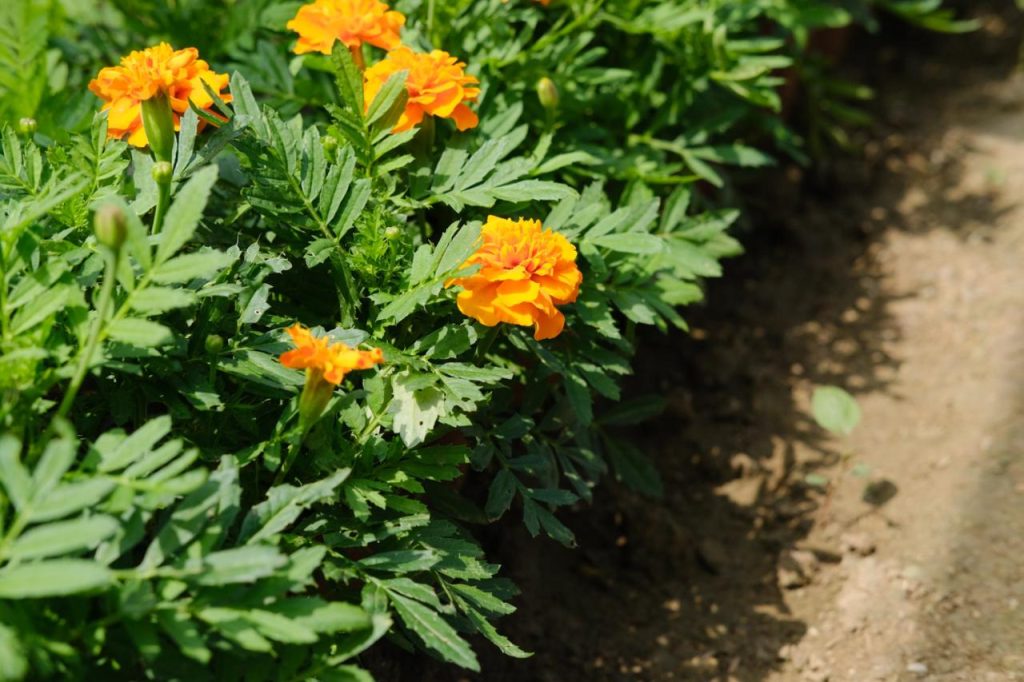
Work the plant into a sunny position about a week after potting, keep watering generous while it is making growth, and feed every fortnight with either a liquid organic manure or a compound fertiliser.
One caution the growers who feed heavily learn the hard way: do not lean on a single fertiliser type all season. A pure high-nitrogen liquid produces a large, dark, leafy plant with few flowers, and an exclusively organic feed can fall short on phosphorus and potassium in the second half of the season. Alternating the two, and keeping nitrogen the modest partner rather than the main one, is what holds the plant in flower.
The general principle of combining a slow organic base with measured inorganic top-ups is set out in the comparison of organic with inorganic fertiliser. For a plant that dislikes rich feeding altogether, the lean pot mix recommended for rosemary takes the same argument to its opposite extreme.
Flowering, and the field version
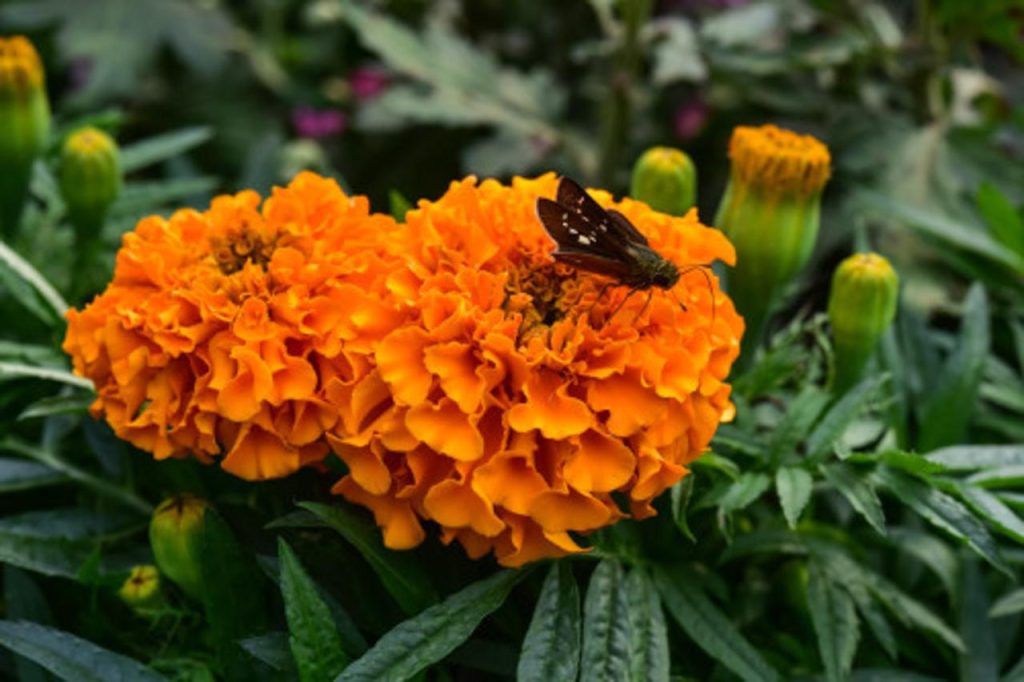
Once flowers are opening, ease the feeding rather than stopping it outright. A continuous bloomer like a marigold draws on reserve through the season, so an occasional dilute feed keeps the later flushes coming; what you stop is the nitrogen. Keep the mix moist and open, and do not let a pot dry out completely between waterings once the plant is carrying blooms.
For an outdoor sowing the timing changes: feed before the flush, and if you are drenching rather than watering at the root, do it in the early evening rather than midday. A foliar feed applied under strong sun sits on the leaf long enough to scorch the edges, and evening application also keeps the liquid off the flowers, which is where a concentrated spray does its visible damage. In a bed, a measured quantity of organic manure worked into the prepared 20 cm layer at the start replaces most of the in-season feeding, and the fortnightly liquid becomes a top-up for tired plants rather than the main programme.