Pitcher plants come from different habitats and need different conditions. Identify the genus before choosing light, water quality, compost or winter treatment.
Identify the genus first
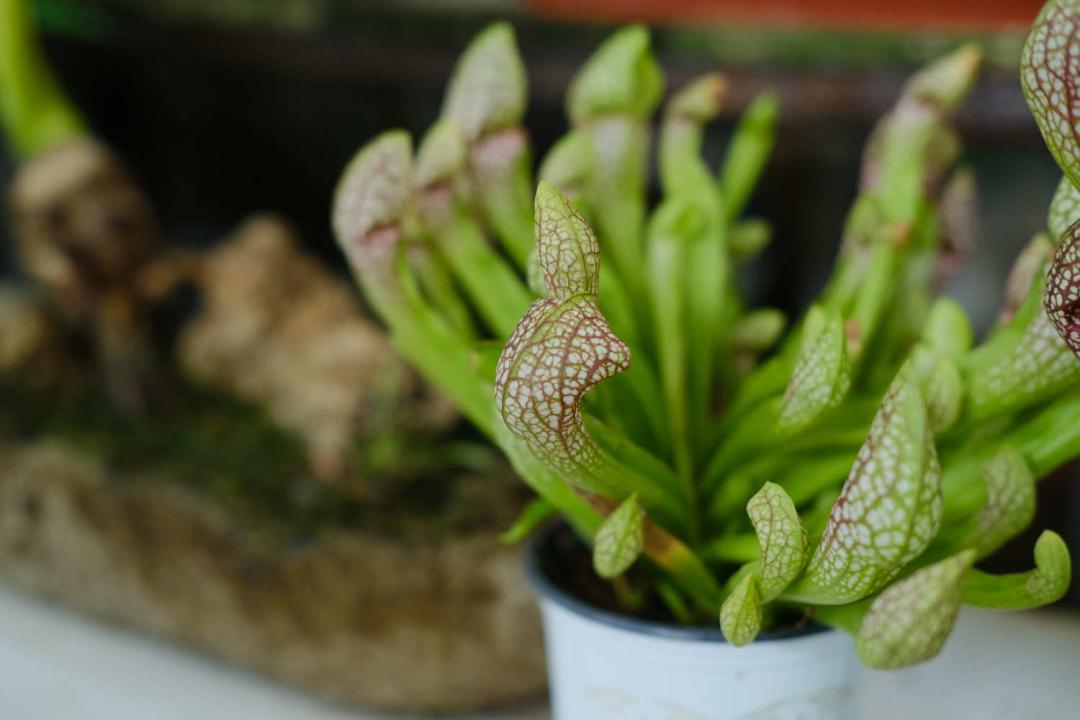
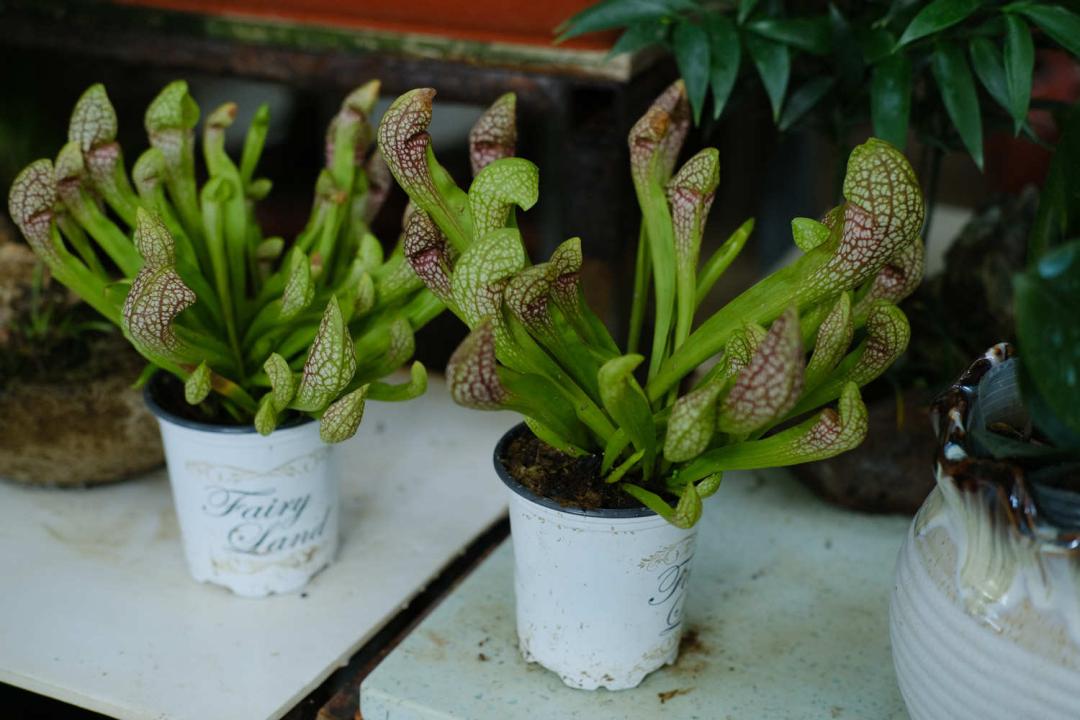
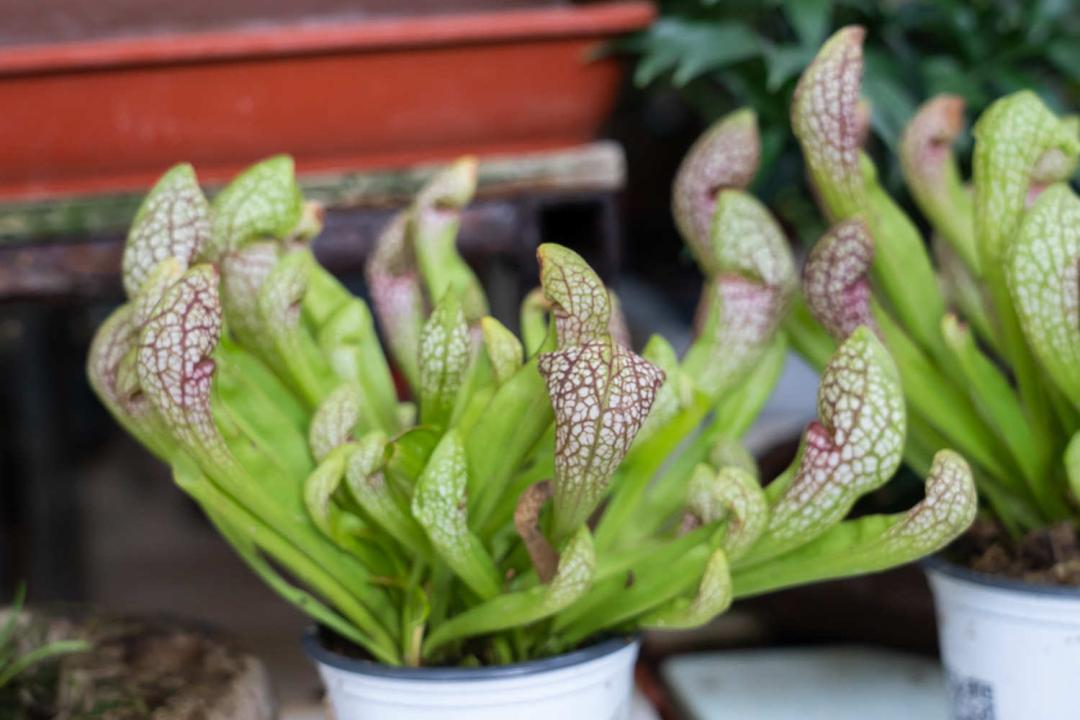
Pitcher plant is a common name for different carnivorous plants. Nepenthes, Sarracenia and Cephalotus do not share one universal care routine. A reliable label is the first step before buying compost or changing water levels.
Match the growing conditions
Some pitcher plants are tropical; others follow a temperate seasonal cycle. Check the species or hybrid for light, temperature and winter requirements. Do not keep a tropical plant cold because a different pitcher plant rests outdoors.
Use appropriate water and medium
Mineral content matters for many carnivorous plants. Follow specialist guidance on suitable rainwater or other low-mineral water and a low-nutrient growing medium. Ordinary enriched houseplant compost is not a safe default for the whole group.
Avoid a universal standing-water rule
Some temperate bog species are grown with water beneath the pot during active growth. That does not mean every tropical pitcher plant should stand permanently in a deep tray. Inspect roots and use instructions for the identified plant rather than treating the pitcher shape as a care category.
Related reading: Ornamental Taro Care: Moisture and Winter Rest.