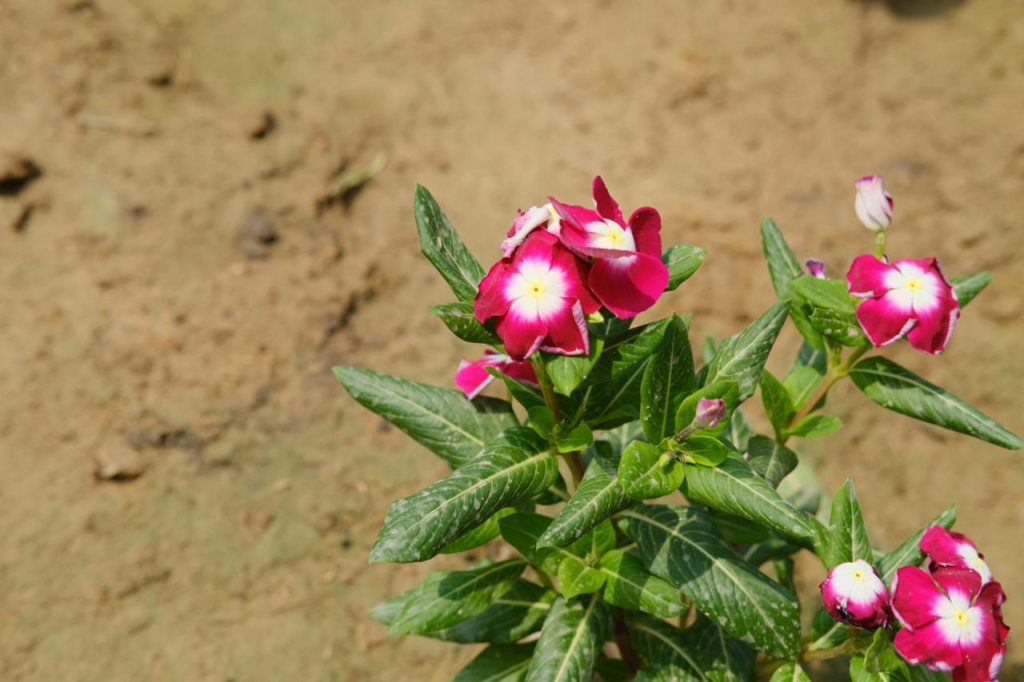
Periwinkle is a tropical plant that behaves as a bedding annual: it loves warmth, will not take cold, hates a wet root run, and flowers for long enough to be worth the space it takes. It is also the cheapest plant to bush out properly, and almost nobody does the pinching.
Soil, water and the two pinches
Ordinary soil grows it, provided the ground drains and moves air; sandy open loam is best, and saline or lime-heavy ground is not worth trying. Pot it into a rich, loose, humus mix. Water sparingly, since a wet compost slows growth and rots the roots, and in an outdoor bed, drainage after heavy rain is the difference between a plant and a collapsed one.
Then the shaping. When a seedling has six or seven leaves and stands about 7 to 8 cm tall, pinch out the growing tip. Repeat once more, three to five weeks later, when the side shoots have lengthened, taking the tip off each and leaving four leaves below. Two pinches and the plant becomes a low branched bush that flowers from every branch instead of a single upright stem carrying a few blooms at the top.
Feeding and deadheading
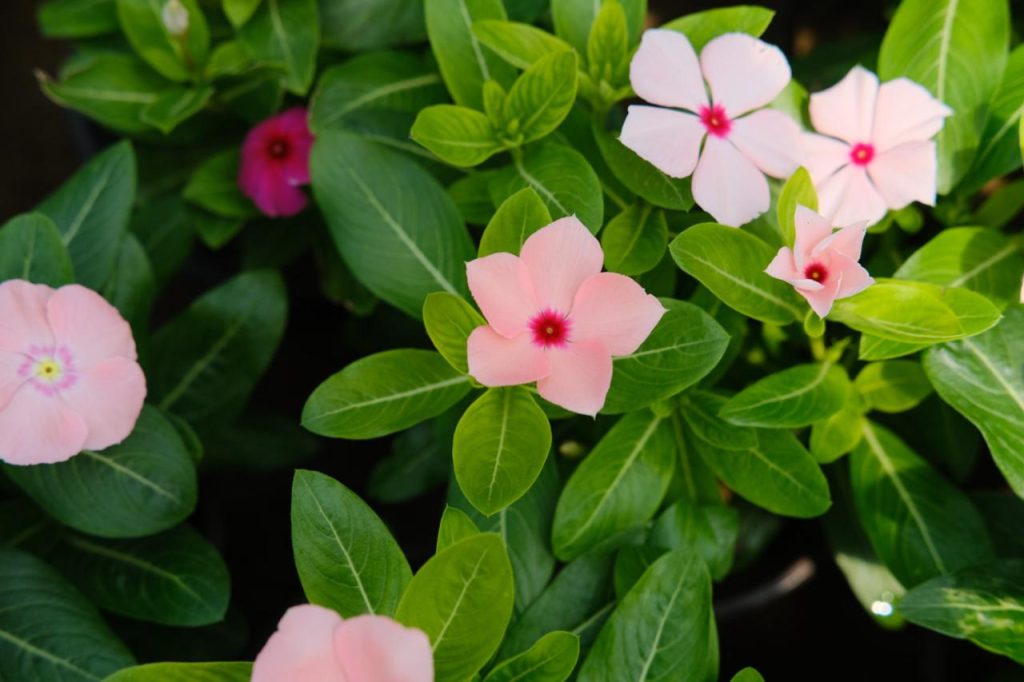
Nitrogen goes in with the growth, phosphate follows at bud formation, and both stop when the first flush is finishing. After each flower, cut the spent cluster off; left alone the plant sets seed and the display thins out. Seed pods ripen from September onward and split when dry, so harvest as the fruit yellows rather than waiting for the whole plant to look ready.
Light, heat and winter
Full light. A plant kept in shade yellows, and alkaline compact soil with poor drainage and no air produces the same result: pale leaves and no flowers.
Keep it warm and, above all, dry in winter. Ten to twelve degrees holds a periwinkle alive; fifteen to twenty indoors and it goes on flowering without a break. Watering must be cut back hard through the cold months, because a cold wet compost finishes the plant faster than the temperature would on its own. Bring it in before the first cold night and put it back out only when spring has properly opened.
Raising new plants
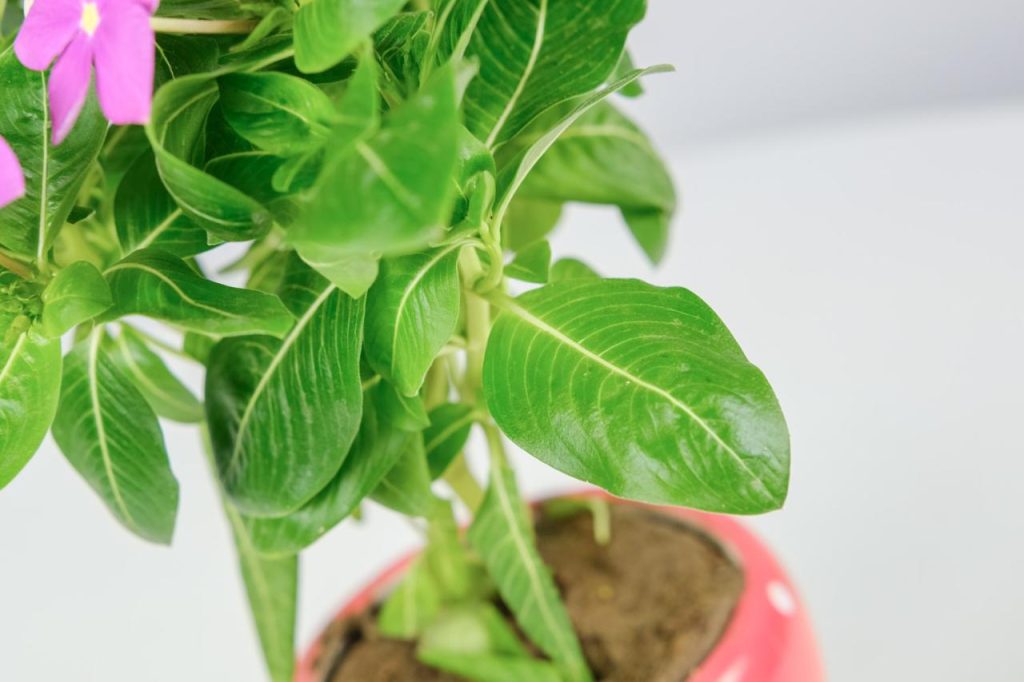
Sow in early April, broadcast or in rows, and the seedlings come away slowly at first. Prick out at three or four leaves, pot on when six to eight true leaves are present, and move up through progressively larger containers rather than straight into a big pot. Cuttings work too: take 8 cm of tender new growth from an older plant in spring, keep it in moist sandy loam at 20 to 25 °C, shaded and humid, and it roots. Named plants raise from seed, and the plant is normally treated as a two-year rather than a permanent one.
The sowing depth and pricking-out rules are at how to sow flower seed, the softwood cutting season at what to cut in June, and the yellowing that gets mistaken for hunger is diagnosed at reading a yellow leaf.