Most sowing failures happen before the seed goes in, in the choice of container and the depth of the hole. The seed itself is rarely the problem.
Before the seed goes anywhere
Large or hard-coated seed benefits from soaking, and the water should be warm to hot for those, cold for the fine-seeded kinds, while dust-fine seed should not be soaked at all. The purpose is to let imbibition start evenly so the batch comes up together rather than over a fortnight.
Use a seedling tray or box rather than a pot, and rather than the border. In a tray you control moisture, you can count what germinated, the nutrients are uniform across the batch, and the seedlings stay straight enough to lift cleanly. Sown directly into a bed, the same seed gives you an unknown germination rate in soil whose temperature you cannot influence and whose surface organisms are not chosen by you.
The substrate should be loose, full of air, moisture-retentive and clean. A mix of peat, coir and vermiculite does all four jobs. Fill, level the surface and stop there: the mix does not need firming into a crust, it needs only to be flat.
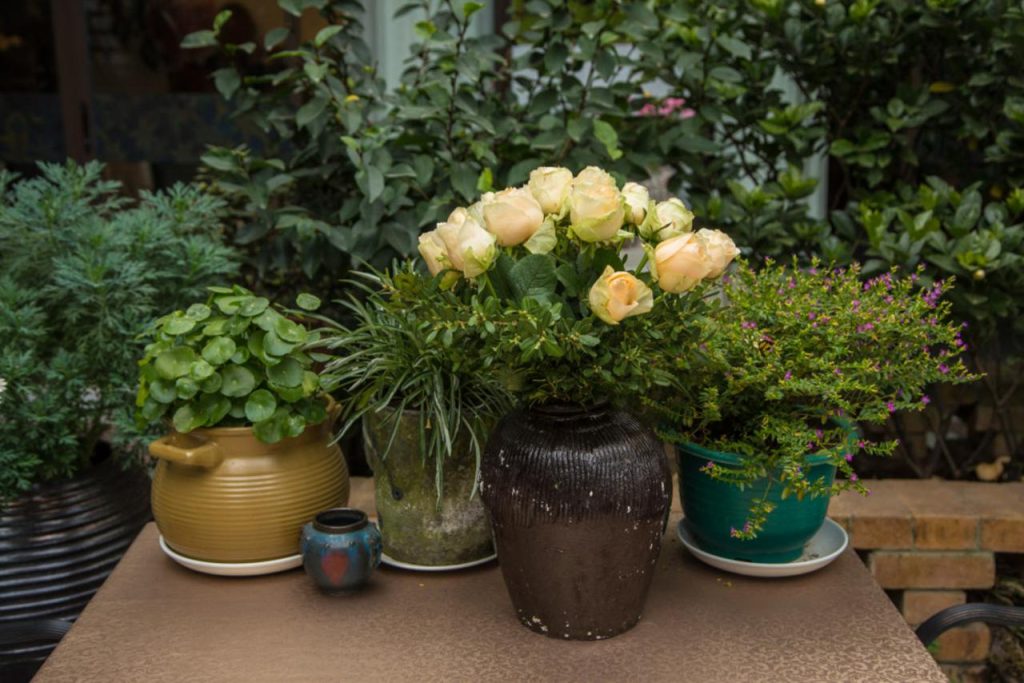
Sowing
Water the tray before sowing so the seed lands on a moist surface, and water in with a fungicide at that stage rather than waiting for problems. Then density: in cell trays, one to a cell or two at most; in a flat, a seed or two per square centimetre of surface rather than a scatter that will crowd within a week.
Large seed can be distributed evenly and picked to position. Fine seed cannot be seen or handled, so mix it with dry fine sand and sow the sand; the seed goes where the sand goes, and the distribution is even because the sand does the measuring.
Depth is the number worth remembering. As a rule a seed is covered to about two to three times its own diameter, and the smaller the seed the shallower it goes. Fine seed on the surface with a sieve of medium over it is right; buried an inch down it will never reach the light. Water afterwards with a fine mist head so nothing moves or sinks.
Cover the tray with glass or plastic film to hold humidity around the seed, and in winter the same cover holds warmth. In high summer leave the cover off, or keep it propped open at the sides, because a sealed tray in heat cooks the batch. The moment germination is through, the cover comes off entirely.
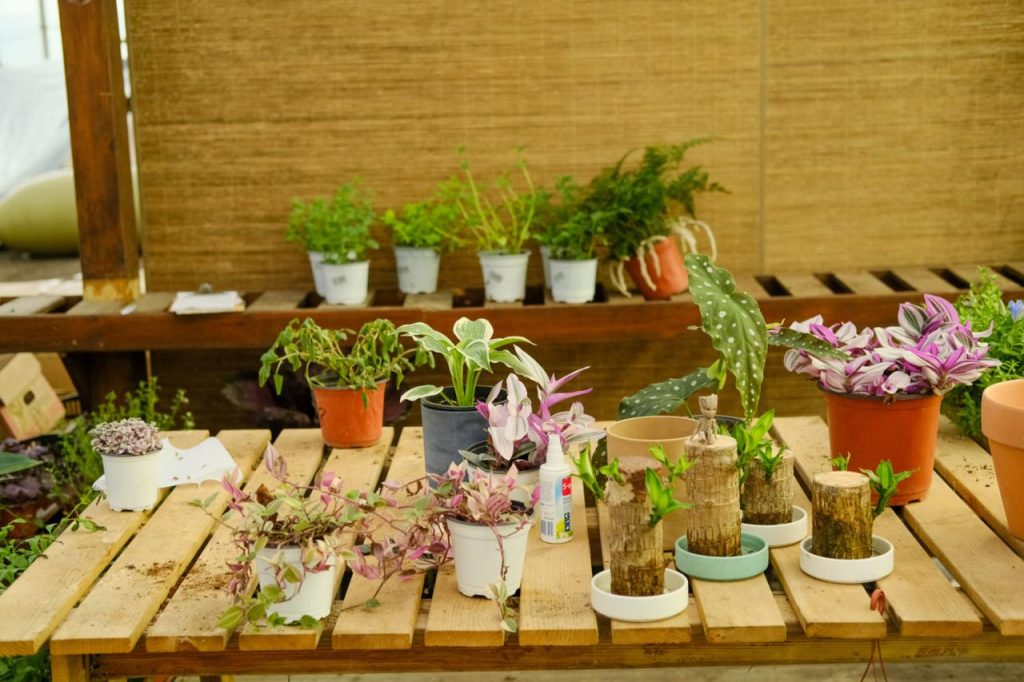
After germination
Most seed germinates around 20 to 25 °C, with the exceptions being the species that need a cold period or a hot one; those are the ones worth checking rather than assuming. Keep the surface moist but not running wet, less in winter and more freely in summer.
Light matters from the moment the coat splits. Seed raised in dim conditions grows long and weak, and no later feeding fully repairs a leggy seedling, so the first true leaves are the point at which a bright position starts paying.
Prick out or pot on when the seedlings are big enough to handle and no later, because that is when they stop shading each other and start competing for root room. Delay produces check, and a checked seedling can take a season to notice it is free.
The tray medium is sterile to begin with, which is the point of sowing in a mix rather than dug soil. If you are raising seed in homemade compost or garden soil instead, disinfect it before use; the soil-disinfecting methods cover what works, and damping-off is the reason the effort is worth it. Once the pricked-out seedlings have rooted, the first feeding is a fraction of the rate described in how to feed without overdoing it.
Pingback: Catharanthus Care: Pinching, Water, Overwintering
Comments are closed.