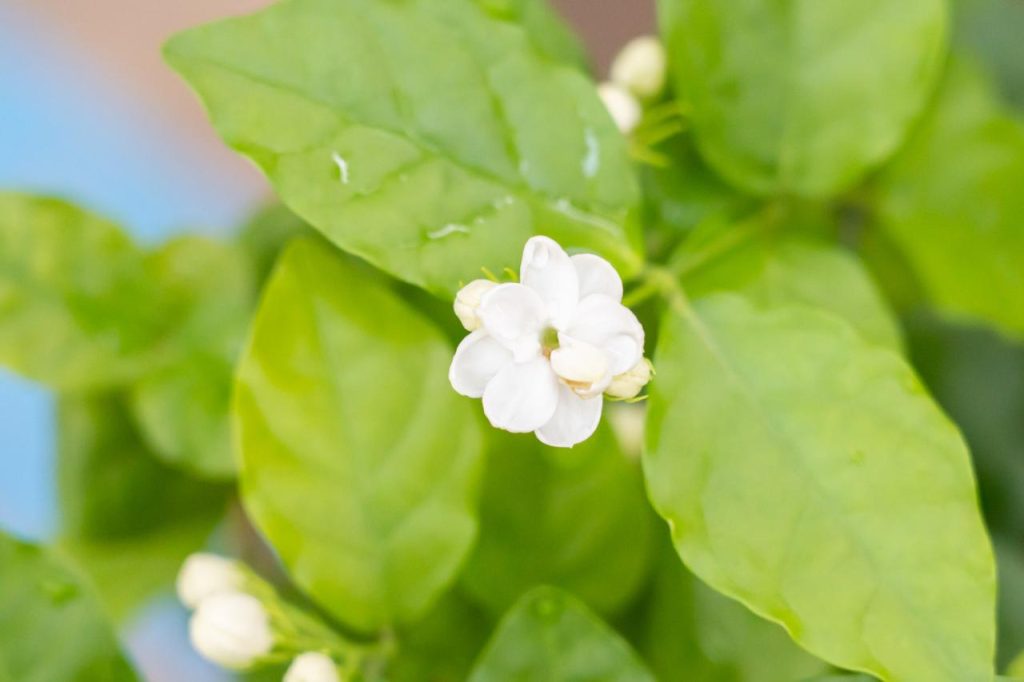
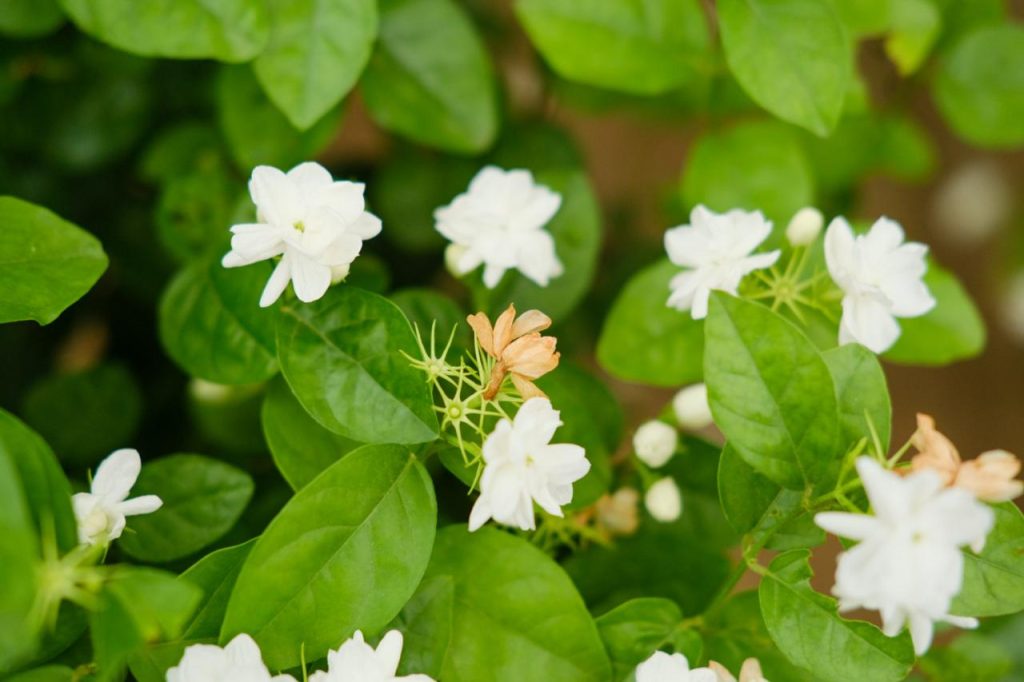
Arabian jasmine, Jasminum sambac, is a warm-growing shrub or scrambling climber with fragrant white flowers. It should not receive a winter routine copied from a hardy outdoor jasmine simply because the common names match.
Keep the nursery identification and choose a sheltered, suitably bright position. Indoors or under glass, the RHS recommends bright light with protection from hot sun. That is more precise than telling every plant to receive the strongest available sun all day.
Moisture and feeding
Provide a moist but well-drained root environment during growth. Check the compost and drainage before watering, and adjust when conditions become cooler or growth slows.
Use a suitable feed at the labelled dilution when appropriate. More fertiliser is not a guaranteed answer to poor flowering, especially where the plant has weak light or an unsuitable root environment.
Pruning and new plants
Identify the plant's growth and flowering stage before pruning. Decide whether you are removing dead material, arranging young stems or reducing an established framework; repeated hard cuts are not one universal jasmine routine.
Semi-ripe cuttings are one propagation option. Prepare the rooting arrangement and label the material before collecting stems, rather than leaving cuttings exposed while assembling the equipment.
If flowers are scarce, record recent pruning, feeding and changes of position. Inspect for pests and review the new growth. A careful growing history gives you a better basis for the next step than adding another feed after every disappointing flush.
Images
Related reading: Checking potted plants for aphids.
References
Horticultural references checked on 29 October 2026.