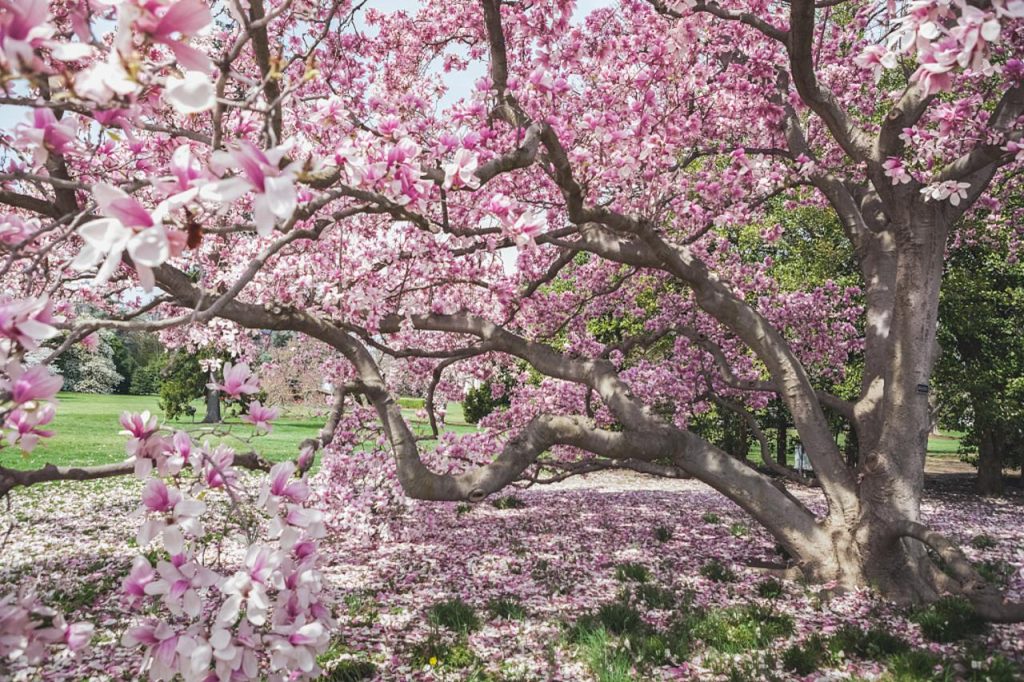
Magnolias range from compact shrubs to large trees. Before planting, check the species or cultivar and its eventual spread. A young nursery plant can make a surprisingly large tree, and repeated hard pruning is a poor substitute for choosing the right size.
Match the plant to the soil
Many magnolias prefer slightly acidic or neutral soil, but some tolerate alkaline conditions. Test the site and check the named selection rather than assuming every magnolia must receive an acidifying treatment.
A sheltered position with suitable sun or light shade and moist, well-drained soil is a useful starting point. Early flowers can be damaged by frost even when the tree itself is hardy.
Help a new planting establish
Inspect moisture around the root ball during dry weather. Newly planted trees need more attention than established specimens, while a wall can shelter roots from rainfall. Container plants also need ongoing watering and feeding suited to their growing medium.
Prune for a reason
Magnolias generally need little pruning once settled. Identify damaged or poorly positioned growth before making cuts, and consult guidance for the type you have. If flowers are scarce after heavy pruning, do not assume extra fertiliser will immediately restore the display.
Related reading: Magnolia flowering time.
References
Horticultural references checked on 29 October 2026.