Magnolias differ in flowering time, and not all bloom before their leaves appear. Confirm the species before using a spring calendar to judge your tree.
What the tree gives you
Magnolias vary from compact shrubs to substantial trees, with different flower colours and seasons. Check the species or cultivar before using a single flowering photograph to choose a permanent planting.
A note on the name, since the confusion is common. Magnolia is a tree in its own family. It has nothing to do with orchids, whatever the translated names suggest, and it wants sun, depth of soil and space rather than a bark basket.
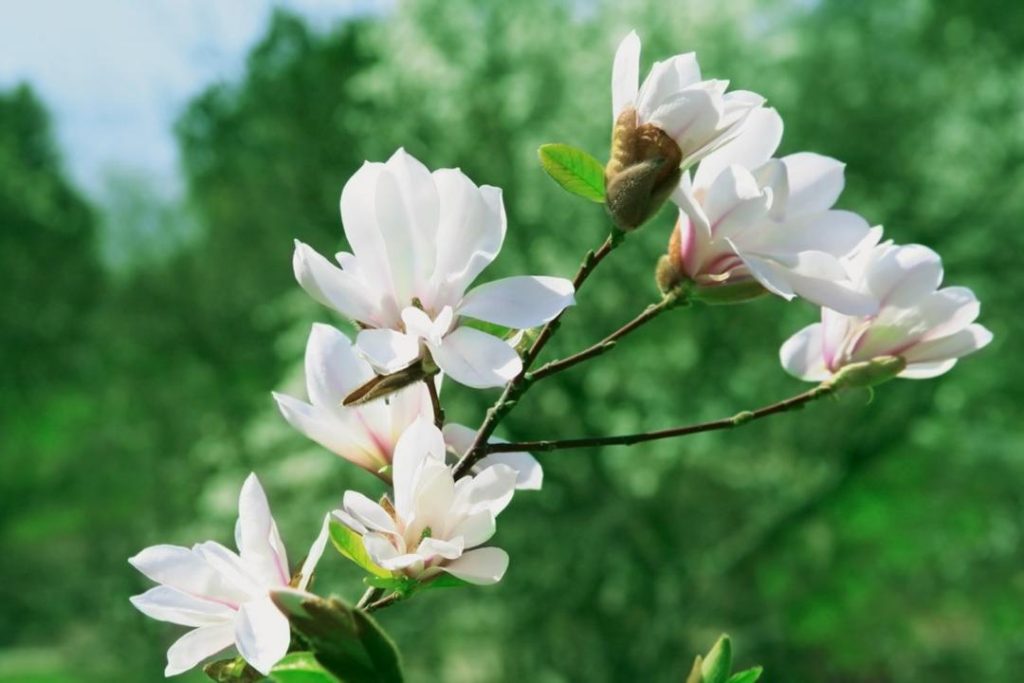
Moving one without losing it
Transplant while the tree is still dormant: before the spring flowers open, or after the autumn leaves have fallen. Those two windows are the only reliable ones, because a magnolia in active growth transpires heavily from a root system you have just cut back.
Young trees go with a soil ball, and small saplings especially must be lifted with earth intact around the roots rather than bare. Wrap the ball, keep it damp, do not leave the root plate standing in sun and wind, and water in well at the new planting. Staking for a season is worth the trouble on any tree above head height.
Feeding for a full crown
A magnolia that looks thin in flower is usually a magnolia that has been fed at the wrong time. The best feeding season is autumn, October and November, when the tree is going down and can store what it is given. Then, as the flower buds swell in spring, two or three light feeds carry the bloom through to an even display across the branches.
Flower buds need phosphate more than they need a nitrogen rush, and the timing of the two matters. Judging which fertiliser a plant wants is the useful habit here: autumn is for carrying the tree through, spring bud time is for the bloom, and a nitrogen feed in high summer just produces soft growth that will not ripen before cold weather. A balanced compound at the root zone, watered in, does the job without any cleverness.
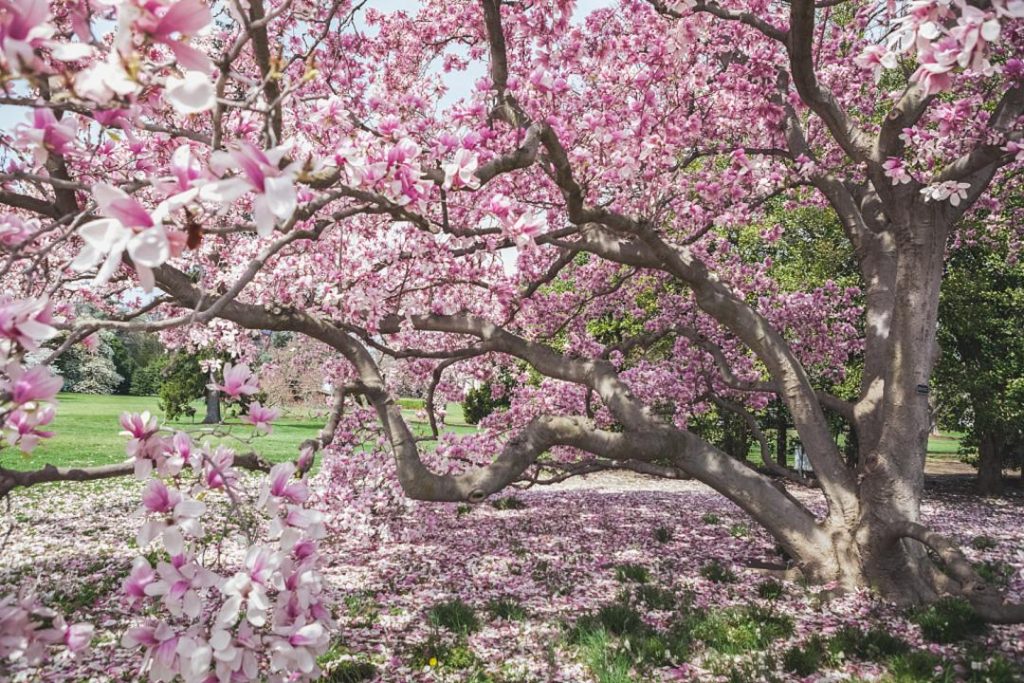
Why people plant it
Magnolia has carried a standing meaning in the region for a long time: dignity, and a soul that will not bend. It is a traditional gift of respect toward a teacher, which is a strange and pleasant reason to grow a tree, and it has been written about by poets for centuries, being one of the first large flowers of the year.
In the garden it does the ordinary jobs well. It is a tree for a courtyard where someone will look out of the window in March. Two other flowering woodies do a similar job at a different date. Read the red-twigged dogwood for winter stem colour. For foliage that keeps the interest after the petals fall, see the purple-leaved plum type. Plant the three of them and the corner is never empty.
Related reading: Magnolia Care: Choosing a Site, Watering and Pruning.