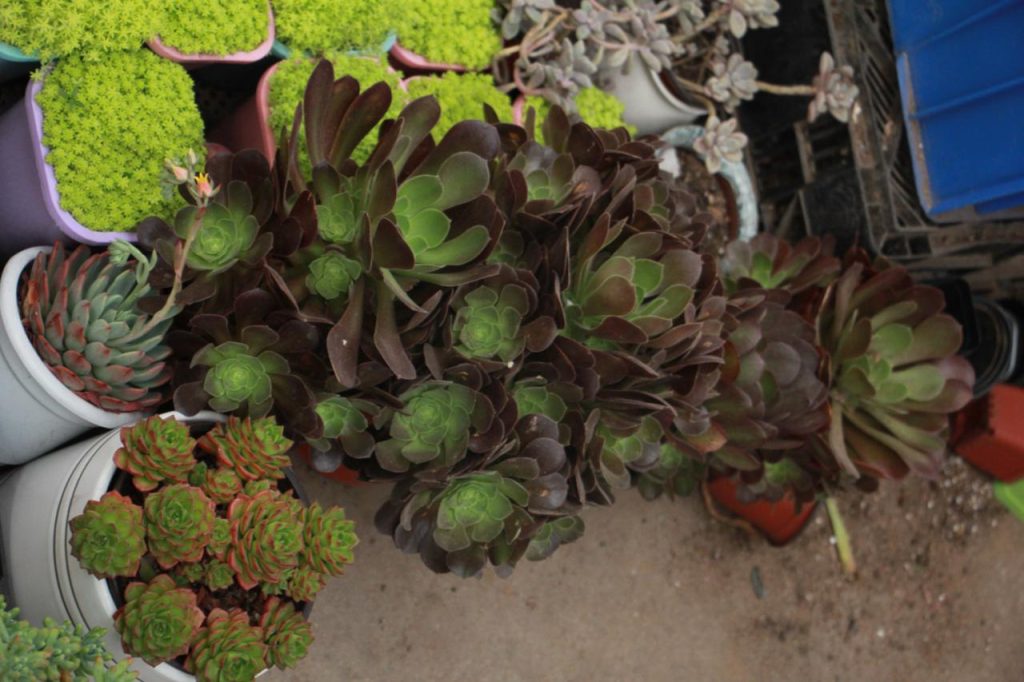
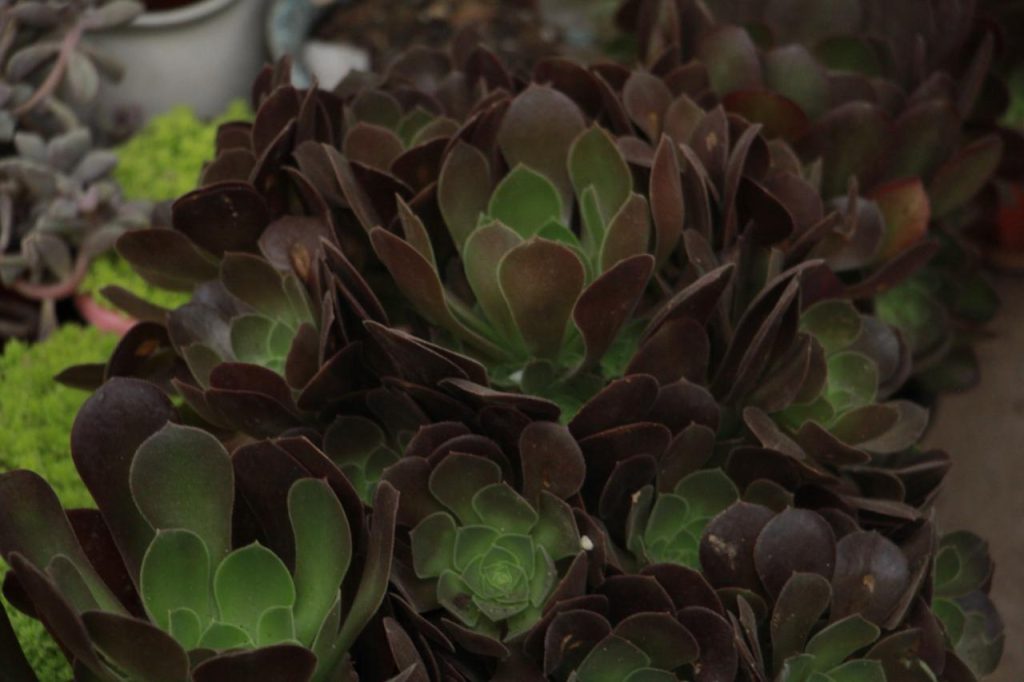
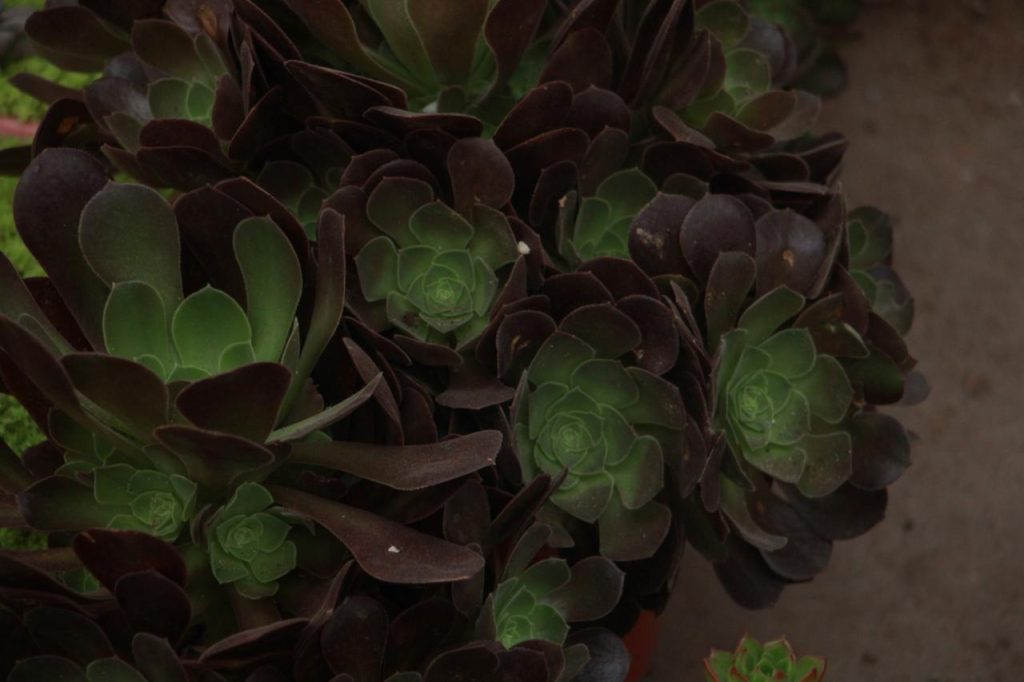
A tree-shaped aeonium is a plant with a visible stem and a balanced crown of rosettes. Developing that outline is a gradual shaping job; it is not a reason to strip every lower leaf or cut a weak plant heavily.
Assess the framework first
Check the stem base and existing branches. Decide which growth you want to keep and whether the pot is stable. Soft or collapsing tissue needs investigation before pruning for appearance.
The RHS succulent guide allows trimming of leggy, branching succulents and describes clean cuts above a node. That is a general method, not a guarantee that every bare stem will branch exactly where you want.
Work with growth you can observe
Make a small, deliberate change and record it. Avoid combining major pruning, a much larger pot and a new feeding routine, which makes the plant’s response harder to interpret. A top-heavy specimen may need a more stable arrangement as well as shaping.
The RHS ‘Zwartkop’ profile distinguishes watering during growth from its dormant period. Use the plant’s actual activity and conditions rather than treating a warm room as proof that heavy watering is appropriate.
Keep a record of the developing shape
Photograph the plant from the same side after each stage. Compare new growth and stem soundness, rather than expecting old damage to disappear. If choosing a starting plant, Choosing a Black Aeonium: Size and Plant Condition explains what to inspect before buying.
Photographs for comparison