A monstera cutting roots in four to five weeks if it has two things: a node, and an aerial root. Everything else in this article is detail. Gardeners who lose monsteras to rot almost always lost them because they took a piece of stem with no root potential and then drowned it trying to force it.
The species is Monstera deliciosa, and it is forgiving about almost everything except this one decision, which is made at the moment the blade goes in rather than in the weeks of waiting that follow.
When to take the cutting
Spring and autumn. Not because monstera is fussy about calendar months, but because those two windows give you warm temperatures without the extremes. Growth is active, the plant recovers quickly from the cut, and you can keep the cutting in a bright room without worrying about a cold snap through a windowsill at three in the morning.
Aim for roughly 18-26 °C. Below about 15 °C, root initiation slows to the point where the cutting sits doing nothing long enough for rot to get a foothold. Above 30 °C, the single leaf you’ve left on the cutting loses water faster than a rootless stem can replace it, and it collapses from the edges inward.
Autumn cuttings work fine but need somewhere to go. Once night temperatures drop near 8 °C, move the pot indoors, out of the path of any draught from a window. Frost does not nibble at a monstera cutting; it kills it outright.
Cutting the piece properly
Ten centimetres of stem is plenty, and it should carry two or three buds. Cut just below a node, on an angle, with a blade you’ve wiped with alcohol. A crushing cut from dull scissors damages the tissue at exactly the point where roots are supposed to emerge.
Here’s the part people skip. Look along the stem for the aerial roots — those thick, woody, brown-tipped threads running out from the node into the air. If your cutting has one, take it with the root attached and about a centimetre of stem either side. That aerial root is already root tissue. It will start working in the new pot within days, which is why pieces with one succeed while identical pieces without one sit for six weeks and then go soft.
If the aerial root is long, coil it gently into the pot rather than chopping it off.
Leaves: keep one, remove the rest
One leaf per cutting. Sometimes a leaf and a half if the leaf is small. Every leaf left on is a mouth the stem has to feed with a root system it doesn’t have yet, but you need at least one for photosynthesis, and you need the petiole attached because roots can also emerge from that node.
Trim the petiole of any extra leaves down to a stub rather than pulling them off; tearing into the sheath wounds the stem.
What to root it in
Plain vermiculite or washed coarse river sand are the traditional choices and both work, chiefly because they hold moisture without holding water. A looser mix of leaf mould and garden soil also works and gives the cutting somewhere to feed once roots appear, but it is the option most likely to introduce rot, because garden soil brings organisms you didn’t invite.
Whatever you use, wet it before the cutting goes in, not after. Pushing a cutting into dry media and then flooding it displaces material around the wound and leaves a pocket of air against the cut face.
Make the hole with a dibber or the handle of a spoon, then set the cutting in it and firm the surface with a fingertip. Depth: about two to three centimetres, enough to bury the node and no deeper.
The four weeks after
Keep it out of direct sun. Bright shade, and steady moisture in the medium. Humidity around the leaves matters more than water at the base — a clear plastic bag over the pot, propped open with a chopstick so it doesn’t touch the leaf, does more for a monstera cutting than any rooting hormone. Ventilate the bag daily or the inside of it will go green with algae and the leaf will grey with botrytis.
Around the one-month mark, give the cutting a very gentle tug. Resistance means roots. If it lifts out clean, it hasn’t rooted; leave it another two weeks and stop checking so often.
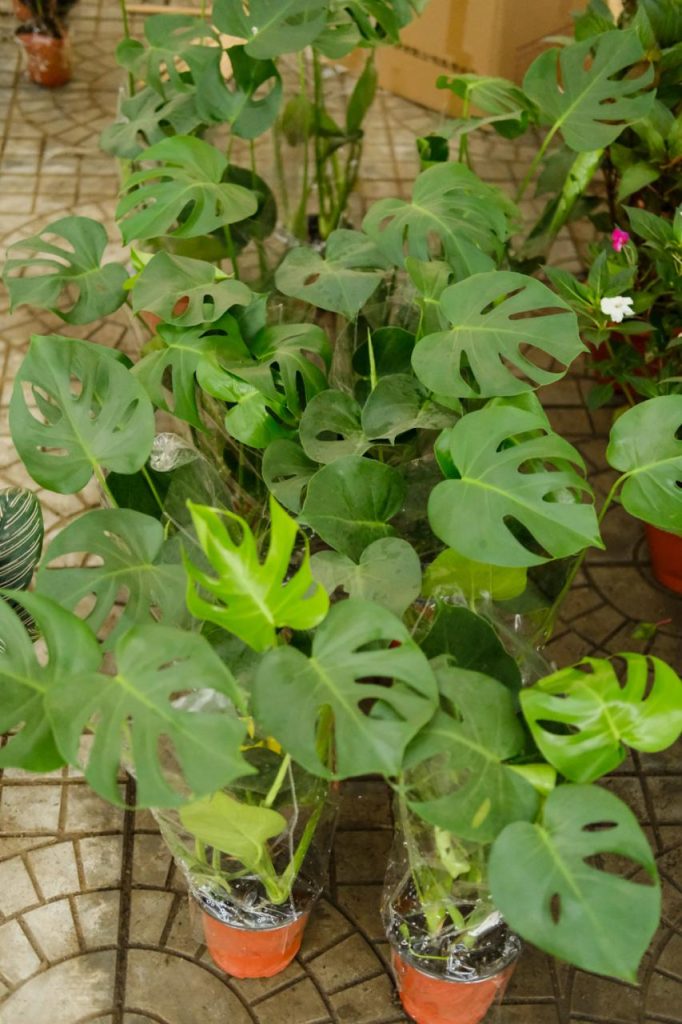
Potting on, and the mistake that follows
Pot up as soon as you have roots, not when you have a big plant. Newly rooted cuttings want to be working on leaf production, and if they’re sitting in vermiculite with roots circling a small space they’ll stall. Use a free-draining houseplant mix with bark or perlite in it, in a pot one size up with drainage holes.
The common follow-on error is treating the new plant like an established one. Water it as the medium dries about two centimetres down, feed nothing for the first month after potting, whatever type of fertiliser you normally use, and keep it out of harsh afternoon sun for another four to six weeks. A rooted cutting is not a mature monstera. It takes about a year of steady growing before the leaves start showing fenestrations, and a plant that was rushed through its first season usually produces several solid, holeless leaves before it recovers.
Problems worth recognising early
Stem going soft at the base, brown and mushy where it enters the medium. Rot, from waterlogged media or from a wound that never dried. Cut above the soft section, let the new cut air-dry for a couple of hours, and restart in fresh vermiculite.
Leaf yellowing slowly while the stem stays firm. Usually normal — the cutting is drawing the leaf down to stay alive while it builds roots. Don’t pull it up in a panic to check.
Leaf edges crisping and curling. Too dry, too hot, or too much light. The bag-and-chopstick fix from above applies here.
Nothing at all happening after six weeks. More likely than not, the piece had no node below the cut. This is where a cutting quietly dies of having never had a chance.
Pingback: Aphids on Potted Plants: How to Get Rid of Them for Good
Comments are closed.