Rose of Sharon is one of the easiest flowering shrubs to multiply from a stem, and almost everyone who tries it judges the result too early. Three to four weeks is the normal window before a cutting is rooted, and a cutting that looks unchanged at day twelve is not a failure. It is on schedule.
When to cut
The reliable windows are after flowering finishes and through the colder part of the year, when the shrub has stopped growing. Take either soft current-season tips or semi-ripe stems from the middle of a shoot; semi-ripe, half mature and half soft, is the more forgiving of the two because it holds water while the callus forms.
Choose a stem with three to five nodes and cut it to 10 to 15 cm. Trim off any flower buds, since a bud on a cutting is a competing demand for the carbohydrate you want spent on roots, and strip the leaves from the lower half of the stem. Exposed leaf nodes under damp medium rot rather than root, and the reduced leaf area cuts the water loss that wilts a cutting before it can take anything up.
Medium, depth and the bag
Push the cutting in to about half its length. Straight vermiculite holds moisture and stays sterile, which is all that is required at this stage; a gritty perlite-and-compost mix works equally well if you would rather the roots had something to grow into afterwards. Water the medium before making the holes rather than after, so the cutting is not washed into a slurry.
In cold weather, put the pot inside a loose plastic bag and keep it in bright light out of direct sun. The bag does two jobs at once: it holds the humidity around the few remaining leaves so the stem does not dry from the top down, and it keeps the root zone a couple of degrees warmer than the room, which is the difference between three weeks and six.
Do not leave the bag sealed indefinitely. Vent it every few days, because the same still, wet air that prevents water loss also invites grey mould on any leaf that touches the plastic.
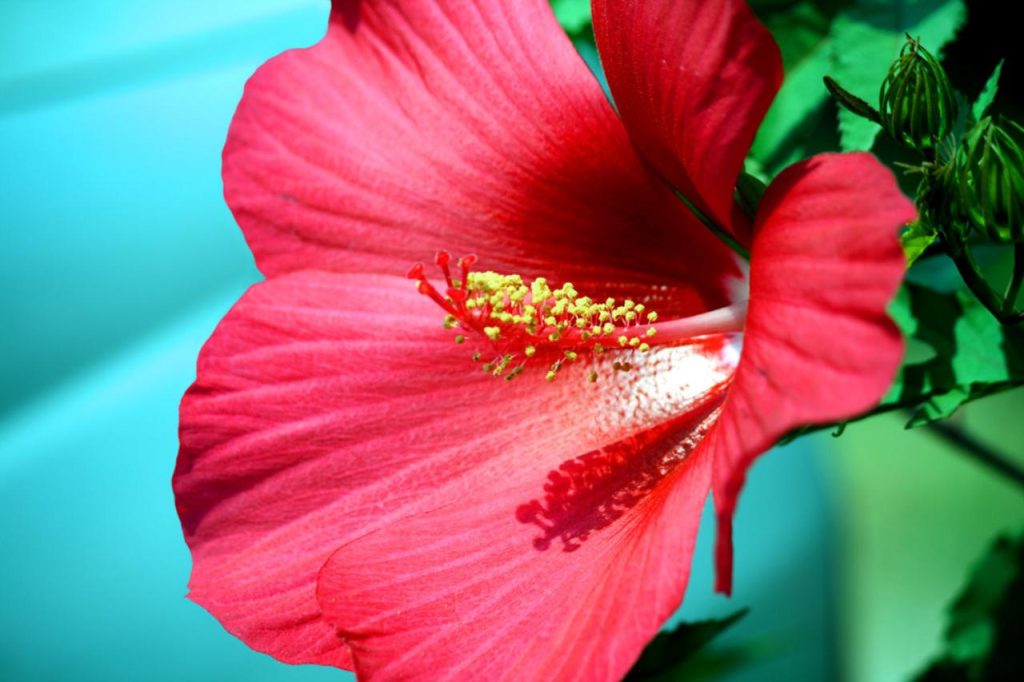
After the roots
A rooted cutting goes into a larger pot and is grown on as a seedling rather than planted out immediately. Feed lightly, keep the mix moist while the root ball fills the new pot, and only put it in the border once a firm root mass holds the compost together. A young hibiscus with a small root ball planted straight into open ground spends its first season standing still, and in a cold district it is worth keeping the plant under protection through its first winter either way.
For the general rules behind all of this, which buds to keep, how deep to place a stem, why the medium matters less than the humidity, see the account of what a cutting actually is. The summer softwood version of the same technique is in the June cutting list.