A moth orchid's roots are as useful to inspect as its flowers. Check the growing medium and drainage before deciding when to water or whether repotting is needed.
Give Phalaenopsis bright filtered light
Choose a position with useful brightness rather than deep darkness, protecting sheltered leaves from abrupt harsh sun. Keep the plant away from damaging cold drafts and excessive heat. A transparent nursery pot helps observation but does not remove the need to inspect conditions.
Check roots and medium together
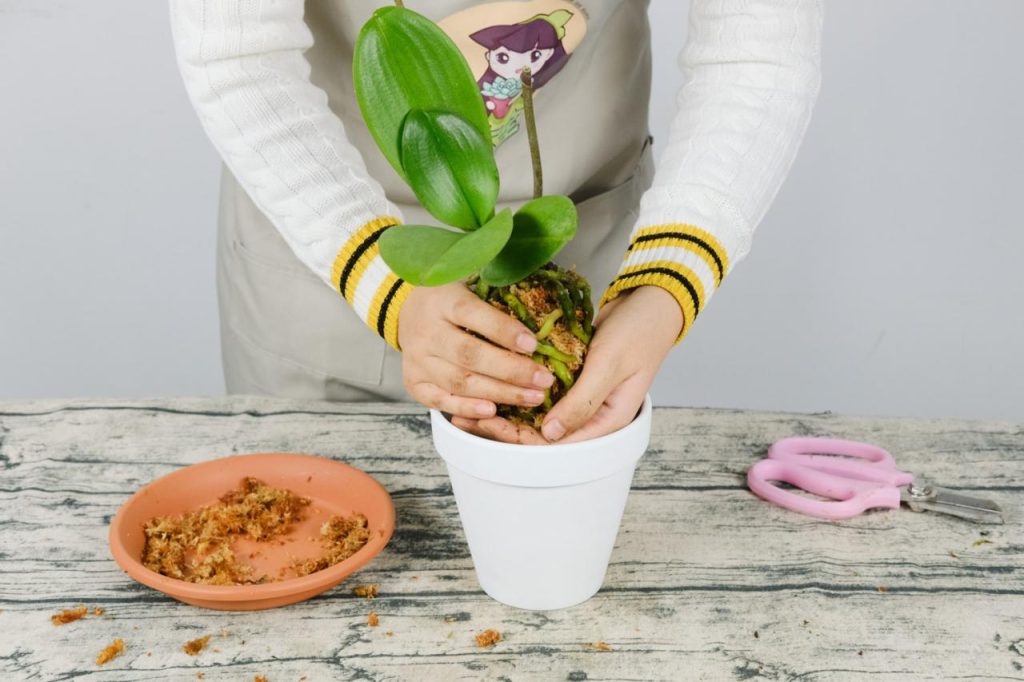
Use suitable open orchid medium and look for firm roots. Exposed roots and material near the surface may dry before the center. Root color can help in some plants, but should not replace assessment of moisture and firmness.
Water and drain thoroughly when needed
Wet the root zone appropriately and let excess leave. Avoid standing water inside a decorative cover or trapped around the crown. Wrinkled leaves can accompany dehydration or roots damaged by saturation, so another soaking is not always the answer.
Preserve healthy growth after flowering
Manage the flower spike according to its condition and the plant's health. Retain sound leaves and roots. Feed appropriately during active growth and repot deteriorated medium at a suitable stage rather than forcing flowers with concentrated fertilizer.
Related reading
Phalaenopsis Potting Media: Bark, Moss and Root Conditions