Most bougainvillea complaints are not really about flowers. They are about a plant that is doing extremely well at the one thing you did not ask for: making leaves. Big glossy green stems, long reaching shoots, not a hint of colour. That plant is not sick or sulking. It has been given exactly the conditions that produce growth instead of blooms, and the fix is to change a few of those conditions at once.
Here is the order I work through them, because light and pot size account for the majority of cases and there is no point fussing with fertiliser before those two are right.
The colour isn’t the flower
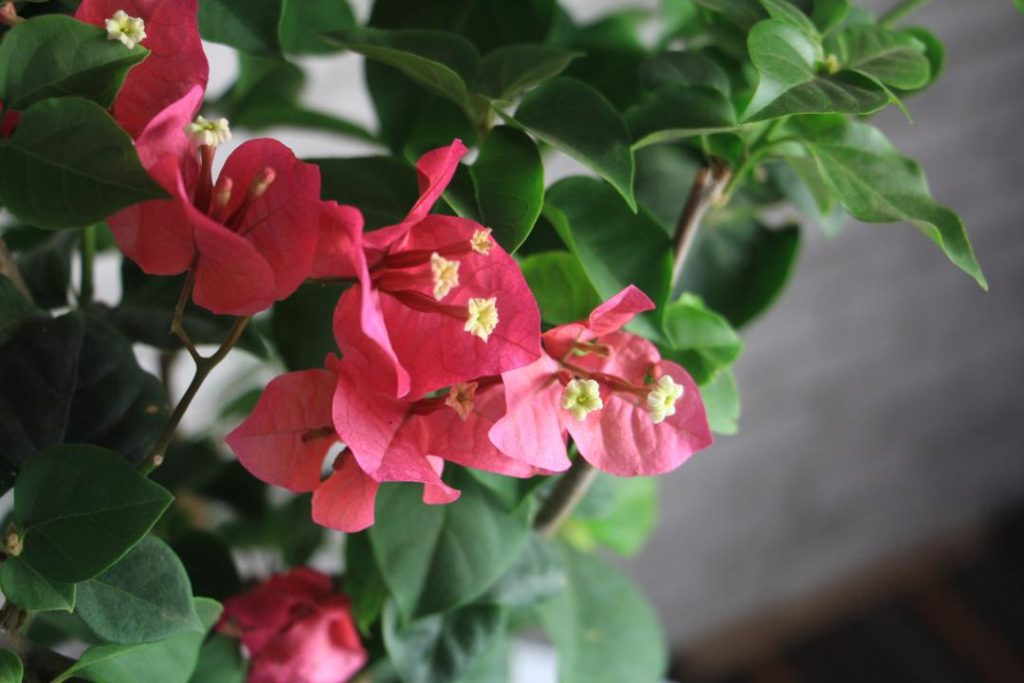
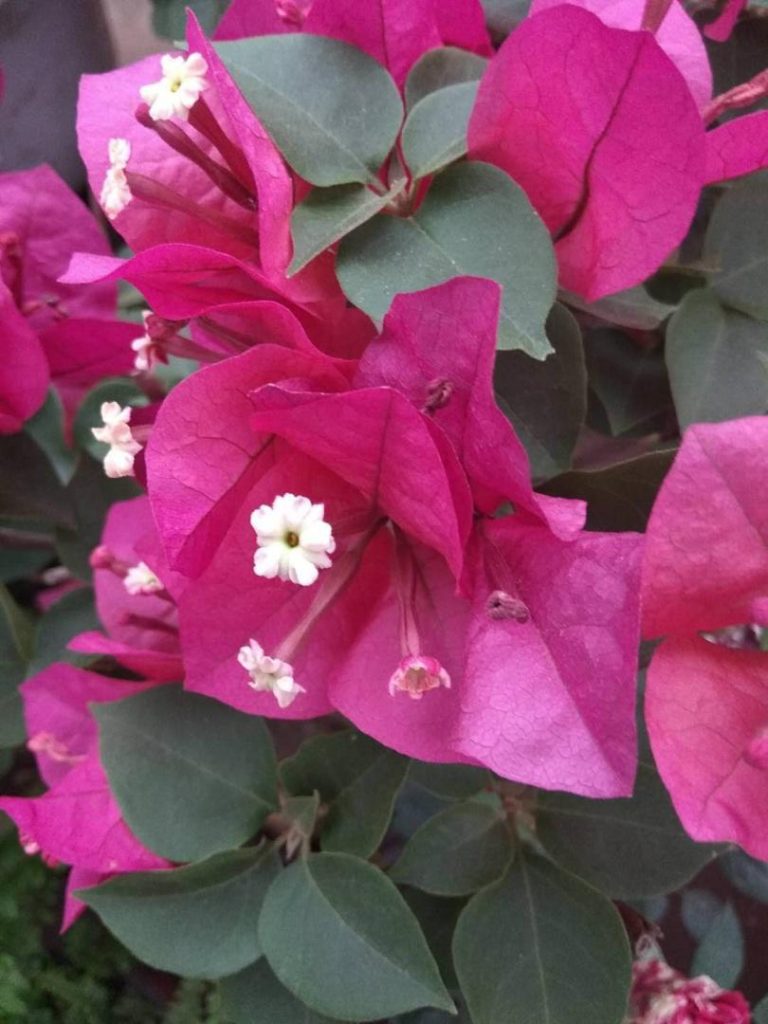
Worth knowing before you start chasing blooms. Those papery pink, magenta and orange things are bracts, which are modified leaves. The actual flowers are the small cream tubes in the middle, and they come and go quickly while the bracts hang on for weeks. So when a plant “fades”, the bracts are simply ageing, not the flowers dropping from a fault in your care. That distinction matters when you decide whether to prune or panic.
Give it more sun than you think it needs
Bougainvillea is one of the few pot plants that genuinely wants direct sun. Aim for at least eight hours of unfiltered light a day. A south-facing window with double glazing will not deliver that, and neither will a shaded balcony that gets bright light but no sunbeam. If the plant has been indoors or under a cover, move it somewhere it gets burned by the midday sun and see what happens within four to six weeks.
Under-light does two things at once: it stops new bracts forming, and it makes existing buds abort. If you are seeing buds that shrivel before opening, light is the first suspect.
Stop over-potting it
This is the factor people miss. In the ground a bougainvillea root system can run several metres, and that is what supports the enormous flowering displays you see in warm climates. In a pot, the root volume controls how much the plant can push, and a pot that is too generous produces exactly the leafy vine you are complaining about. All the energy goes into exploring fresh soil.
Pot on only when roots are genuinely circling the drainage holes, and go up one size, not three, in a mix that drains freely — rotted pine needle leaf mould blended with loam does the job without holding water against the roots. A slightly tight pot is a plant that has decided it is time to reproduce, which is what flowering is.
Water by season, and let it dry out at the right moment
Bougainvillea is thirsty in active growth and easily drowned in rest. The seasonal pattern that works:
- Spring and autumn: once a day in most weather, when the top of the mix has gone dry.
- Summer: twice a day, once in the morning and once in the evening, and if it is sitting outdoors under rain, tip out the saucer. Waterlogged pots drop buds faster than dry ones.
- Winter: cut right back. Keep it barely moist.
Then there is the deliberate part. When you want a flush, dry the plant out on purpose. Hold the water back until the leaves look a little soft and dull, then water properly. Repeat that cycle for three or four weeks, then return to normal watering and feed. It reads as neglect, but it is the standard commercial trick and a healthy established plant takes it without complaint. Do not do it to a plant that has just been potted on, or to one in a small pot on a hot patio, where real damage happens quickly.
Feed on a schedule, and again after every flush
A plant in flower is a plant exporting a lot of material, and it needs the supply to match. During the growth period, a liquid fertiliser once a week is the baseline. Once flower buds appear, move to a phosphate-dominant feed roughly every four weeks, and a foliar spray of potassium dihydrogen phosphate at about 0.1 per cent will push bud formation along if the roots are already feeding well.
The step people skip is what happens after the bracts fade. That is the moment the plant has just spent its reserves and needs replacing them before it will start the next round. Trim the spent stems back and feed within a week. If you skip this and wait, you lose six weeks to recovery.
Too much nitrogen is the other feeding mistake. A high-nitrogen or unmeasured organic feed gives you the same result as too much water and too little light: leaves, leaves, leaves.
Keep it above 5 °C, and expect leaf drop if you don’t
Bougainvillea has no real cold tolerance. Growth is happiest between 15 and 30 °C. Below 5 °C it takes frost damage, and a cold snap that dips under that for a night or two will strip the leaves. A defoliated plant in winter is usually recoverable; keep it barely moist, keep it warm, and it pushes again in spring. It will not flower while it is cold and wet either, so do not judge a winter plant by its bloom count.
Prune hard, because it flowers on what grows next
Bougainvillea colours up on new wood. A plant that has never been pruned puts out a few long whips and stops, because it has no reason to make fresh growth. After each flush, cut the flowered stems back by about a third, to a leaf pointing the direction you want the plant to go. That pruning does two jobs at once: it triggers the new shoots that will carry the next flush, and it keeps the plant the shape you want.
The short version
- Eight hours of direct sun. Move it outside if you can.
- Keep the pot one size tight, not roomy.
- Water by season; dry it out deliberately for a month when you want buds.
- Weekly liquid feed in growth, phosphate as buds form, feed again within a week of every flush.
- Never below 5 °C.
- Cut back a third after each flush.
Fix the light and the pot before you spend money on fertiliser. If you have been growing it in a bright window in a large pot and watering on a schedule, those three changes alone will usually produce colour within a month.
Once it is flowering reliably you can have as many plants as you like: a bougainvillea cutting follows the same rules as any other semi-ripe stem, node below the cut, one leaf, humidity over the top. Propagating a monstera from a cutting walks through the node logic in detail and it transfers directly.