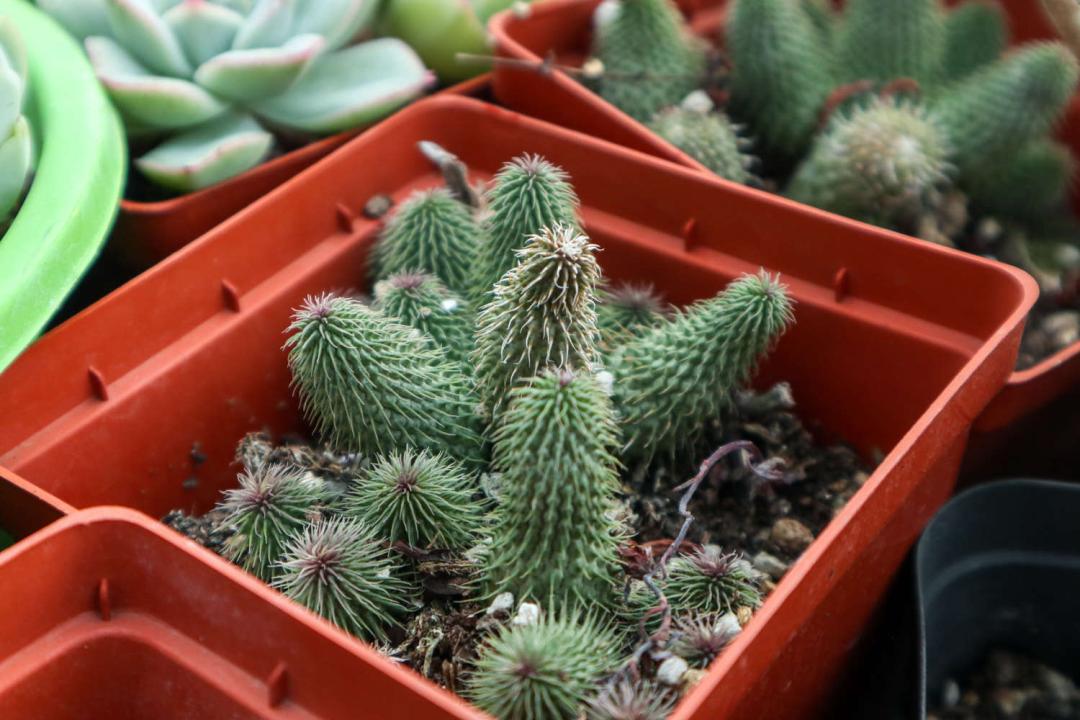
Most people buy and propagate succulents in spring. The season that actually works better is autumn, and the reason is undramatic. A plant that spent July and August sitting still, drinking little and producing nothing, starts moving again within two or three weeks of night temperatures falling. Everything you cut, sow or snap off in that window meets a plant that is already pushing roots.
Autumn is also when nurseries restock, which is how the two things get confused. Buying a plant in September is easy. Rooting a cutting in September is easier, and almost nobody talks about it because spring has the marketing budget.
What the summer break costs you
High temperature puts most succulents, including the popular rosette types, into a slowed state. Growth stops, roots stop, and a cutting taken in that condition often does not fail so much as stall: the leaf sits there for six weeks, the tip goes soft, and you conclude that propagation is difficult. It is not difficult. It is seasonal.
Surviving summer matters more than anything you do in autumn. A plant that made it through the hot months in one piece is a plant you can propagate. A collapsed one is not, which is why the autumn refresh is partly replacement and partly expansion.
Sowing: the window is short and specific
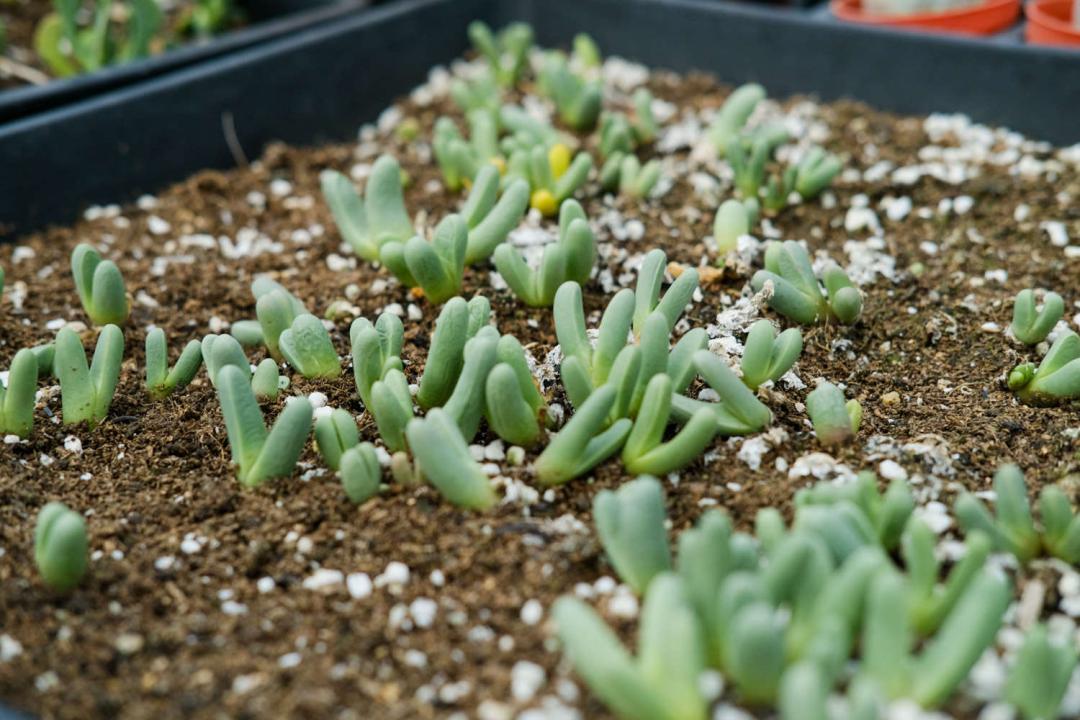
Sow from roughly the end of September to mid October. Earlier and the seedlings have to survive another hot month; later and germination slows, then stalls, and your trays sit empty into winter.
Succulent seed is dust-fine, so the method is one of not doing very much. Press the surface of a sieved, damp mix flat. Scatter ten to twenty capsules’ worth of seed across the top of a small pot. Do not cover the seed with soil. Put the pot into a clear plastic bag, or under a propagator lid, to hold humidity at the surface, because a fine seed with a thread of root dries out in an afternoon and is finished.
Most species germinate within about ten days. Once the majority of seeds have sprouted and the cotyledons are visible, take the cover off; leaving it on longer invites algae across the surface and damping-off, and seedlings that etiolate under film in warm weather are not worth saving.
Some genera are worth the trouble and some are not. The slower-growing, more collectible ones respond well to sowing because you cannot easily get them any other way. Anything with a strong tendency to make offsets is a waste of a year when you could just snap the offset off.
Leaf cuttings: the part people overcomplicate
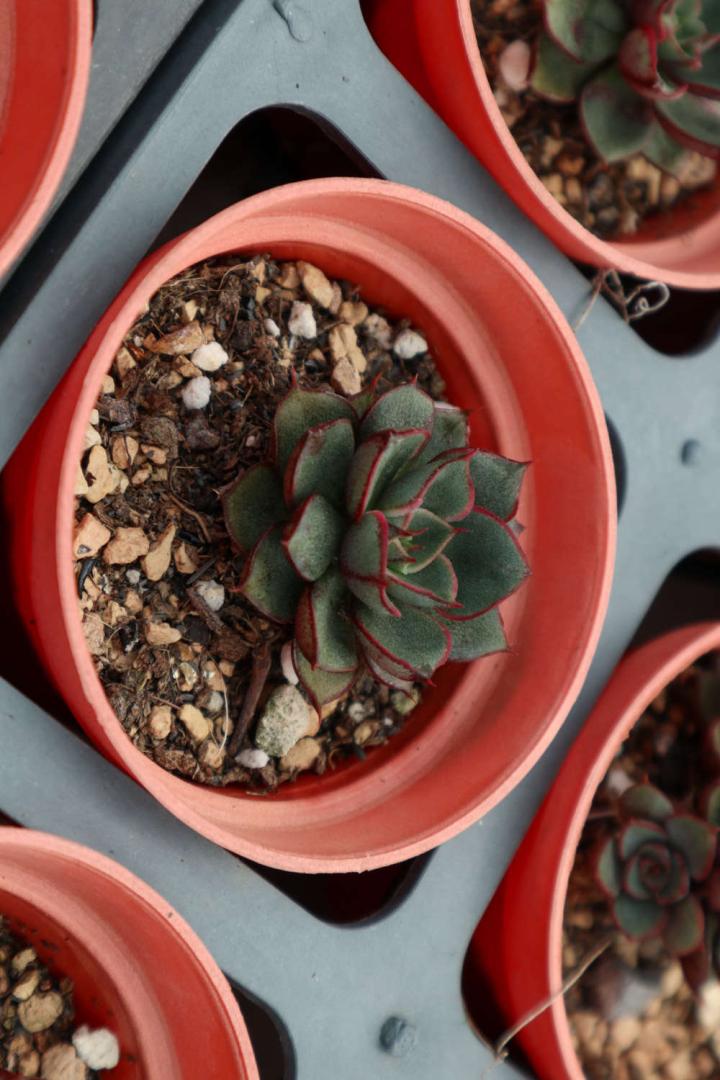
Pick a thick, firm, unblemished leaf from a plant that has been growing, not one that has been suffering. Twist it sideways off the stem so the whole base comes away with it. A leaf torn part-way, with half its attachment left on the stem, will callus and then do nothing.
Lay the leaf on top of dry-ish media, or slide the cut end a few millimetres into it. Both work. The media matters less than the two rules underneath: bright light out of direct sun, and water kept off the leaf itself.
Three pieces of advice that come straight from experience and cost you nothing to follow.
- Let the wound dry for about three days before it goes into the soil. A dried cut roots faster than a fresh one, because a fresh cut in damp media is an open door for rot, and the leaf already holds all the water it needs.
- Do not use a leaf from a plant that is etiolated, waterlogged or yellowing. A stretched leaf from a plant that was reaching for light makes a stretched baby plant, and a mushy leaf makes nothing.
- Do not use leaves from a plant in bud or flower. If a cutting carries a flowering shoot, it will often spend what it has on opening that flower, then go soft at the base and rot. Cut the bud off before you set the piece down.
Stem cuttings and beheading
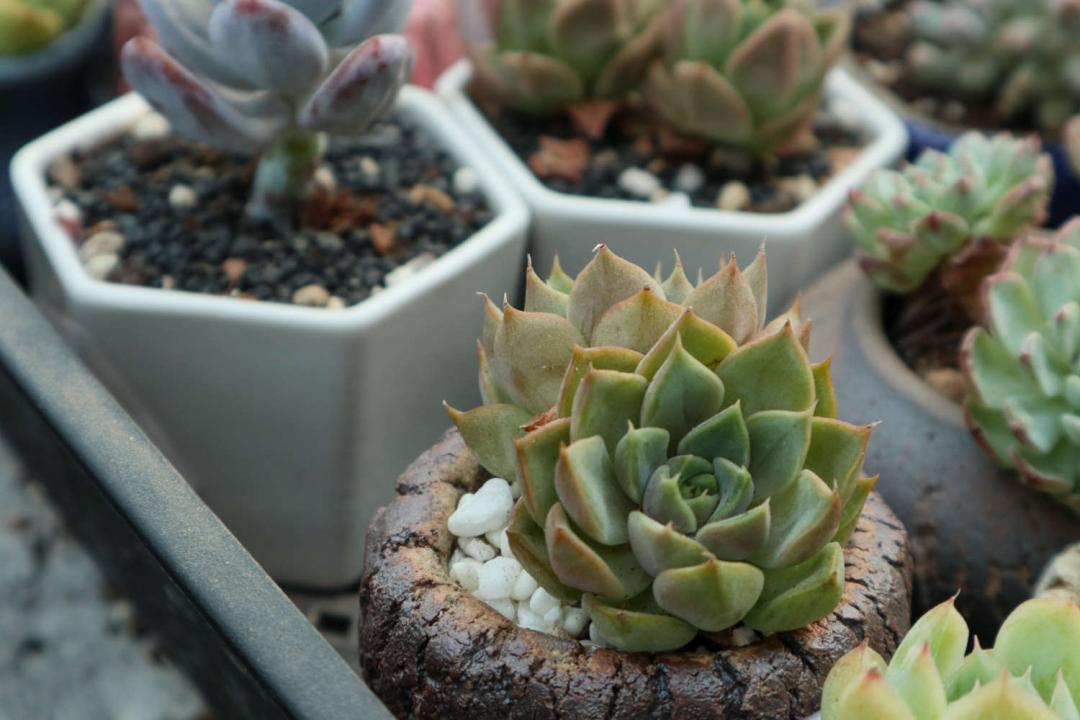
Take a side branch or the top of a leggy plant, strip the lower leaves, and let it dry for three days so the cut surface seals. Push it three or four centimetres into the mix. It will sit unsupported until it roots, which takes a few weeks; anything you do to check on it during that period is more likely to break the new roots than help them.
Beheading a rosette plant does two jobs at once. The top becomes a cutting, and the stub you left behind, roots still in the pot and undisturbed, generally produces several new heads along the stem within a season. The old root system is already established, so the regrowth comes fast, and this is the reason beheading is worth doing even when you do not want a new plant.
Root cuttings are the least discussed method and the most plant-specific. Some species carry fat underground roots that will throw a new shoot from any fragment left in the soil. Others will not. If your plant is one that makes these, you can propagate from a piece of root with no leaves on it at all, laid horizontally and barely covered.
What to do with the result
Seedlings and cuttings from an autumn batch have a mild winter and a full spring ahead of them, which is exactly the growth curve you want before the next summer tests them. By the following June the plants you started in September should be big enough to survive a bad month. That is the whole argument for the season: it gives a young plant one full growing cycle before its first heat.
Water young plants more often than adults, because a root system the length of your thumb cannot bridge a dry fortnight. Keep them somewhere they get light for most of the day; a seedling that stretches in an autumn of short, dull light has to be started again. If you are also working out how to multiply a plant you already like, the underlying what a cutting actually is is worth ten minutes before you cut anything.
Feeding can wait. A cutting has its own stored nutrients and no roots to draw on, so fertiliser in that first month does nothing except burn the tip of whatever is trying to grow. Start feeding small once the plant resists a gentle tug.