Two of the most commonly grown ground cymbidiums in China are 蕙兰, Cymbidium faberi, and 春兰, Cymbidium goeringii, the chunlan. They are sold next to each other, grown the same way, and frequently mislabelled in both directions. The difference is not hard to see, but you need to look at the right thing, and the right thing depends on whether the plant is in flower.
Leaves: count them, then measure
Cymbidium faberi carries five to eight leaves on a growth. They are long, generally between twenty-five and eighty centimetres, and narrow at seven to twelve millimetres, standing upright more than arching. Fold the base of a leaf across: it creases into a distinct V. Run a finger along the edge and you will feel coarse teeth, and hold a leaf to the light and the veins read translucent.
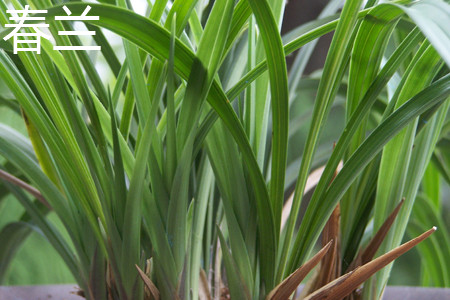
Chunlan carries fewer, usually four to seven, and shorter, with around sixty centimetres as an upper limit rather than a typical figure. Its base folds into a V too, so that character is shared and useless for separating them. The edge is what differs: entire, or with only fine serration that you will not feel at a walk past the bench.
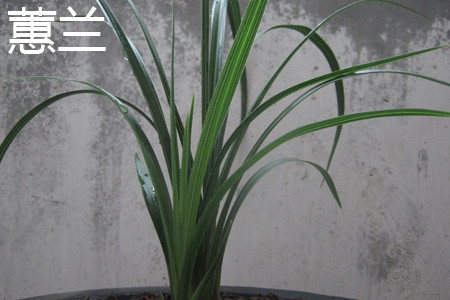
So the reliable leaf test is a combination rather than a single feature: number of leaves, length, and edge texture. Translucency of the veins is a supporting clue, not a decision. A plant with six long leaves and coarsely toothed edges is faberi whatever the label said, and one with four shorter, smooth-edged leaves is chunlan.
Flowers: colour and, more importantly, month
Faberi flowers are a light yellow-green, often with purple-red markings on the lip. The sepals are narrow and ovate, the petals similar in shape to the sepals, and the lip long ovate. The flowers come in March to May.
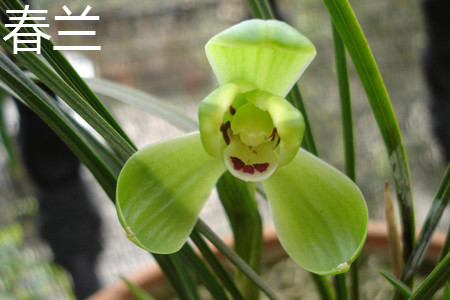
Chunlan flowers are green, or yellowish-brown with purple-brown stripes. Its sepals are nearer to a long, rounded ovate shape, the petals run from ovate-oval to long ovate, and the lip is close to round-oval. It flowers earlier, January to March.
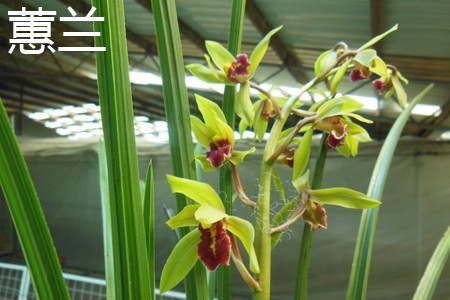
The flowering window is the fastest discriminator of the whole set, and it is the one nobody uses. Buy a plant in flower in late January and it is almost certainly chunlan. A plant opening in April is faberi. The overlap in March is the only month the calendar alone will not decide, and that is when you go back to leaf count and edge teeth.
The flower-colour descriptions in old guides are worth taking loosely. Both species vary, both fade as a flower ages, and a stressed plant with one thin flower is not a good colour reference. Structure is steadier than hue: the shape of the lip and the width of the sepals hold across a much wider range of growing conditions.
What the difference means in the pot
Faberi makes more leaves, longer, off a bigger root system, and it flowers later in the year after the spring growth has run. That has a practical consequence for feeding: the plant is building during exactly the months when chunlan is finishing. A chunlan is putting its energy into a flower in midwinter, when light is at its weakest and most growers are either not feeding at all or feeding everything.
Both are grown the same way at heart: coarse, open medium, roots that dry between waterings but never bake, a winter rest with cool temperatures and reduced water, and the same discipline about not disturbing a plant that is in bud. That rest period, cool and dry-ish, is what the bud initiation responds to, and it is the single most common reason an imported or nursery-grown plant arrives flowering well and then refuses to flower in a warm sitting room.
Neither species forgives being potted into ordinary compost. What you are making is an air-supplied substrate with some moisture retention in it, and bark and grit do that while a fine mix does not. For the phalaenopsis on the same shelf the question comes up constantly too. What a phalaenopsis is potted in is a useful side-by-side, because the reasoning is identical even though the plant is not.
One last identification trap. If the plant has flat, broad, strongly arching leaves and a tall spray of waxy flowers in winter, it is one of the hybrid greenhouse cymbidiums rather than either species, and it wants warmer and wetter treatment than the two above. Those are also not the plant you dig out of a hillside, and confusing the two is how people get into trouble with a wild-collected one.