Clivia is spoiled more often in winter than in any other season, and almost all of the damage comes from doing the kind thing: keeping it warm, steady, watered and lit around the clock. The plant wants a winter that is cool, drier, and marked by a difference between day and night, and each of the eight well-meant errors below costs either the foliage or next year’s flower.
Heat that never changes
A steady room temperature is the first mistake. Clivia does best in winter at roughly 23 °C by day and 13 °C by night, and the gap between the two is the point, since the drop is what the plant reads as the season and what its flowering is built around. A room that holds one temperature for twenty-four hours is a room in which the plant cannot tell the date.
The related error is baking. A clivia put beside a stove, a radiator or a heater flue to keep it warm will yellow its leaves from the drying heat long before any cold damage would have. The right winter position is a cool, bright corner away from every artificial heat source.
Light, and what happens to the spike
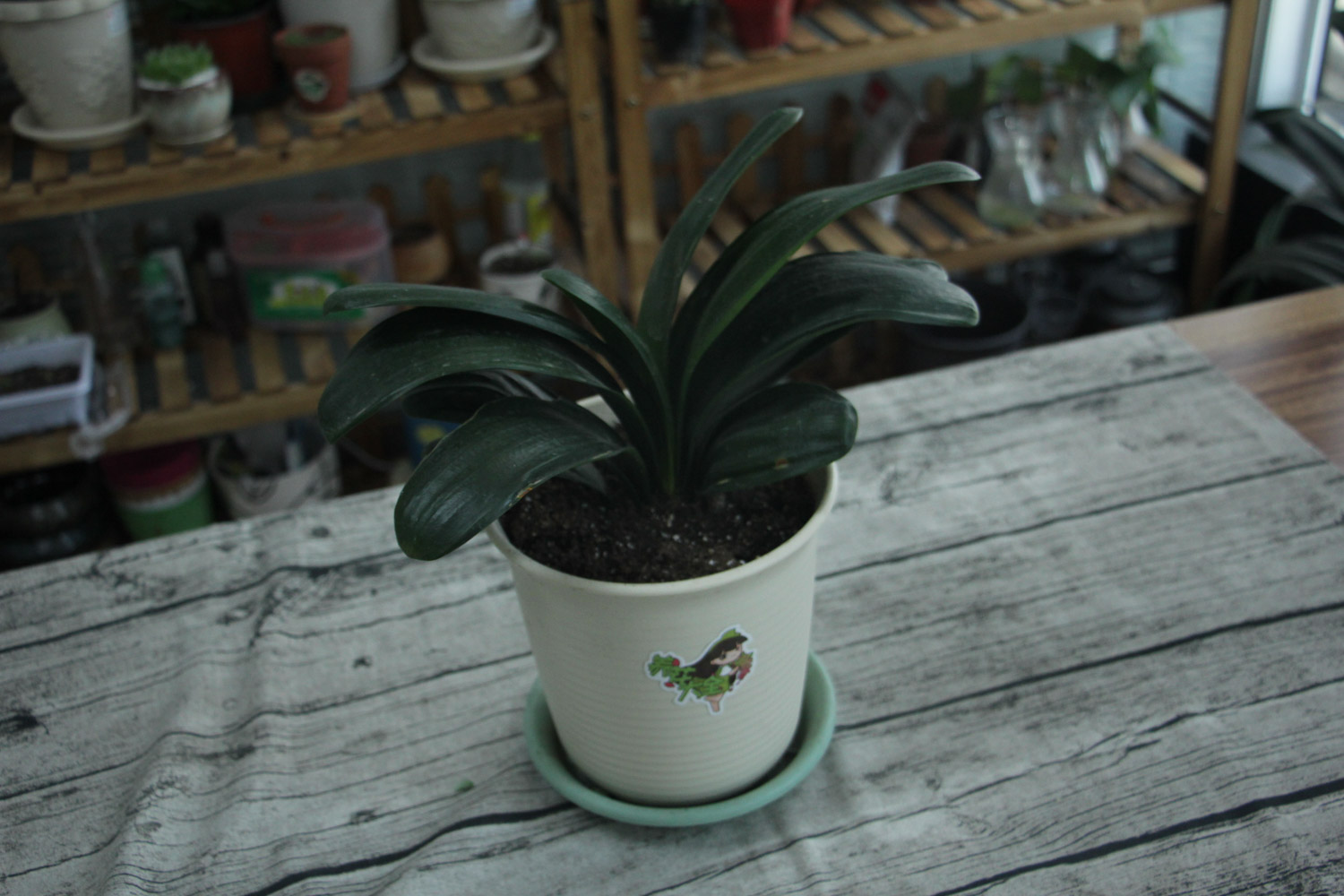
Clivia wants plenty of light through winter but not endless light. Long days are what keep it making leaves instead of moving on to flowers, so a bright position still needs a proper dark period, and a plant left under a lamp for sixteen hours a day is a plant that will not bloom.
The second point concerns the spike itself. Once it appears, the buds should not be taken out into strong early sun: heat and light on a spike that has not finished developing is how clivia ends up flowering down inside the leaf spread, with short stems and the bloom trapped between the straps.
Water, air and food
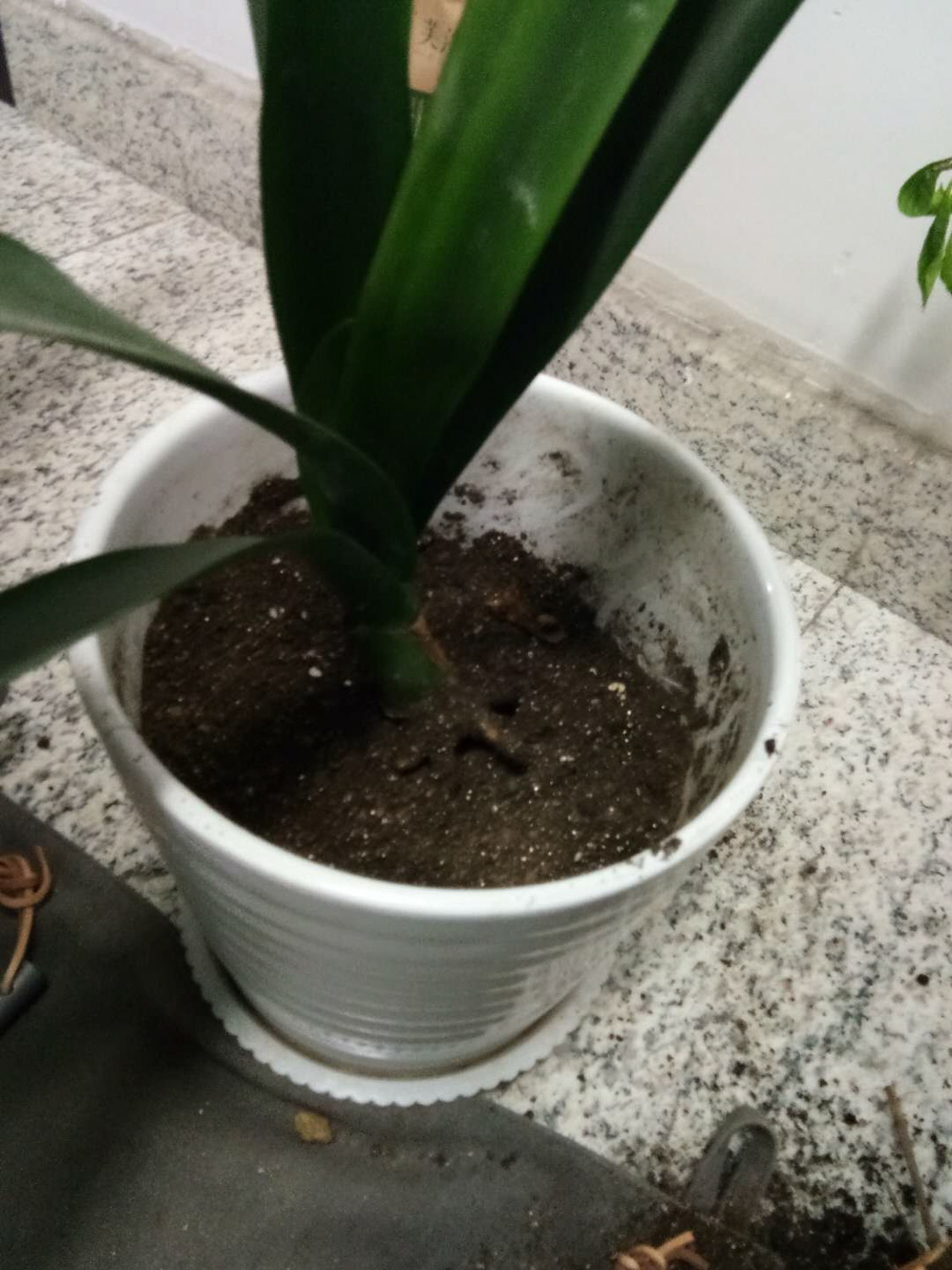
Winter watering should be minimal. Growth has slowed, the pot is standing in a cool room with no air moving, and a clivia in that state uses almost no water; keep the compost on the wet side and the roots are the first thing to go. The other winter problem is dry air, which browns the leaf tips, so humidity around the plant needs raising by misting or a tray of damp pebbles, and the broad leaves should be wiped with a damp cloth now and then, partly for the dust and partly because a clean leaf makes use of whatever light there is.
Do not put raw, unfermented fertilizer into a winter pot. Cool soil does not stop that material breaking down, it only slows it, and a slow fermentation going on inside the root zone is a root burn that appears weeks later. If feeding happens at all it should be ripe, dilute, and clearly wanted.
Cold, and how to recover from it
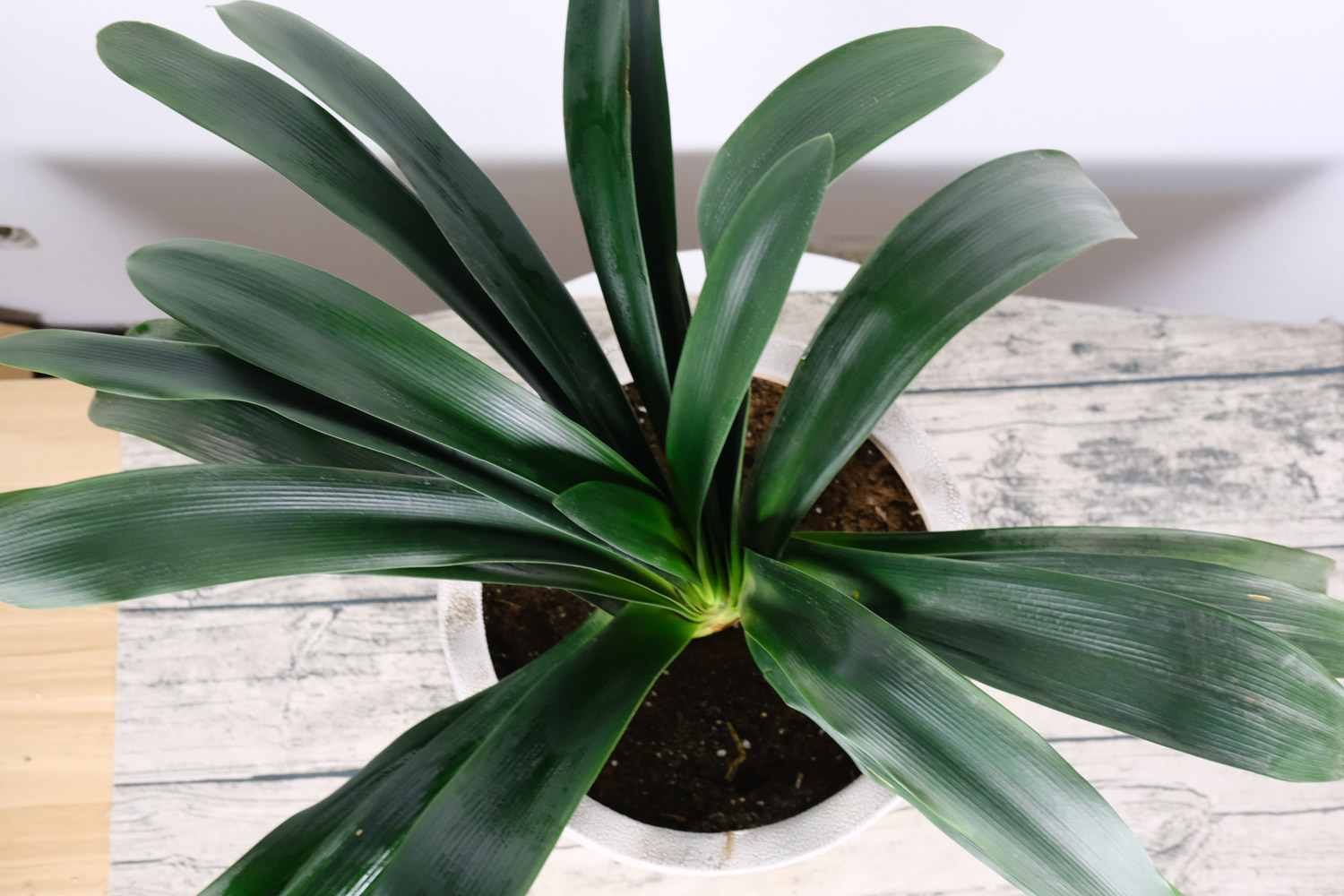
Below about 4 °C clivia is at real risk of frost damage, so the frost-free requirement stands even though the plant wants cool. Recovery matters as much as avoidance: a frozen clivia must be warmed slowly, kept out of direct sun while it thaws, and left dry until it has. A fast thaw in a hot room or a bright window turns light frost damage into a dead leaf.
The same cool-and-dry logic applied to a fruiting indoor plant is argued at coral berry indoors, and the case for withholding water to protect a plant through cold is made at purple-leaf plum. For how a different genus handles the same winter rest, the orchid comparison is at cymbidium and chunlan.