A tree philodendron that is going wrong usually shows it on the leaves long before anything else is visible, and the leaf pattern tells you which problem you have. The four complaints worth learning are leaf spot, anthracnose, spider mites and scale. Everything else that goes wrong on this plant tends to be water, and that is a different article.
What to look for
Yellowing leaves, dead leaves, leaves curling inward, and spots of discolouration on the blade. Those four are the entry symptoms, and they are not the same problem. Yellow across many old leaves is usually roots or water. A curled, thickened, speckled leaf is an animal. A spot with structure is an infection. Obvious chewed marks and holes are something larger.
The order matters more than the diagnosis, because every one of these is far cheaper to prevent than to clear. Do not wait for symptoms to appear before you start looking.
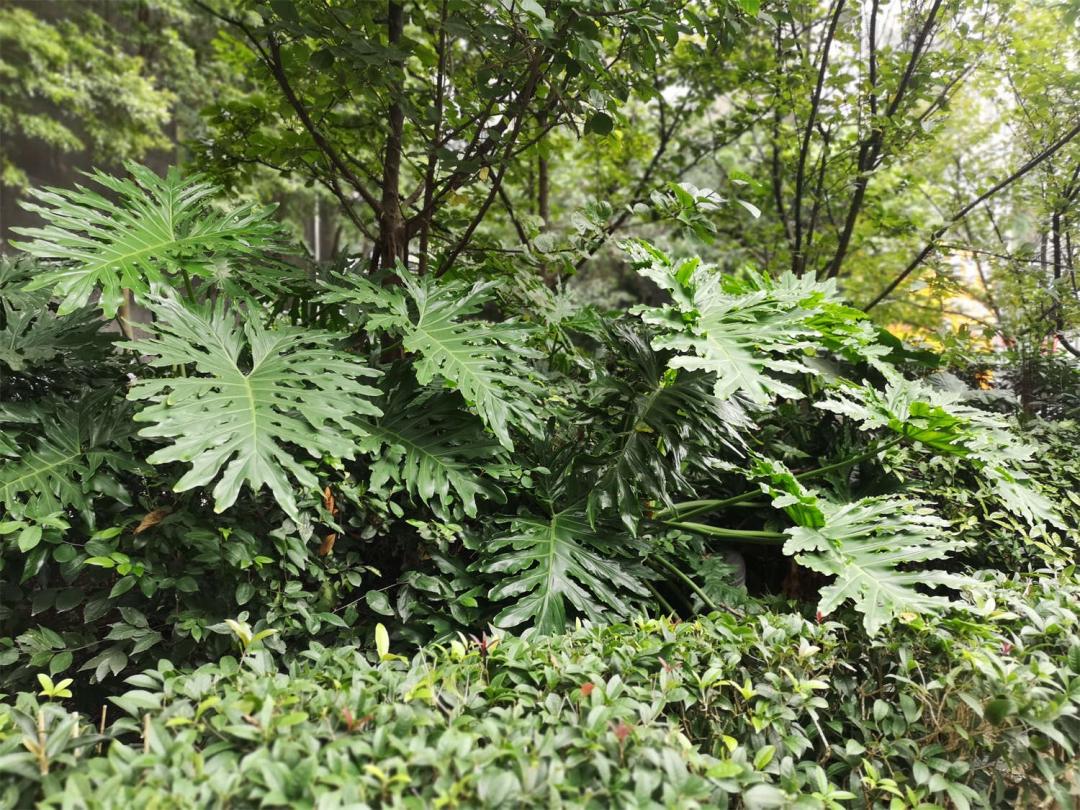
The diseases: leaf spot first, anthracnose second
Bacterial leaf spot is the more common of the two on this plant. It reads as near-circular spots, brown to reddish-brown in the middle with a darker brown rim, and a yellow halo ringing each spot; several small spots then merge into one large dead patch. Anthracnose looks similar at first glance and behaves the same way, spreading from older leaves upward, but it tends to sit along the margins and the veins.
The difference matters less than the shared cause: leaf surfaces that stay wet, air that does not move, and cool nights with condensation on the foliage. Both are far more likely on a plant that is misted at night and left in still air.
For treatment the practical options are the ones the plant has been sprayed with for decades: a 50% carbendazim wettable powder diluted to roughly 1:1000 for leaf spot, with methyl thiophanate and zineb as the alternatives. Alternate products rather than repeating one, spray the underside as well as the top, and follow the label on the specific product you bought rather than this ratio.
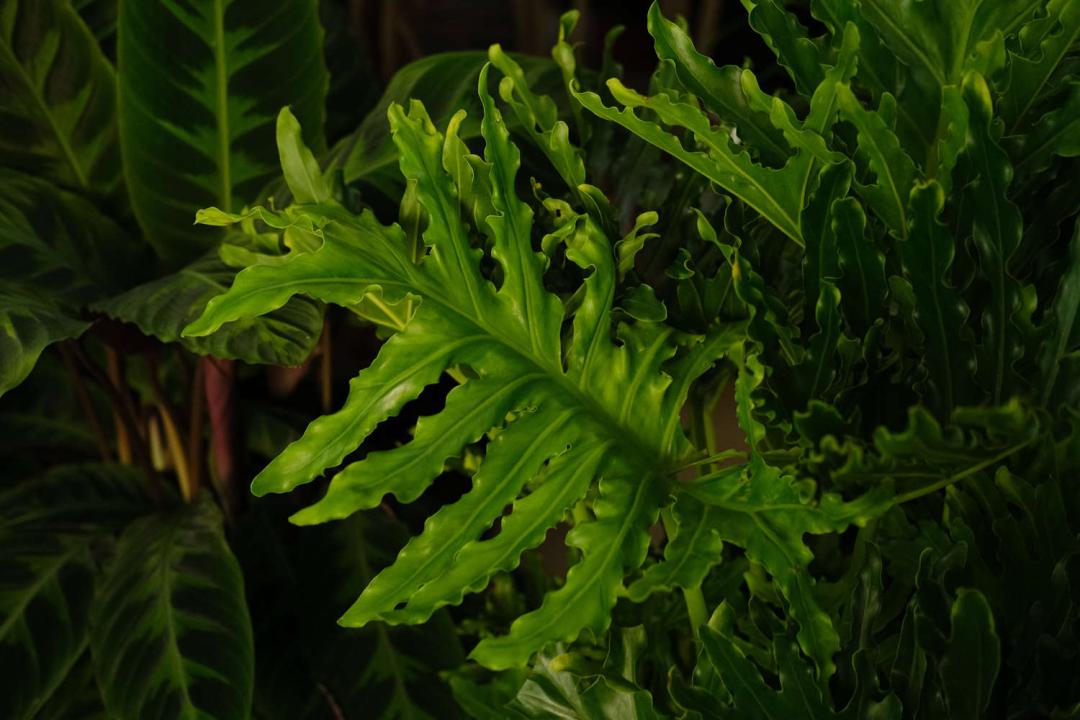
The insects: mites in dry air, scale in still air
Spider mites and scale are the two animal problems, and they have opposite triggers. Mites come when the air is dry: the leaves lose their sheen, a fine pale speckling appears, and in bad cases there is light webbing in the leaf axils. Scale is the one that shows up in stagnant, poorly ventilated conditions, as small brown or white shells stuck along the petioles and midribs that do not fall off when brushed.
Treat the two differently. Scale needs a systemic or contact insecticide aimed at it; the preparation traditionally used for it is a 50% omethoate-type product at roughly 1:1000, applied twice a week apart to catch the hatch the first spray missed. Omethoate is restricted or withdrawn in a number of countries, so check what is legal and labelled for ornamental plants where you are, and consider insecticidal soap or a rubbing-alcohol swab on a small infestation first. Mites are discouraged rather than killed: raise the humidity around the plant, keep the foliage clean, and improve ventilation, which removes the still air scale likes at the same time.
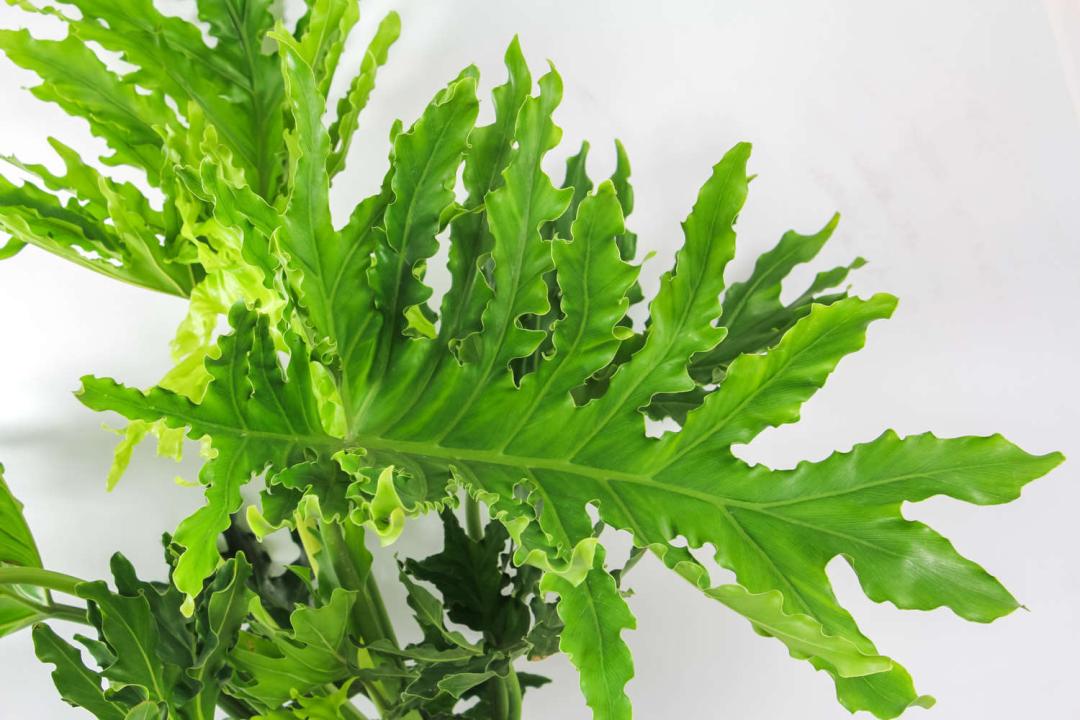
The housekeeping that does most of the work
Cut off yellowed, dead and scorched leaves as you find them, and do not leave fallen leaves lying on the soil surface, because that is where both the fungal and the bacterial residents overwinter. Keep the plant in bright indirect light, give it air movement, water so the pot drains freely and empties rather than holds, and keep the leaf surface wet for as short a time as possible. That is the whole prevention, and it is worth more than any spray.
Most of the damage on a badly kept tree philodendron starts with roots rather than leaves, so if you are fighting recurrent spotting on a plant in a heavy mix, work through watering tree philodendron before you spray again. A plant with poor roots produces poor leaves, and no fungicide fixes that.