春羽, the deeply lobed leafy plant sold in the West as tree philodendron or lacy-leaf philodendron, is one of the easier large houseplants to keep alive and one of the easier ones to kill with kindness. The reason is its leaves. They are broad, thin and numerous, and a plant covered in them loses water all day. It wants moisture during growth. It also has a root system that will rot in the same wet mix at the wrong temperature, which is the whole difficulty.
During growth: keep it evenly moist
While it is pushing new leaves, do not let the mix dry out. A plant that goes bone dry between waterings in summer will drop or yellow its lower leaves, and each lost leaf is a season of stored energy gone. In the hot months a healthy plant in a terracotta pot can drink twice a day.
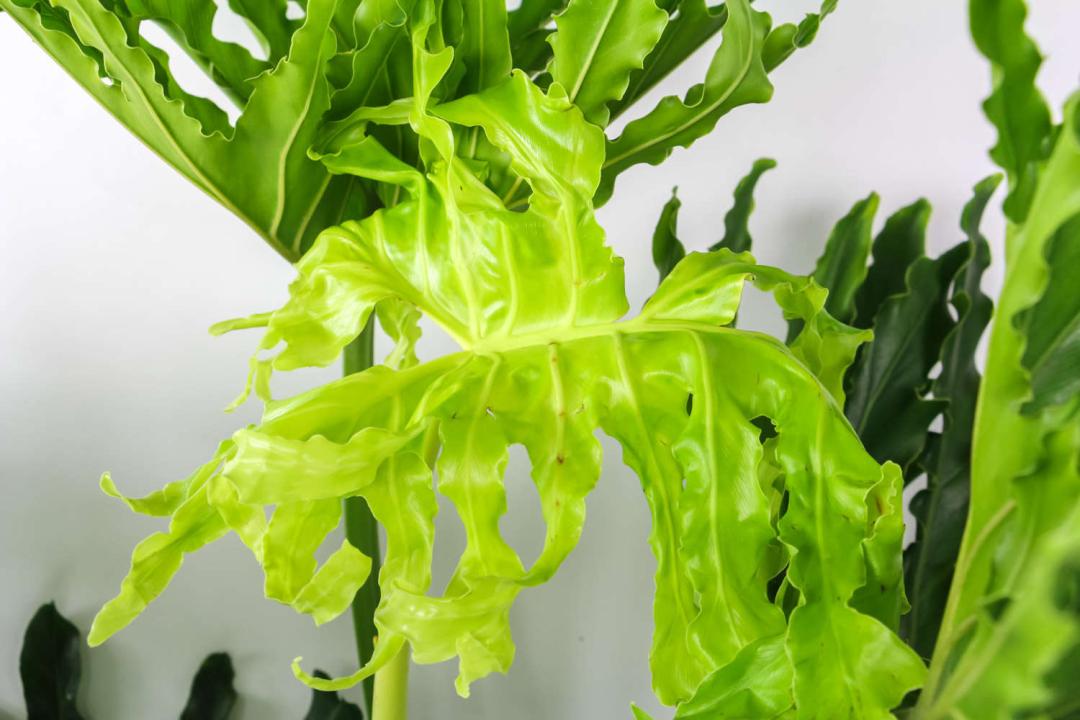
Misting and leaf-spraying are genuinely useful on this plant, and not for the reason usually given. The benefit is not measurable humidity in a living room, which sprays do not create; it is the film of water on the leaf slowing the loss, and the dust rinse that keeps the stomata working. Wipe the leaves as well as spraying them. A dull grey tree philodendron is a plant with its breathing holes blocked.
Below fifteen degrees: change the rule entirely
The turning point is temperature, not the month on the calendar. Once the room sits below about fifteen degrees, growth slows, uptake drops, and the same watering routine that was correct in July is now the thing that will rot the roots. Water sparingly, and let the mix come partly dry between drinks.
This is where the classic failure happens: a centrally heated flat in January, warmer than summer outside, with a plant that has stopped growing because there is no light. Heat without light is worse than cold for watering decisions, because the warm mix dries on the surface while the roots sit inactive in the middle of it, and the grower waters the surface they can see.
Standing water is the specific danger. This philodendron tolerates wet better than most things, and can survive a genuinely soggy pot for a surprising time, which is exactly why people do not notice the damage until the stem base goes soft and the leaves drop from the bottom up.
Feeding it water with something in it
Chinese growers have long recommended weak organic waters for this plant, rice-rinsing water above all, and thin chicken water or fish water on the list too. The reasoning is a good one: a big-growing plant in a pot uses up what is in the mix, and a dilute regular addition keeps the mix from going exhausted and compacted.
Two cautions, both practical. Rice water straight from the sink is starchy and full of surface fines; poured fresh and often, it sours the top of the mix, feeds fungus gnats and glazes the surface so water runs off instead of in. If you use it, let it stand until it has fermented lightly, dilute it well, and rinse the surface with plain water now and then. And anything that smells of meat water in a warm room is an invitation to flies: those are better on a balcony plant than in a bedroom.
If the plant is in a room rather than on a terrace, a weak balanced liquid feed at a quarter strength is less trouble and does the same job. The seasonal feeding routine covers the logic; the short version is dilute, infrequent, never onto dry mix.
The two checks that prevent most of the losses
- Put your finger into the mix to the second knuckle rather than judging from the surface. In a big pot the top two centimetres dry in a day and the middle of the ball is unchanged, which is how a well-intentioned person drowns a plant.
- Check that the drainage holes work. On a plant of this size the holes clog with root and fines over a season, and the pot silently becomes a bucket with a hole drilled in the rim. Lift it, look underneath, and clear them. If water sits in a cachepot, tip it out every time.
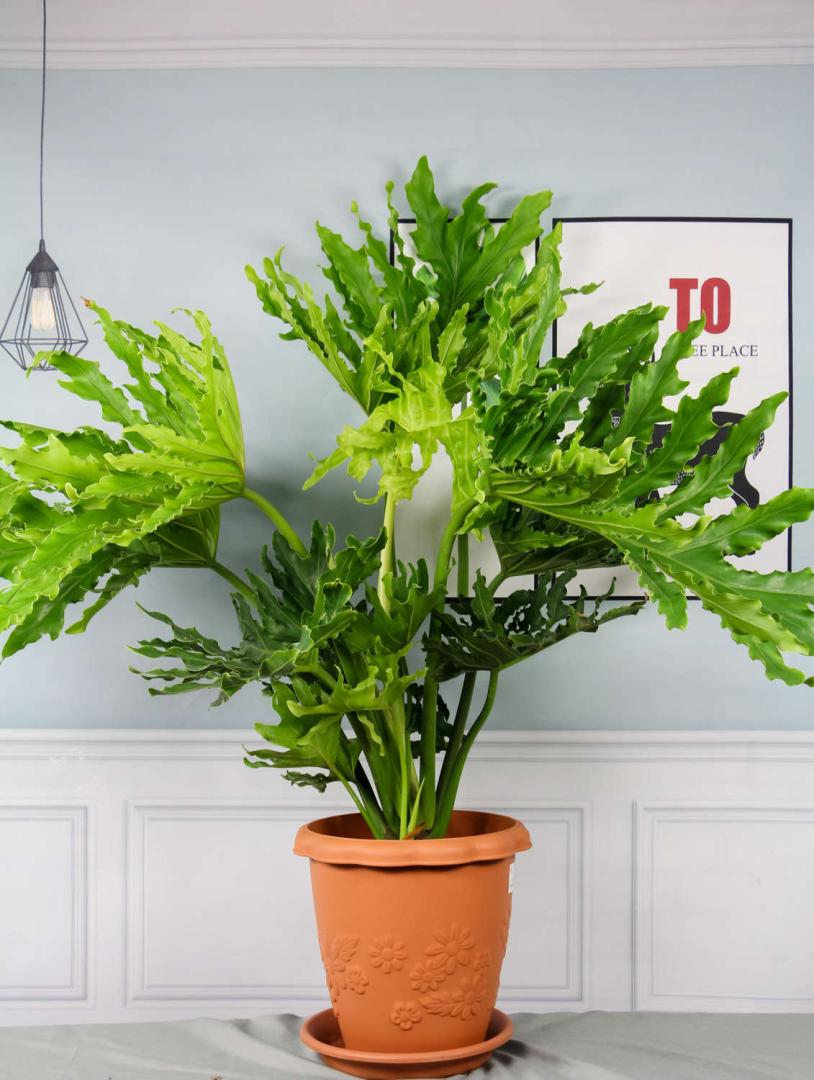
Water when the mix has begun to dry rather than on a day of the week, keep humidity on the leaves in summer, and let the winter be drier than feels comfortable. That covers almost everything the species can go wrong from. The one thing this plant will not recover from quickly is a rotted stem base, and by the time the leaves tell you, the damage is above the point where new roots can form.
If you are also losing lower leaves indoors in winter and suspect a water problem, compare notes with the way a hoya is carried through the year, because the seasonal flip is the same and that plant makes the mistake obvious much sooner.