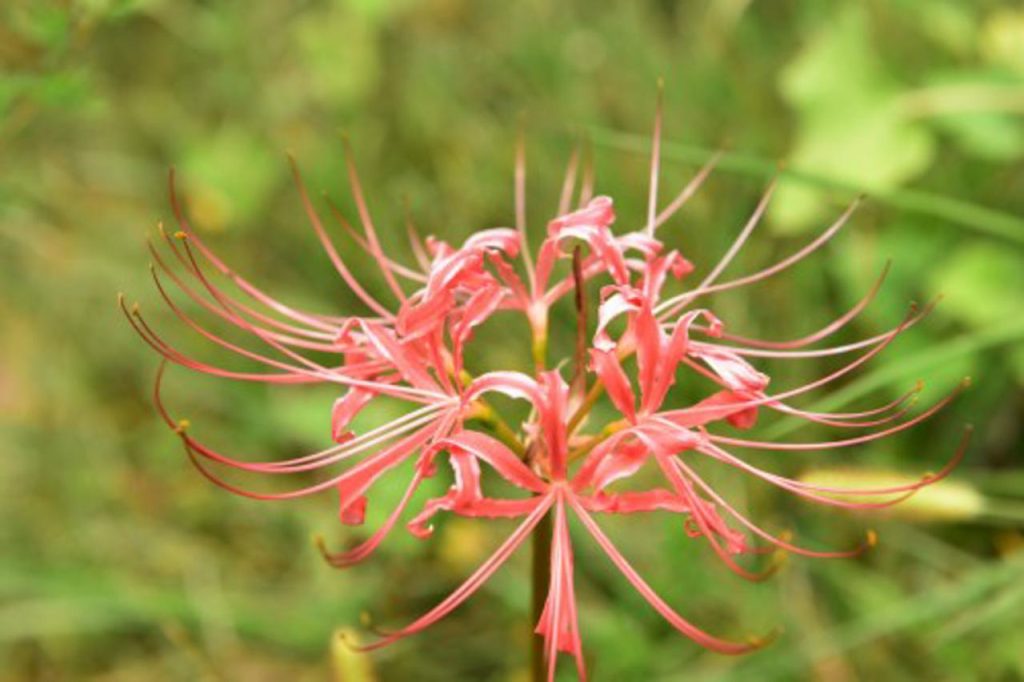
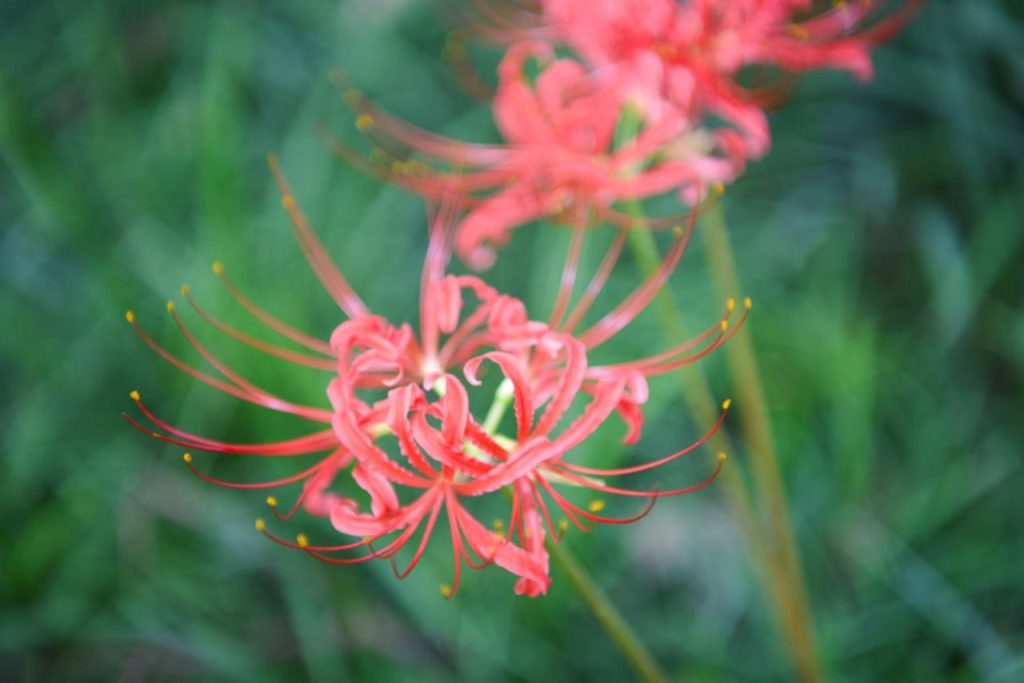
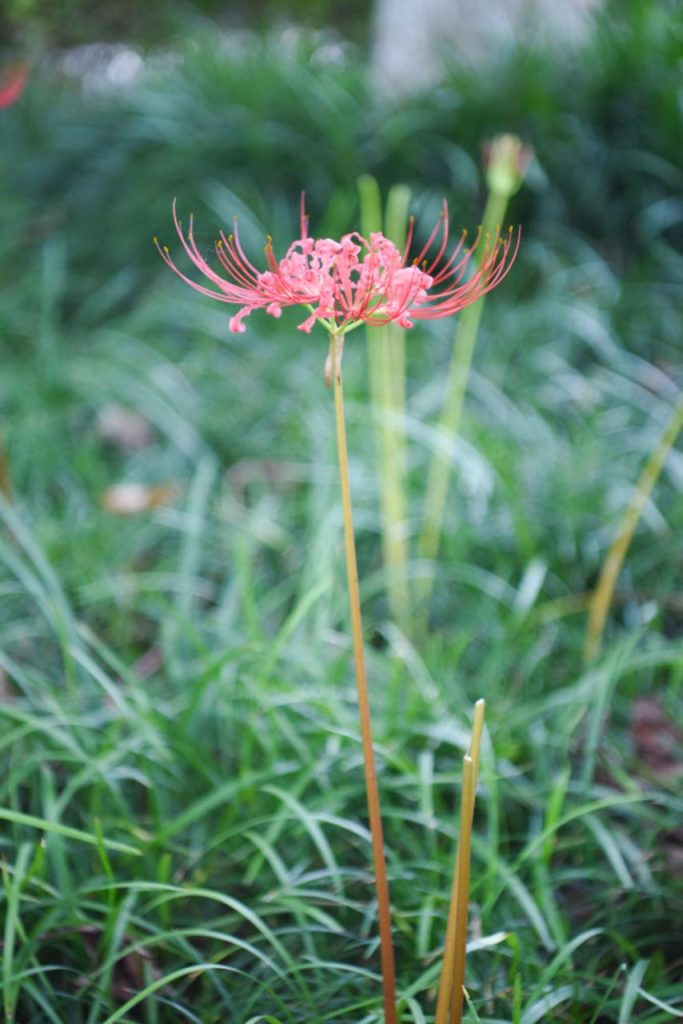
The red spider lily’s bare flower stems make a striking image. They can inspire a story about absence or separation, but that is an interpretation of the display, not evidence of a supernatural property.
What the plant actually does
North Carolina Extension describes Lycoris radiata flowering in late summer to early autumn, with leaves growing afterward and remaining through the cooler season in the conditions discussed. Flowers appearing without a leafy background therefore have a botanical explanation.
Do leaves and flowers “never meet”?
That phrase works as a literary image, but an absolute claim is less useful than the plant’s observed seasonal cycle. Growing conditions and timing should accompany a horticultural description. A poetic contrast does not explain the plant’s origin.
Give a story its setting
If a poem, artwork or local account uses the flower to evoke remembrance, cite that work. A list labeled “Chinese,” “Japanese” and “Korean” meanings can wrongly imply that everyone in those countries shares one interpretation.
Writing about the flower today
Describe the flower stems, the long projecting stamens and the season before deciding what they suggest to you. If the image reminds you of someone or an occasion, explain that personal connection. Avoid presenting stories about the dead or magic as botanical facts.
For a different example of color meanings tied to an identifiable text, read tulip entries in Greenaway’s dictionary.
Sources