Gerbera, sold as the African daisy or Barberton daisy, is one of the few pot plants that will genuinely keep producing large flowers for months rather than weeks. Under reasonable conditions it runs from November through to April, with the heaviest flushes in spring and autumn, and in a warm bright house it can carry on through the year.
That performance is not free. Each flower is a long hollow stem and a head the size of a saucer, and the plant is building that out of whatever you give it. Most gerbera problems are the plant running out of resources, and most of the solutions are about how you feed and water it while it is spending.
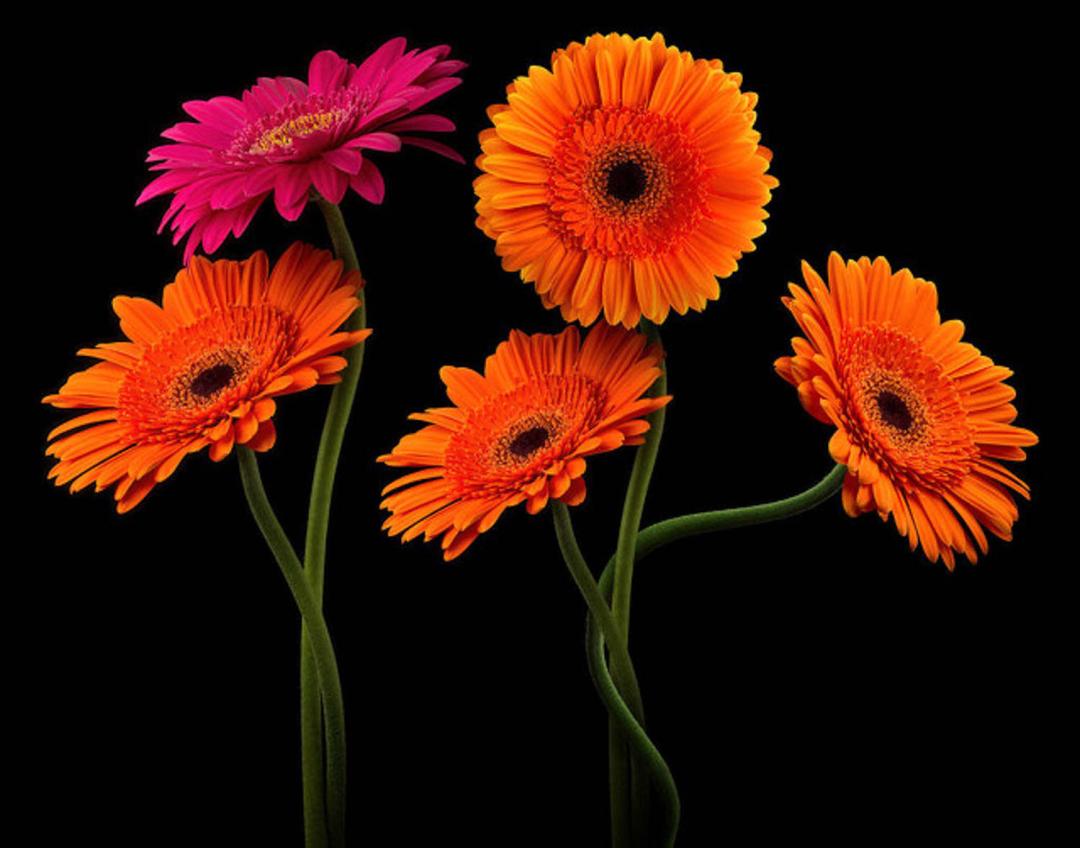
Water the roots, never the crown
This is the rule that decides whether the plant lives past spring. A gerbera grows from a short crown with the leaves and flower stems emerging from a central point close to the compost surface. Water that sits in that crown causes crown rot, which is the single commonest way these plants die, and it can happen within days in cool weather.
Water at the base, or use drip irrigation or a can with a long spout aimed at the edge of the pot. The practical principle is the traditional one: don’t water until the mix has dried, then water thoroughly so it runs right through. Never a little and often, which keeps the crown damp and the roots half-dry at the same time.
Air humidity matters and crown wetness does not help. Keep the air around the plant moist by misting the room or standing the pot on a tray of damp pebbles, and leave the crown alone.
Feed for flowers, not for leaves
Once the plant is in bloom, nitrogen is the wrong target. Too much of it produces a big flush of leaves, weaker stems, and fewer and smaller heads. Shift to a feed weighted towards phosphorus and potassium and keep nitrogen modest.
During active growth and flowering, a liquid feed every two weeks will keep the stems strong. If you are using a slow-release granular feed, work it into the top of the mix at the start of the season and don’t chase it with extra nitrogen later.
Thin the buds. This is the step people can’t bring themselves to do
A gerbera that is happy will set more buds than it can finish properly. Left alone, it pushes them all, and the result is a plant carrying a lot of small, pale, short-stemmed flowers at once, followed by a long gap while it recovers.
Remove the surplus. When a cluster of buds appears, rub off all but the strongest two or three, and cut the rest out at the base of the stem. The remaining heads come larger, better coloured and on stems long enough to cut. It feels destructive for about a week and then you see the difference.
Do the same with foliage. Peel off old and yellowing leaves at the base regularly, and clear away any spent flower stems down to where they emerge. Every leaf that is fading is a leaf the plant is still feeding, and the material you remove also blocks the air movement around the crown that stops rot.
Summer and winter, separately
Summer: shade the plant from the worst of the midday sun and keep the air moving. A gerbera baked in a still corner in July will scorch at the leaf edges and the flowers will open and fade within days. Ventilation matters more than most people expect, and it is also what keeps the crown dry after watering.
Winter: keep it warm and keep the temperature steady. Large swings between a warm sunny day and a cold night are what cause the petal edges to brown and the stems to weaken. Aim to hold it above 12 °C, water less, and stop feeding if growth has visibly stalled.
That 12 °C threshold is also the answer to the question of how to keep a gerbera flowering out of season. Above it the plant keeps growing and keeps making stems. Below it, the plant goes quiet. You cannot push a cold gerbera into flower with fertiliser, and feeding a dormant plant only burns the roots.
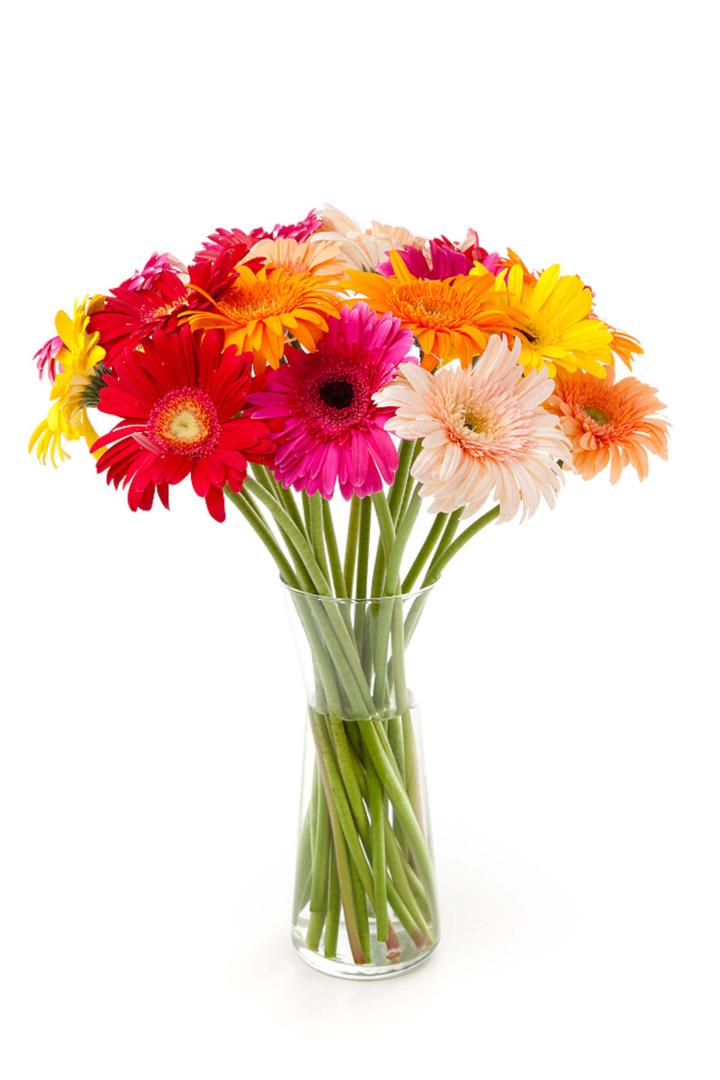
Getting the best out of cut flowers
Gerbera stems continue to lengthen in the vase and the hollow stem collapses if it is left in deep water, which is why shop-bought gerberas often droop after a day. Cut the stem short, keep only a couple of centimetres of water in the vase, and do not strip the stem by running your hand down it, which blocks the vessels.
What usually goes wrong
- Nothing but leaves. Too much nitrogen, or too little light. Gerberas want full sun outdoors and the brightest sill you have indoors.
- Collapsing at the base. Crown rot from watering overhead. Repot into an open, free-draining blend — rotted leaf mould and loam is the cheap version — cut out the soft material, and water at the rim from then on., and water at the rim from then on.
- Aphids in the buds. Gerberas get them badly, and because the colony sits inside the unopened flower, the rinse-and-repeat routine has to start before the buds open rather than after.
- Short weak stems. Too many buds left on the plant, or the pot has dried out while the stem was extending.
- Pale small flowers. Warm nights. Gerberas colour up best with a real difference between day and night temperature, but not a large swing.
- Stopped dead in winter. Below 12 °C. Move it somewhere warmer and wait; it restarts in spring.
None of this is difficult, and the plant is more forgiving than its reputation. The two things worth getting right are water at the roots and fewer buds than the plant is producing, and both feel wrong the first time you do them.