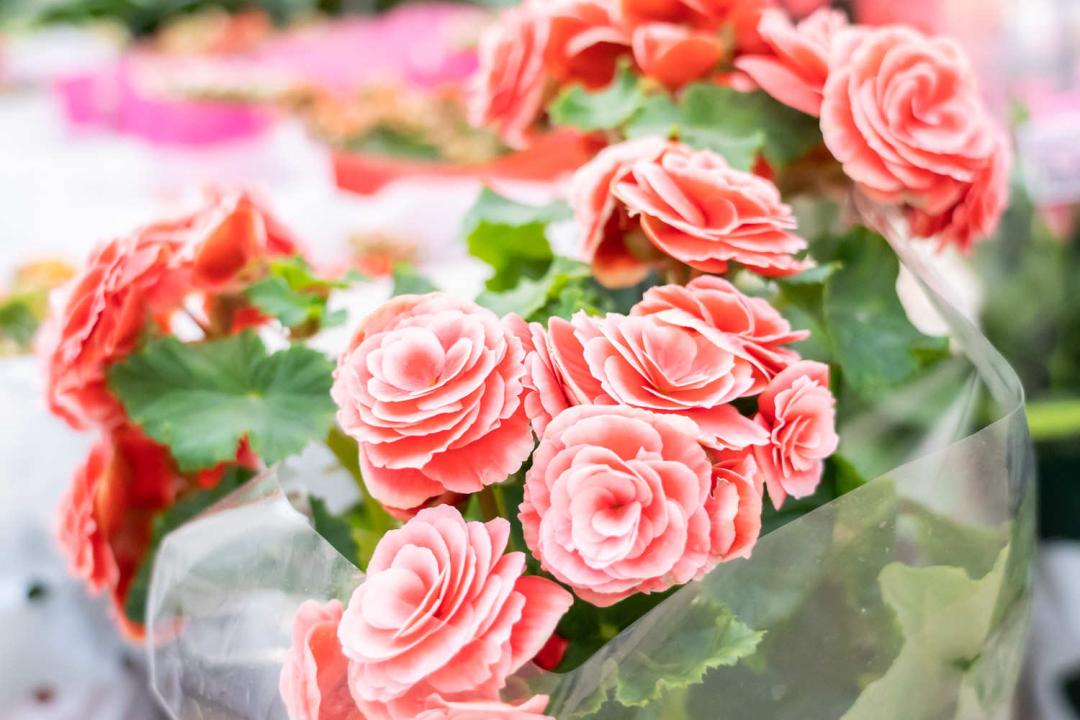
Elatior-type begonias, the compact florist plants carrying flowers right through winter, are fussier than the ordinary bedding begonia about two things: cold and light. Get those two managed and the plant flowers for months.
Temperature
The working range is 18 to 22 C, and the plant dislikes heat as much as it dislikes cold. Through winter, do not let it drop below 15 C, because the plant is still in flower then and a chill strike shows as dropped buds and soft stems rather than as slow growth.
A pot in flower needs light more than it needs warmth, so place it where the sun reaches: a south-facing balcony or a bright sill works well. Keep it away from a radiator or a heater flue, since the hot dry air current takes the moisture out of the petals and the buds. In summer the danger reverses. When temperatures climb, shade the plant and cool it, and do not let a enclosed balcony bake it.
Water and humidity
Watering follows the pot, not the calendar. In summer, with fast evaporation, a flowering begonia needs water often and should be given it in the morning so the foliage is dry before the evening. In winter the opposite applies: water around midday, and let the water sit until it reaches the same temperature as the room, because cold water on a chill-sensitive rootstock is how the stems go soft at the base.
The mix should stay barely moist, never sodden, and never allowed to dry into dust. Misting the air around the plant raises humidity usefully in a heated room. Spray the foliage if you like, but keep the water off the flowers, since wet petals mark and collapse.
Light, and the short-day trick
Growth needs plenty of light, yet young plants and fresh cuttings do best with shading at the start rather than full sun. The interesting part is flowering. Elatior begonia is a short-day plant, which is why it blooms in winter and refuses to in June, and why nursery stock is flashed into bud by covering it for part of the day. To push flowering, give the plant long unbroken dark hours; to hold growth and delay bloom, extend the light with a lamp.
How many hours of darkness, and for how many weeks, depends on the day length you start with. Work from your own latitude and season rather than a fixed timetable, and keep the blackout unbroken. A stray light at midnight undoes the night.
Feeding a plant that is flowering and growing at once
Thin and frequent beats strong and occasional. Young plants want nitrogen to build the leaf area; once the plant is established, pull nitrogen back and lean on phosphate and potassium, which is what the flowers are made from. Before and through the flush, feed generously at weak strength so the plant is not asked to carry dozens of blooms on empty reserves. A dilute foliar feed between waterings helps, since the roots of a compact pot plant cannot support much more.
The division of labour between the three nutrients is set out in this explanation of nitrogen, phosphate and potassium, and the practical schedule for a house plant is in sensible fertilising for potted flowers. For another plant that has to be carried through a warm, bright winter to flower on schedule, the discipline described for clivia in the cold months is close to what this begonia expects.