The fiddle-leaf fig is bought for the leaves and lost through the roots. It is a large-leafed warm-climate tree that grows quickly when it is happy and drops foliage in a very specific, very recognisable way when it is not, which makes the care rules worth learning before the plant arrives.
Light, the requirement that decides everything else
Bright scattered light, and as close to four hours of actual daylight as the room can provide. Weak light is not simply slower growth: it is a plant that reaches, thins, and stops putting out proper leaves. Hot summer sun through glass is the opposite error, and it bleaches the surface of the leaf or burns it outright, so summer shade is needed while winter light should be increased rather than reduced.
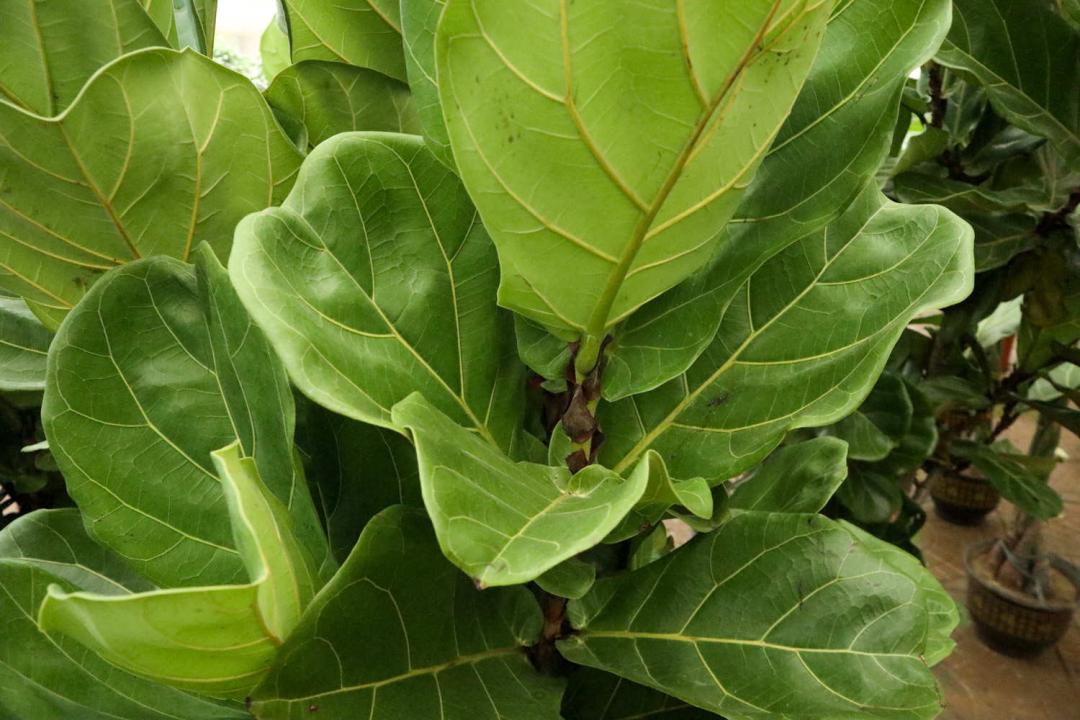
Heat, soil and water
Comfortable growth happens between 25 and 35 °C. Cold tolerance is weak, which is the entire winter requirement in one line: keep it above 5 °C and it will hold on, and below that it will not.
The mix needs to be loose, airy and free-draining, and slightly acid. Peat suits it, and a workable potting soil is leaf mould, ordinary loam and coarse sand with a small amount of well-rotted base fertilizer folded in. Watering follows the dried pot rather than a calendar: wait until the mix has dried and then water heavily enough that it comes out of the drainage hole. Spring and summer mean generous water and an evenly moist profile. The exception is a long cool spell, when heavy watering is exactly what kills the plant, because a cold wet root system simply stops.
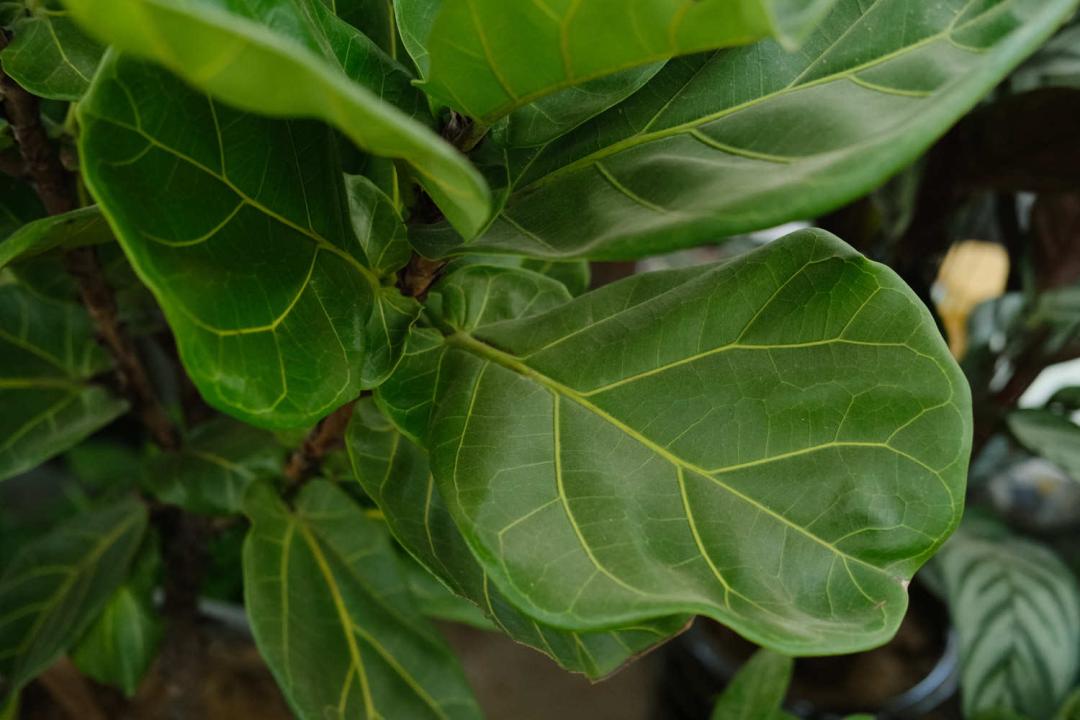
Pot size, and the one habit to break
Choose the pot smaller than instinct says. A small plant is happy in a 20 to 25 cm diameter container and a large one in 30 to 35 cm, with drainage that works. The other habit worth breaking is moving it: a fiddle-leaf fig dislikes being shifted far more than most house plants, so pick the position once and leave the plant there. Rotating the pot a quarter turn each week is a different matter, and useful, since it keeps the growth even instead of pulling the whole plant toward the window.
Feeding demand is genuinely high, and thick leaves are the visible result. One or two liquid feeds across the growing season is the working amount, and feeding stops in winter. The broad leaves also need dust wiped off, occasionally sprayed clean, and any leaf showing spots should be removed while the plant is moved somewhere brighter and airier. Spot damage on the leaf, treated by spraying water onto it, usually gets worse rather than better.
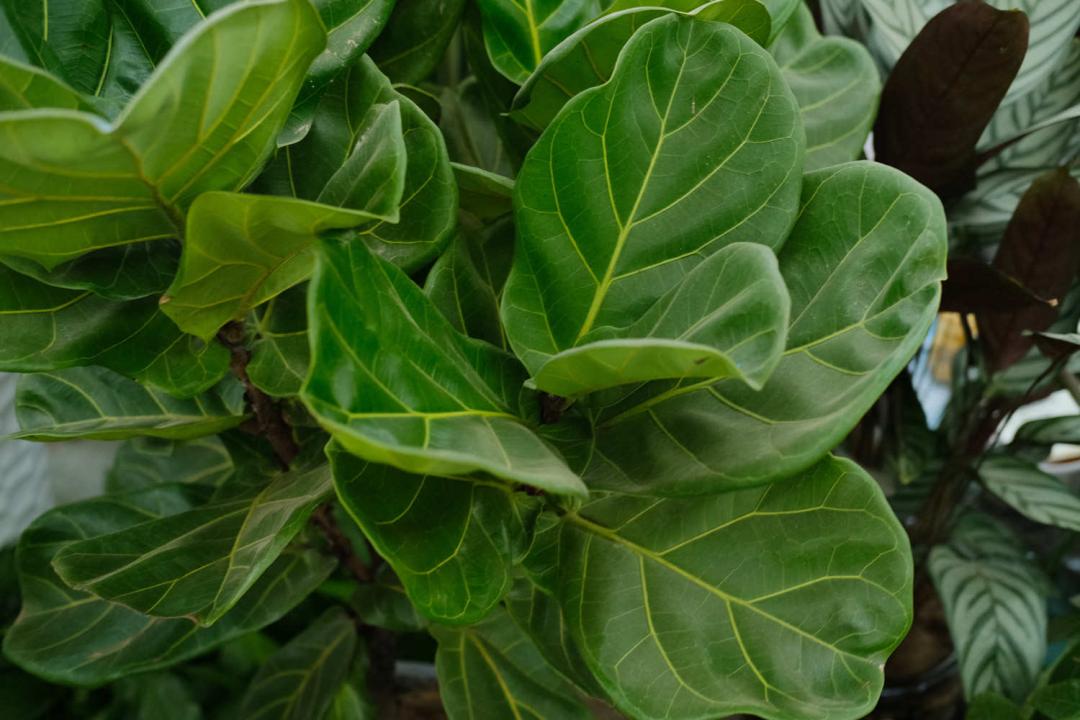
Pruning is done at repotting, or in autumn as the plant comes under cover, and it is the point at which the shape is decided. Pot choice is argued in more detail at which pot material to use, what the plant is actually taking out of the soil is set out at nitrogen, phosphorus and potassium, and why a wet compost in a cool room is the fatal combination is worked through at the moisture line between watered and rotted.