A succulent that arrives home looking good and dies inside three weeks has almost always been done a favour. The plant is built to survive a period of dryness, and it can survive that period. What it is not built to survive is wet soil without air, and every one of the six mistakes below ends at the same place: roots that cannot breathe.
1. The sealed glass
Succulents in a bottle or a covered terrarium look exactly as bad as they perform. Three things go wrong in a closed container, and they compound each other. Air does not move, so the layer of humidity sitting on the leaf surface never resets. Sun through glass heats the inside well above the room temperature, and a plant in a hot, still, moist bottle is cooking in its own transpiration. Water given at the bottom has nowhere to leave, so the substrate stays saturated at the base while looking dry at the top.
Any leafy succulent will fail this way, and it will fail quickly, usually from a soft rot that starts at the stem. If you want the bottle look, use a plant that evolved in exactly those conditions. Nothing in the rosette group does.
2. The desk that never sees sun
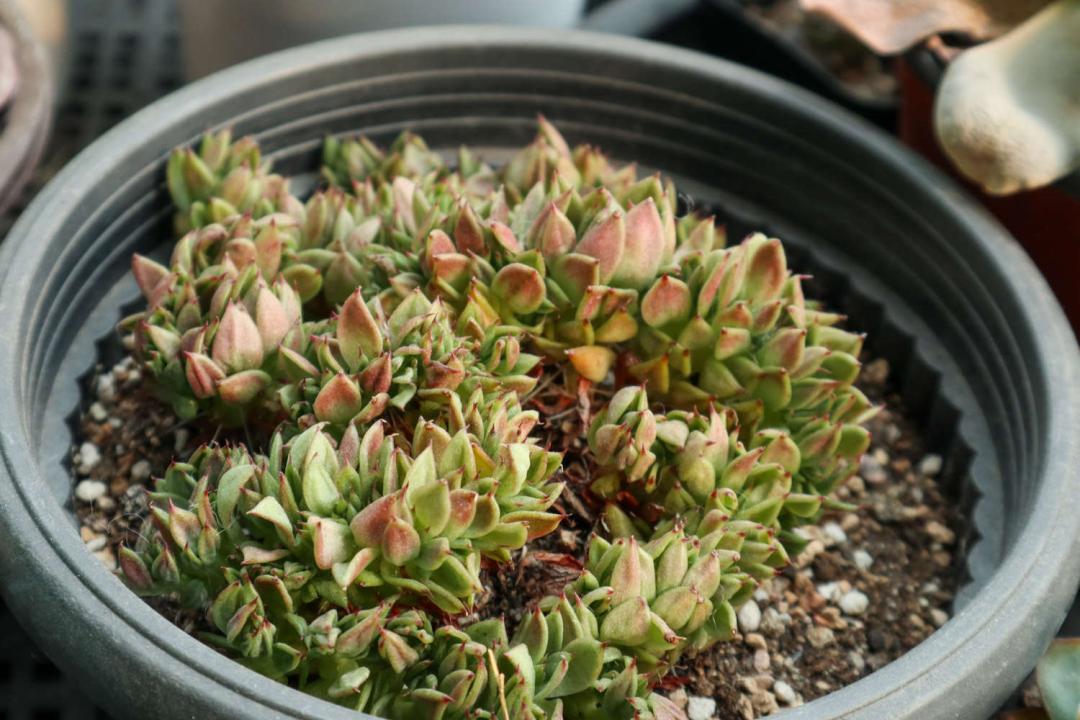
Succulents make good desktop plants for about two weeks. Left permanently in an interior office, they do what every plant does in thin light: they stretch, the colour drains, the spacing between leaves widens, and the stem thins to a pale stick. That part is cosmetic. The damage comes later, because a stretched, weakly lit plant has little reserve and no ability to use the water you keep giving it, so it softens and blackens from the base up.
The cheap fix is a fortnight of rotation: bring the plant to a bright window or outside for a couple of days, then return it to the desk. That is enough for a rosette to hold its shape. A desk that gets no direct light at all is a poor home permanently, and no amount of feeding changes that.
3. Soil dug out from under a tree
Go outside with a bucket and the richest-looking dark earth is under the nearest big tree. For a native plant that soil is excellent. For a potted succulent it is close to poison, for two separate reasons.
The first is biology. Unsterilised ground carries insect eggs, fungal spores and nematodes, and a plant grown abroad in a nursery mix has had no exposure to any of it. The second is physical. That dark soil is fine and humus-loaded, and it does two things at once: it holds water for a long time, and it closes into a solid mass as it dries. Four or five waterings into a pot of it and the roots are sitting in a wet, airless block. The leaves go dark and soft, which is the plant’s way of reporting that the root system underneath is already gone.
If you want local soil in a mix, sift it, dry it, and treat it the way you would treat any reused compost. How to disinfect potting soil lists the methods that are actually worth the trouble.
4. The bed of fine sand
Beach sand and builders’ sand look clean and appropriate, since succulents grow in sand. What is missing from the picture is grain size. Fine sand holds water at the bottom of a pot the way a sponge does, and it conducts heat straight through the container. A pot standing on a sunny ledge in summer heats the root zone, the roots are cooked and then sit in that wet, hot layer, and black rot follows.
Sand is a good additive when it is coarse, because it holds the mix open. As the whole mix, fine sand is one of the faster ways to lose a plant.
5. Water every single day
The most common cause on this list. A new plant is checked daily, watered daily, and dies within a fortnight, and the grower spends the whole time certain the plant was thirsty. Succulent roots need air as much as they need water, and they get it from the gaps between grains of a free-draining mix. Water every day and those gaps are permanently full: the roots drown, and a drowned root cannot take up water, which is why an overwatered succulent looks exactly like a dried-out one. Soft, translucent, easily-popped-off leaves mean overwatering. Wrinkled, dry, tough leaves mean underwatering.
6. No water at all
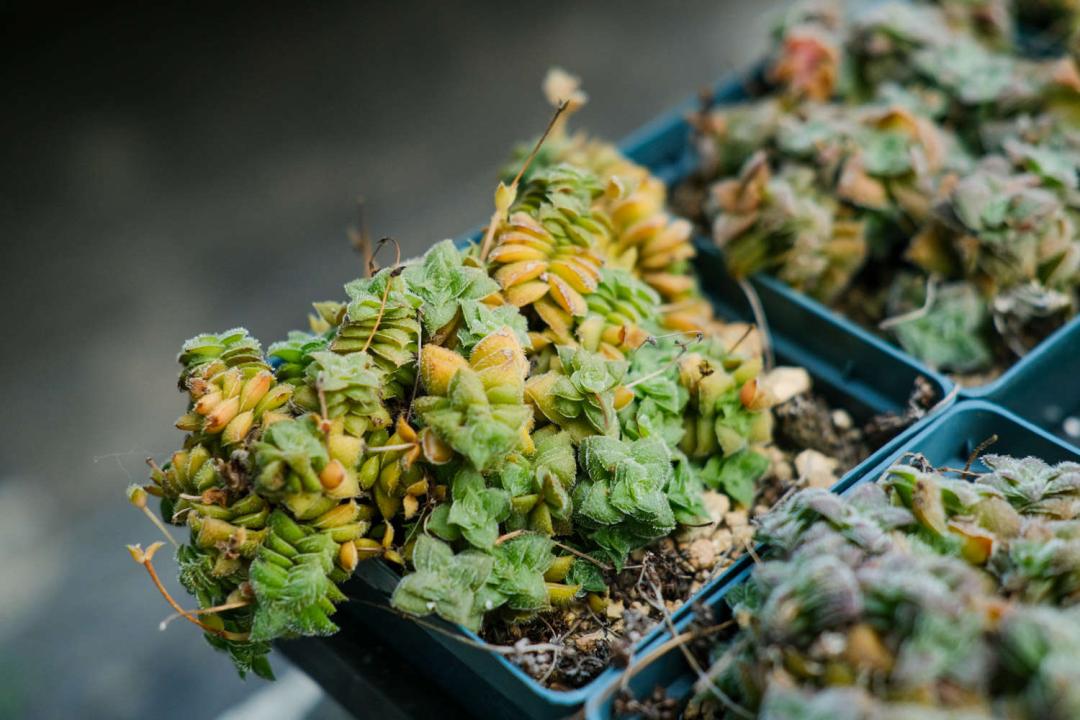
The opposite error, and the one wrapped in the most folklore. Succulents tolerate drought; they do not require it. Tolerance and preference are different claims, and the plants most people grow are not desert natives in the way the idea assumes. A large share of the popular rosette types, Echeveria and most of what is sold as ornamental succulent, come from seasonal dry country in Mexico, where rain falls in a clear wet months and the dry spell is a rest, not a permanent state. Southern African genera such as Haworthia and Crassula come from shaded or scrubby ground and want even less sun and more regular moisture than the stereotype allows.
Given water in the growing season, these plants grow faster, fuller and with fewer lost leaves. Withholding it does not make them prettier or tougher. The one exception worth knowing: a plant pushed into colour through genuine dryness and strong light is a plant being stressed on purpose, and it will not recover the same way afterwards.
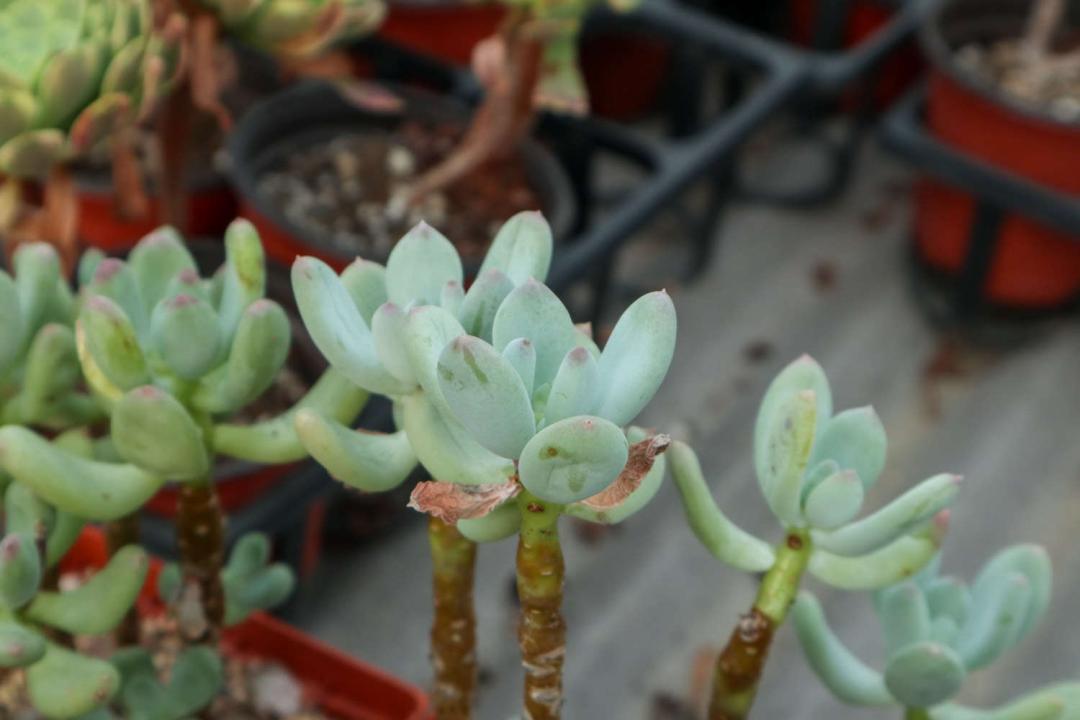
Two of the six causes above are about water and two are about air, and they are the same problem viewed from different angles: a wet, airless root zone. That is also why autumn gets emphasized so much on this site: propagating succulents in autumn puts roots on new plants at the moment the weather does the work for you, in a mix that will not repeat the mistake.