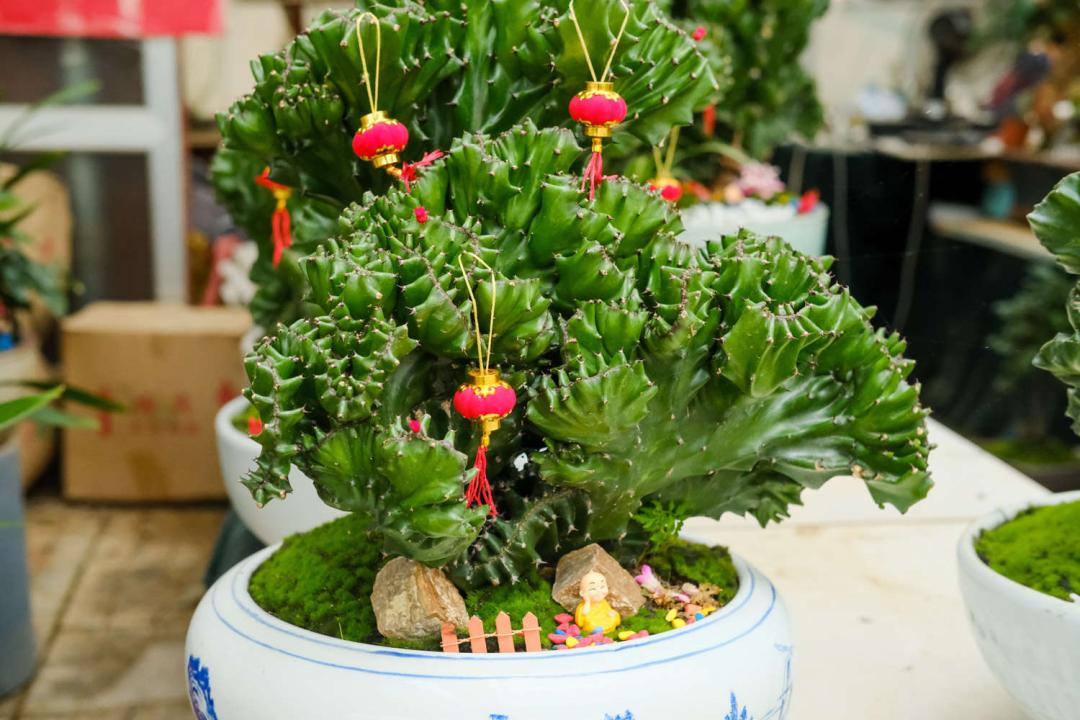
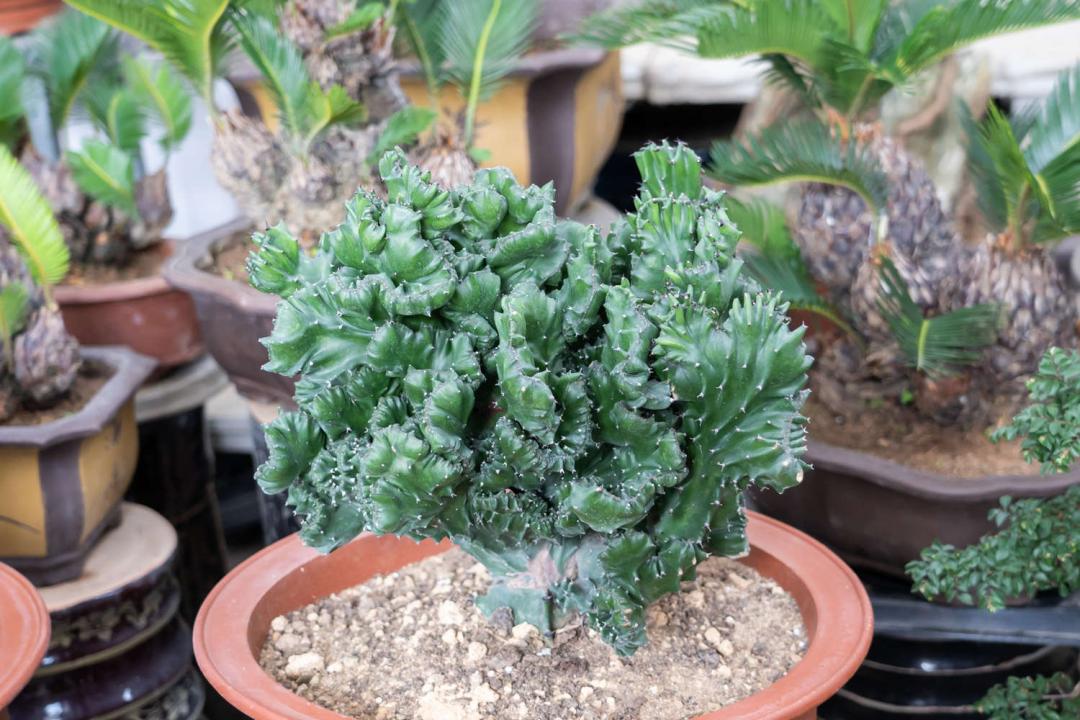
Kirin palm is a crested form of euphorbia, grown for the fan of fused, coral-like stems rather than for leaves. It comes from hot, dry, open ground, which is the reason it tolerates a neglected corner of a balcony better than most of the plants sharing that corner, and the reason two specific mistakes, cold and wet compost, do more damage than anything else.
Light and warmth
Full light through spring and autumn, and a plant that spends those months deep indoors will show it in the stem colour and in how loosely the crest sits. High summer is the exception: shade it somewhat, because the leaves yellow and the surface of the stem scorches. Winter is not a rest from light even though growth has stopped, since the plant still needs sun to hold what it has.
The working band is 22 to 28 °C. At 35 °C it shuts down and goes dormant, which is a normal summer state rather than a problem to solve with water. Cold is the real limit. It has no tolerance worth relying on, so it comes inside at the first cold snap before frost, and a winter holding around 15 °C is what keeps the leaves on. Colder than that and it drops them.
Soil, water and feed
Soil is simple: sandy, open, draining fast. A mix of leaf mould, garden loam and crushed coal cinder or grit does the job, and the only property that matters is that water moves straight through it. A pot that stays damp, or a saucer that holds water, rots the roots from the bottom up.
Watering therefore errs dry. Let the pot dry out completely and then water it through, and in winter cut back to the point where the mix stays on the dry side for weeks. As spring warms, resume gradually rather than all at once.
Fertilizer is where restraint pays. This plant has no appetite, and unrotted or concentrated feed does direct damage to roots and stem. One application a month through the growth period of a thoroughly rotted, weakly made cake water is more than enough, and feeding stops in winter. The case for weak feeding across the board is made at feeding potted plants.
Repotting, air and the reversion
Repot in spring, once a year for a plant that is still filling out. Tip off the old compost, cut away any decaying root, and give it ten days indoors afterwards before moving it back outside, keeping the new mix barely moist through that window.
Two environmental details are worth more than any fertilizer. The first is moving air: a kirin palm standing in a still corner for months is the one that gets scale. The second is distance from a kitchen. Gas and cooking fumes do it no good at all. Pruning is not required, which surprises most owners.
The fault to watch for is reversion, where part of the crest degenerates back into an ordinary columnar stem. Cut those stems out when they appear and put the plant somewhere brighter and sunnier, since weak light is what lets the plain growth take over.
Taking a cutting
Cuttings are taken from April to June, on a sunny morning, from a strong shoot. Cut it clean with a sharp knife, then leave the piece in the shade for three or four days so the cut surface dries and stops bleeding, and only then insert it about 3 to 4 cm into clean, gritty medium. Keep that medium slightly moist and roots arrive in roughly a month. The sap is a skin irritant, so handle the cut stem with care and keep it off worktops. The wider argument about which cutting to take and when is at the types of cuttings, and what to put the stem into is worked through at what to root cuttings in.