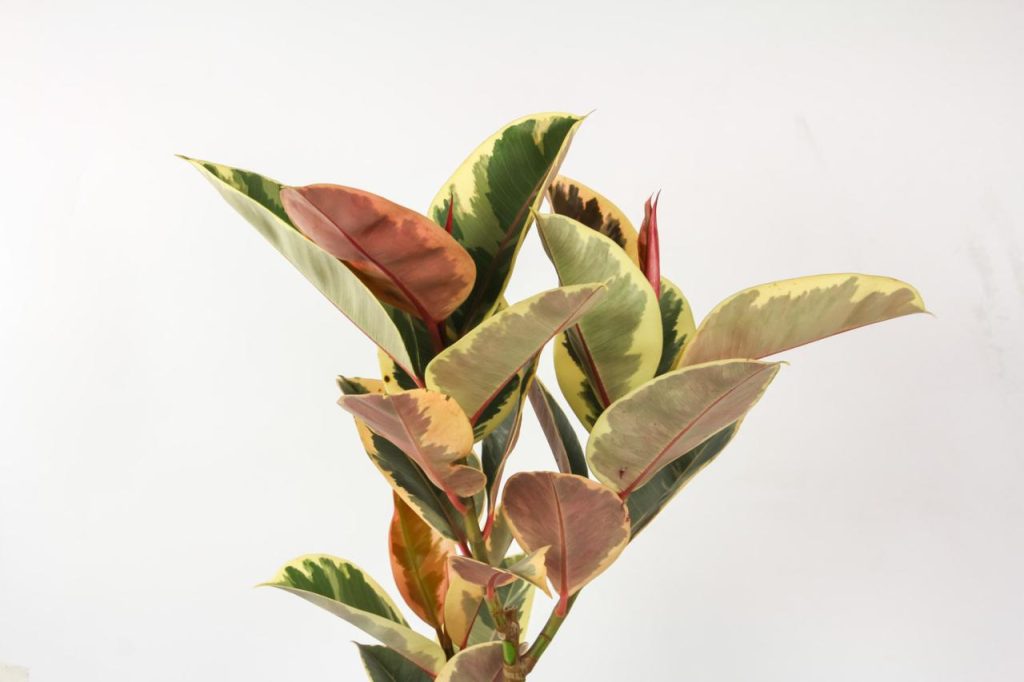
Rubber plant, Ficus elastica, is grown for large glossy leaves and can become a substantial indoor plant. Choose its position with room for that growth rather than buying a small pot for a permanently narrow gap.
Bright light supports good growth, and the plant should be protected from cold draughts and abrupt temperature changes. Check the conditions at the leaves as well as at the pot, particularly beside glass.
Watering and feeding
Use a well-drained houseplant mix. Water thoroughly when needed, allow the mix to dry slightly between waterings and empty runoff from a saucer or cover.
Check moisture below the surface before responding to a yellow leaf. Wet roots, insufficient light, dry conditions and pests can all belong in an investigation; leaf colour alone does not identify the cause.
Feed appropriately during active growth, following the product label and the plant's conditions. Nitrogen is a plant nutrient, not something to ban from every rubber plant. Equally, increasing feed does not replace adequate light or correct a persistently wet pot.
Shape and root space
A tall plant may need support or suitable pruning. Repot when there is a reason, such as congestion or a declining growing medium, rather than selecting a much larger container for its appearance.
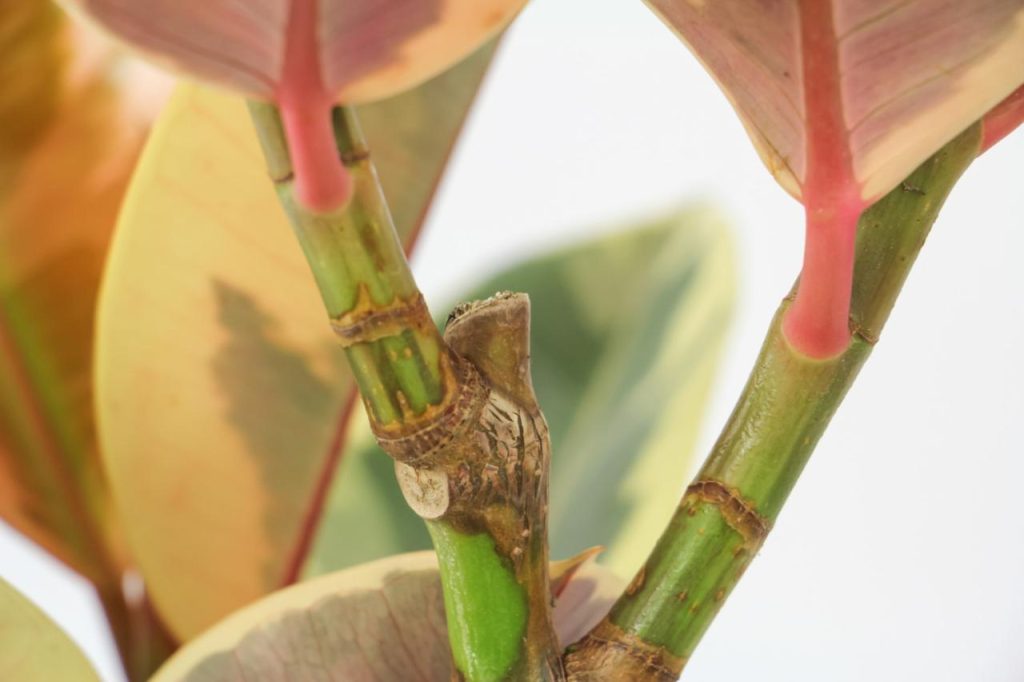
Keep dated photographs if leaves begin to fall and inspect their undersides. Clean dusty foliage gently. When making cuts, handle the milky sap carefully because it can irritate skin. Record any changes so subsequent growth can be assessed against a clear history.
Images
Related reading: Choosing a plant container.
References
Horticultural references checked on 29 October 2026.