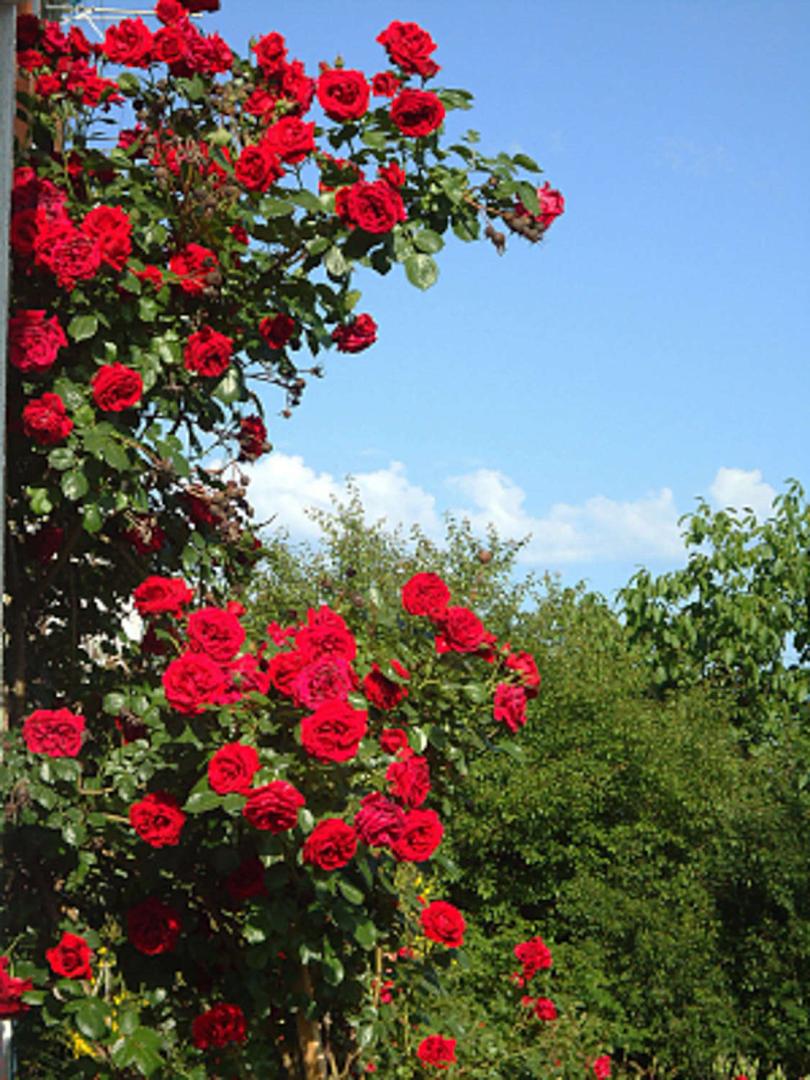
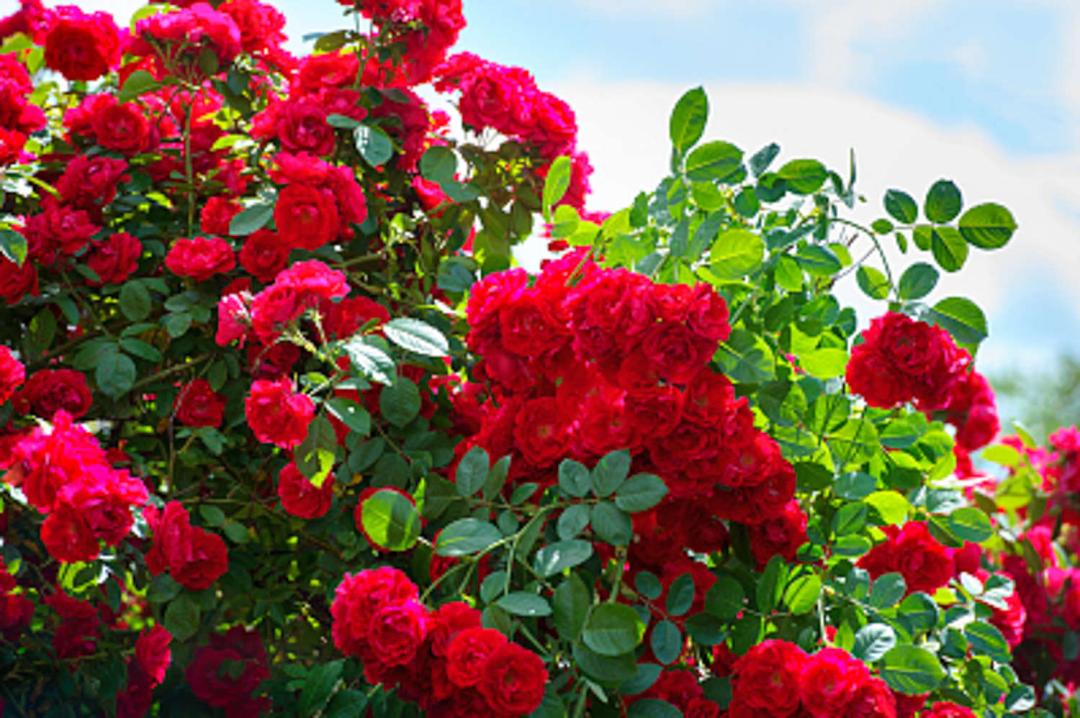
Climbing roses need space for roots and a support suited to mature stems. Check the cultivar's flowering habit before choosing a pruning plan.
Install support before stems tangle
Climbing roses need a sturdy structure and ties; they do not cling to a wall by themselves. Leave access behind and around the stems for inspection and pruning. Check that wires, trellis and fixings can support mature growth.
Guide healthy main canes
Train flexible young canes gradually rather than forcing stiff branches into sharp bends. Loose ties should allow room for thickening and be checked regularly. Where practical, spreading canes along the support can provide more room for flowering side shoots.
Water the planting area properly
A rose beside a wall may receive less rain than the open garden. Check the original root ball and water thoroughly when it begins drying. Keep mulch off the stem base and avoid leaving a container standing in collected water.
Prune for the cultivar
Confirm whether the rose repeats or flowers once before selecting a routine. Remove dead and damaged material first, preserving a useful framework. Major renovation is a separate job from routine deadheading and should follow the rose's established flowering habit.