Silk tree and acacia names can overlap in translation, but a botanical identity is needed before choosing a position or winter-care routine. Check the label and local planting guidance rather than transferring one temperature claim to every similar tree.
Keep the botanical name clear
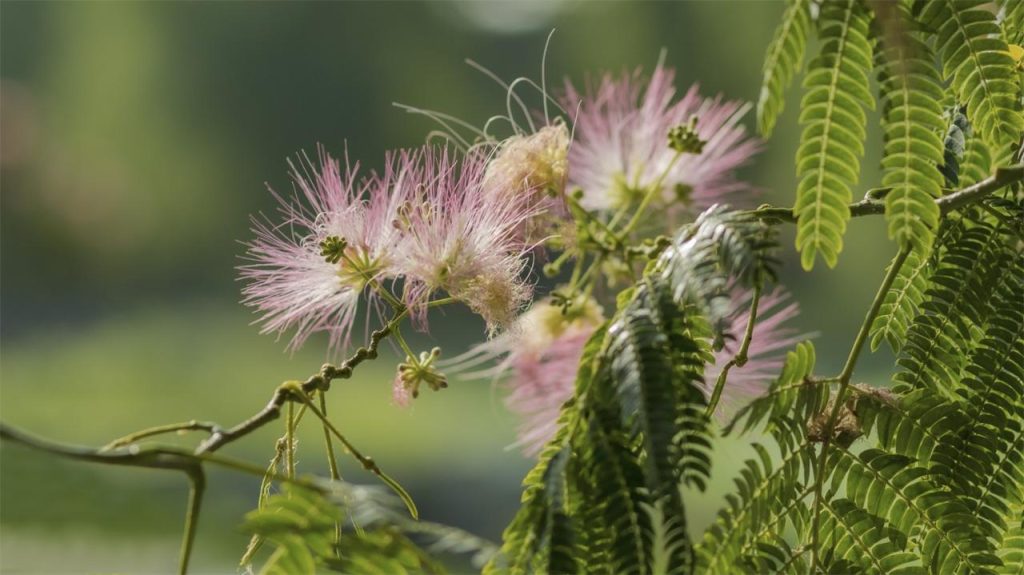
Silk tree, commonly called mimosa, is Albizia julibrissin. Acacia is a different botanical genus, although common names and translations can blur the distinction. Start with the nursery label rather than transferring a care guide solely because a tree was sold under an acacia name.
Assess the planting space
Check mature size, local climate and suitability before choosing a position. A small container specimen does not show the eventual spread of a tree. Local planting guidance matters, especially where an introduced tree can spread beyond the garden.
Establish healthy roots
Prepare a suitable planting area and check soil moisture while a new tree establishes. Avoid leaving the root ball saturated or allowing it to dry unnoticed. Pruning should follow the identified tree's structure and condition, not an assumption that every plant with a similar name has the same root habit or response to cutting. For a large tree or an uncertain structural cut, get advice from a qualified arborist.
Related reading: Norfolk Island Pine Care: Light, Moisture and Growing Space.