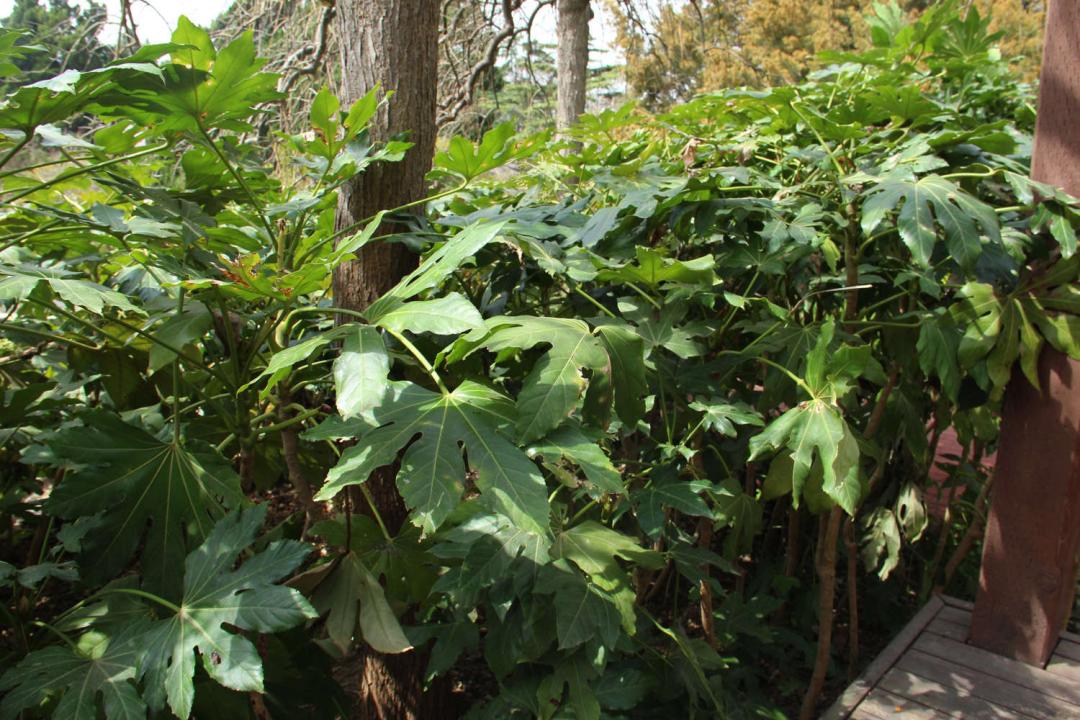
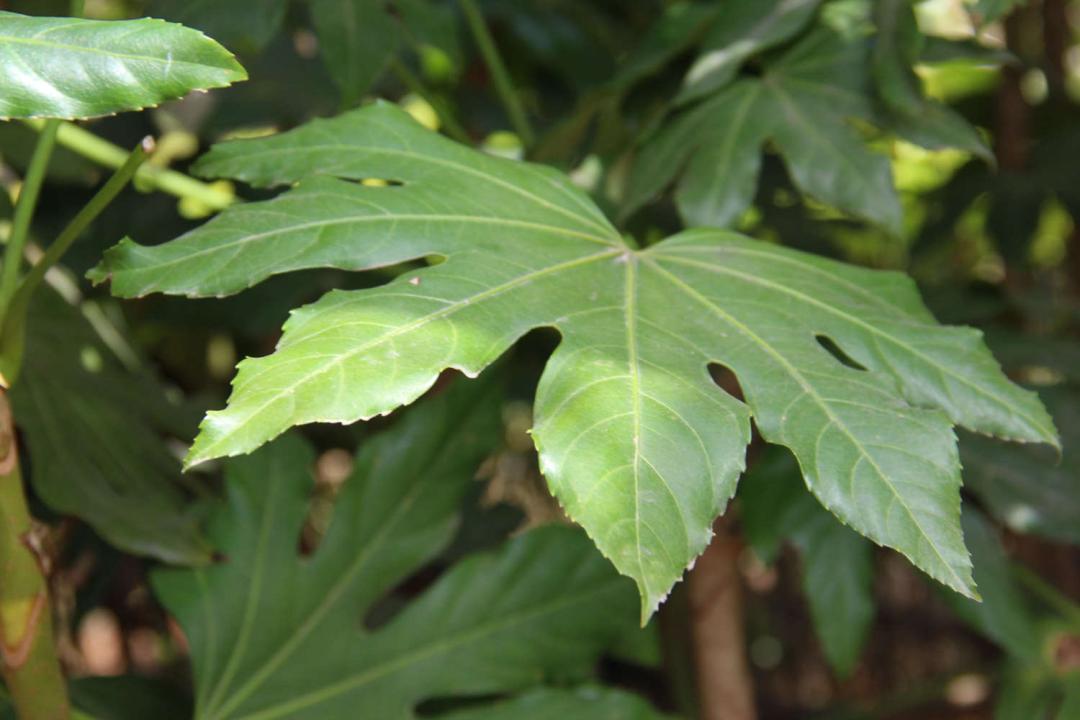
Fatsia japonica is grown for its large, divided leaves. Choose a position with room for the plant, then assess the actual light and moisture at its roots.
Cool air, then shade
Temperature comes first. Fatsia likes it cool, with 10 to 25 °C the working range, 18 to 20 °C by day and 10 to 12 °C at night being close to ideal. Sustained heat is what produces the characteristic decline: the leaves thin out, lose their substance and start to sag. Winter is not the danger, since the plant is genuinely hardy and comes through above 7 °C without complaint.
Light is the second constraint and it points the other way from most of the house. Fatsia is strongly shade-tolerant, and the rule under glass is more than 60 per cent shading for all but winter, with the heaviest shade in summer when direct sun will burn the leaf surface outright. Weak light carried on for months has its own price, though, and it is a quiet one: the leaves come out progressively smaller. Winter is the season to let it have all the sun there is.
Water, humidity and feeding
The feeding season runs from April to October, and it is a fortnightly application of weak liquid fertilizer, with everything stopping after October. Water follows the same calendar. Through hot weather keep the mix evenly moist and spray the leaves and the air around the plant, since fatsia is a humidity plant as much as a shade plant and dry air crisps the leaf edges. From October, cut watering back gradually rather than switching to a winter routine overnight.
Soil wants to be fertile, loose and draining. Three parts loam to one part rice-husk ash with a small amount of base fertilizer is the traditional mix. The reason for the grit is the same as the reason for reduced watering: a fatsia sitting in cold wet compost will show it as blackening stems.
Repotting
Change the pot every one to two years, in March or April, with a charge of base fertilizer at the bottom of the fresh mix. A pot that has gone root-bound at this plant's pace stops the season before it starts, and the two-year rhythm is the same one argued for another difficult woody pot plant at potted daphne.
Spots, soot and sap-sucking pests
Two leaf problems show up. The first is leaf spot, mostly a summer affair on plants that have been kept wet and still. The second is sooty mould, a black film sitting on the leaf, and it is almost always a symptom of honeydew from a sap-sucking insect rather than a disease in its own right. Yellowing leaves are the third complaint and usually a feeding or drainage question.
The pests are the ordinary house list: aphids, scale and red spider mite. A granular systemic works against the sap-suckers, and the mites need the leaf surface wetted with an appropriate spray rather than a single drench. Before reaching for a can, it is worth confirming what is actually on the plant, which is the subject of aphids on houseplants. Why the summer combination of wet compost and still air produces leaf spot is the same argument run through at the moisture line between watered and rotted.
Related reading: Tree Philodendron and Monstera: Comparing Leaves and Habit.