Coconut palms belong to the palm family, which includes many growth forms. Compare botanical labels and mature size rather than treating palm as one species.
Features to compare
The palm trees are more drought. The palm trees have obvious trunks. The trunk is straight, the flowers of the palm trees are small, and the flowers are pale yellow. The color of the mature fruits is dark brown, and the surface of the fruit is covered with a layer of white powder. Coconut trees like to grow in the environment of abundant sunlight and moist and humid. We know that coconut trees grow under the coast of the sun. Indeed, it makes them develop better.
Palm trees can still survive stubbornly in an unfavorable environment. Compared with coconut trees, it has a low requirements for the dryness, quality, and surrounding environment of the soil. Even if it is contaminated, it can grow. The main breeding method of palm trees is to breed in the form of sowing.
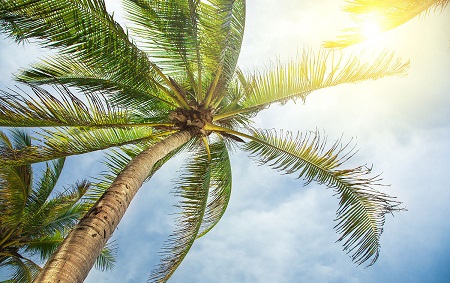
Coconut trees have certain requirements for the soil, and the soil should be rich in potassium fertilizer. At the same time, coconut trees will grow and develop well at low altitude. If the coconut tree encounters a drought, it will return to normal growth in 2-3 years, and the fruit will be seriously affected. Temperature is also very important for coconut trees. It must be above 25 ° C to ensure its normal growth, flowering and results. The main breeding method of coconut trees is also breeding in the form of sowing. It is a large plant of the palm family.
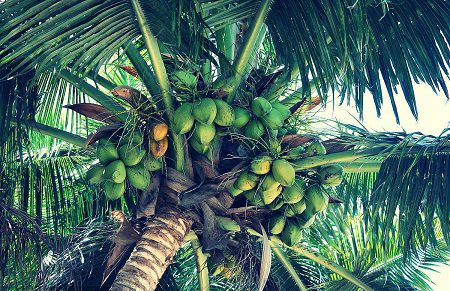
The leaves of the palm tree are dark brown. The leaves are much larger than the leaves of coconut trees, like the shape of the palm. The leaves of the coconut tree are yellow in green, and the trunk is much higher than the trunk of the palm tree.
The fruits of palm trees and coconut trees say that leaves have their own characteristics, and they are the easiest to distinguish from these two points.
Related reading: Container Palm Types: Leaves, Stems and Mature Size.