Discolored orchid leaves can reflect feeding problems, but damaged roots, unsuitable light and watering can produce similar symptoms. Check the roots and recent care before treating a pale leaf as proof of a single missing nutrient.
Start with the roots
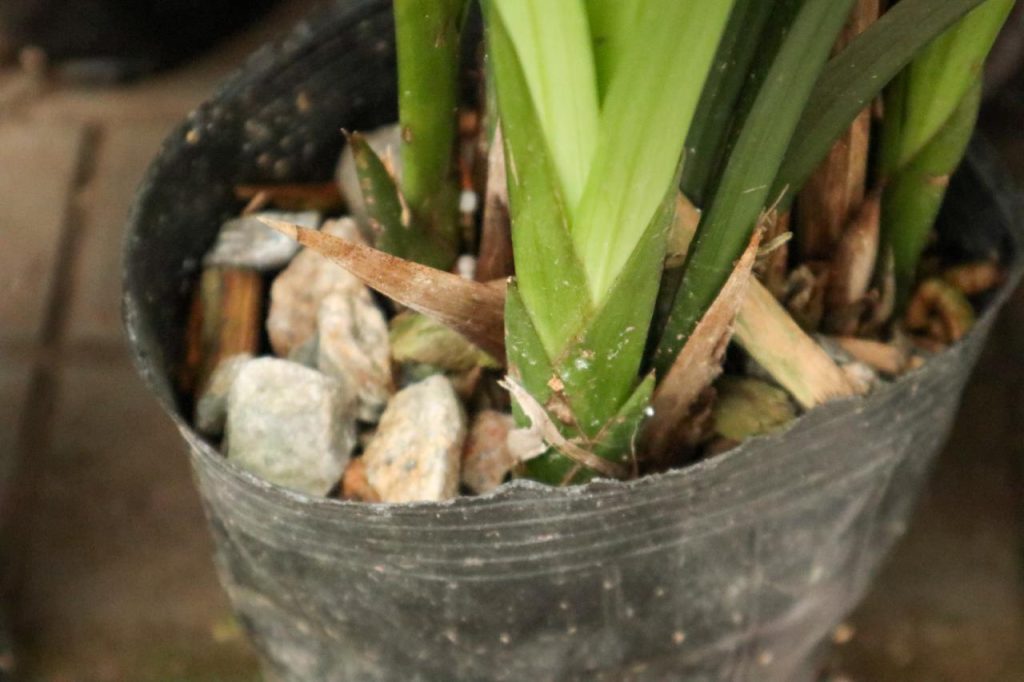
A pale orchid leaf is a reason to investigate, not a diagnosis of zinc, boron or another missing element. Look for a pattern across old and new leaves, note when it began, and check whether the pot is drying normally. Where roots are visible, compare firm living roots with soft, collapsed material.
Review the recent care
Write down the feed used, its dilution and the last few applications. Strong fertilizer and accumulated salts can injure roots and produce symptoms that resemble a shortage. If roots are damaged, adding another concentrated nutrient solution can make recovery harder.
Make a measured change
Use a labeled fertilizer appropriate to the orchid and follow its directions. Avoid mixing individual trace-element salts from a leaf-color chart. Where the cause remains unclear, ask an orchid specialist to assess photographs of the whole plant, roots and medium. Keep a record of new growth; an older damaged leaf may never regain its original appearance.
Related reading: Chinese Cymbidium Orchids: A Guide to Common Groups.