Hardwood cuttings look like the laziest propagation method available, and for a shrub such as the white-twig dogwood they are the cheapest way to make a lot of plants. The reason growers get a poor strike rate is not the rooting medium. It is everything done between cutting the stem and putting it in: the timing, the hydration and the hormone stage, each of which has a specific job.
Lifting the wood at the right moment
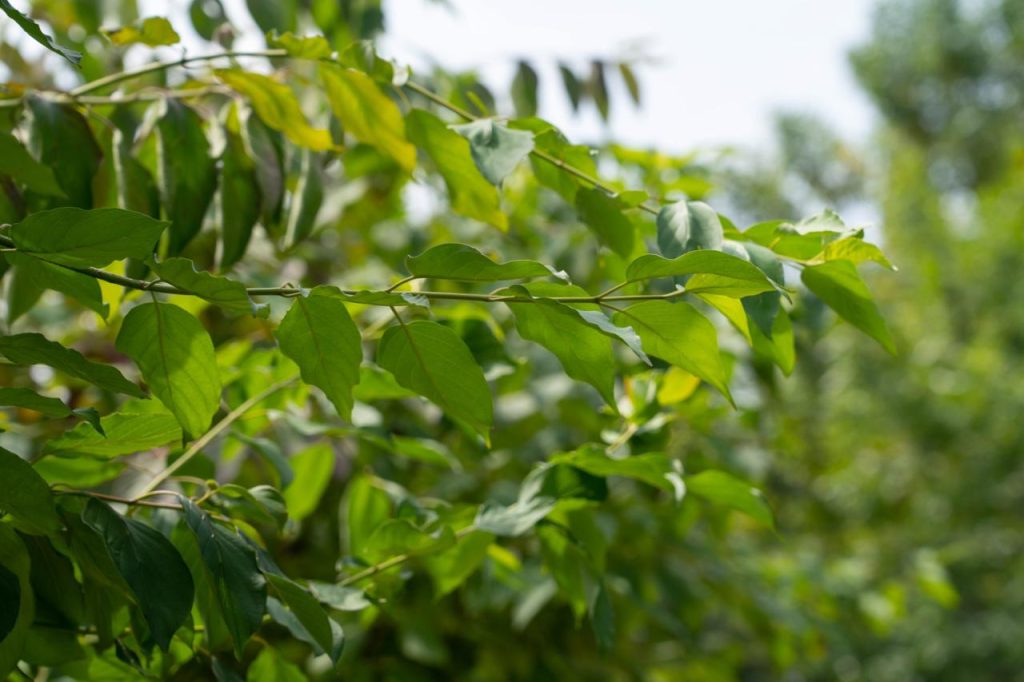
Cut before the buds break, which in most districts means the last weeks of March into the first days of April. The stem has to be fully dormant; once a bud has swelled, the cutting is spending its stored carbohydrate on the shoot rather than on roots, and the strike rate collapses. Choose stems of roughly 5 to 10 mm at the base: thicker wood roots more slowly, thinner wood dries out.
Cutting to length
Work fast once a stem is down, so the cut faces do not dry. Each cutting carries three buds. Make the top cut straight, 15 to 20 mm above the upper bud, and the bottom cut angled 3 to 5 mm below the lowest bud. The straight top and the slanted bottom are not decoration: they are how you keep the cutting the right way up in a tray of identical sticks, and the angled face presents more open tissue for rooting.
Overall length 8 to 12 cm. Tie in bundles of about fifty, which is a working number rather than a botanical one, and it matters because the next step needs the bundles handled as units.
Soak the wood before you do anything else
Stand the bundles in a shallow container with 5 to 6 cm of water and leave them three days. Change the water morning and evening, or run a slow irrigation into the container and let it overflow if you can. Dormant wood is dry wood, and a cutting that is short of water cannot push a callus no matter how good the medium is. This step is where a lot of the difference in a final strike percentage is made.
Then the hormone stage, which is a dilution and a duration rather than a dip. Stand the bundles in a rooting-hormone solution at very low strength, roughly 1:500,000 for an ABT-type powder, to a depth of 3 to 5 cm, and time the soak by the water temperature: six to eight hours when the water is below 8 °C, three to four hours above it. Cold wood takes longer to absorb, so the same solution is applied for a different length of time.
Heeling in: the part people skip
Rake a level, shaded strip of ground and spread 6 to 8 cm of damp sand over it. Lay the bundles in at an angle of about 75 degrees, nearly upright but leaning, then cover the stems with another 5 to 6 cm of wet sand. Water the strip two or three times a day to keep that sand from drying, and keep it out of direct sun.
Leave it 20 to 30 days. What is happening underground is callus formation and the first root initials, and lifting a bundle early to look is how a good batch becomes a bad one. After that, dig the bundles out and put the cuttings where they will root properly. The same logic of preparing wood before it goes into medium, applied to softwood rather than dormant hardwood, runs through the general account of how cuttings work. For the season to take half-ripe wood, and which plants are worth taking then, see the list of June cuttings.