Air plants are tillandsias that use their leaves to absorb moisture. Their roots mainly anchor them, so they can grow without ordinary potting soil. That does not mean they live on air alone.
Choose bright, diffused light and good ventilation. Identify the tillandsia where possible, because species and growing conditions influence the routine. A sealed decorative jar is not an adequate substitute for suitable air movement.
Water, then allow the plant to dry
Use water appropriate to the plant and local supply; the RHS particularly cautions against hard tap water. Misting alone may not provide enough moisture. Follow suitable immersion guidance and adjust to warmth and humidity rather than applying one timetable everywhere.
After watering, let excess water escape and allow the plant to dry between waterings. Inspect the centre and base, including parts hidden by the support.
Build a display you can maintain
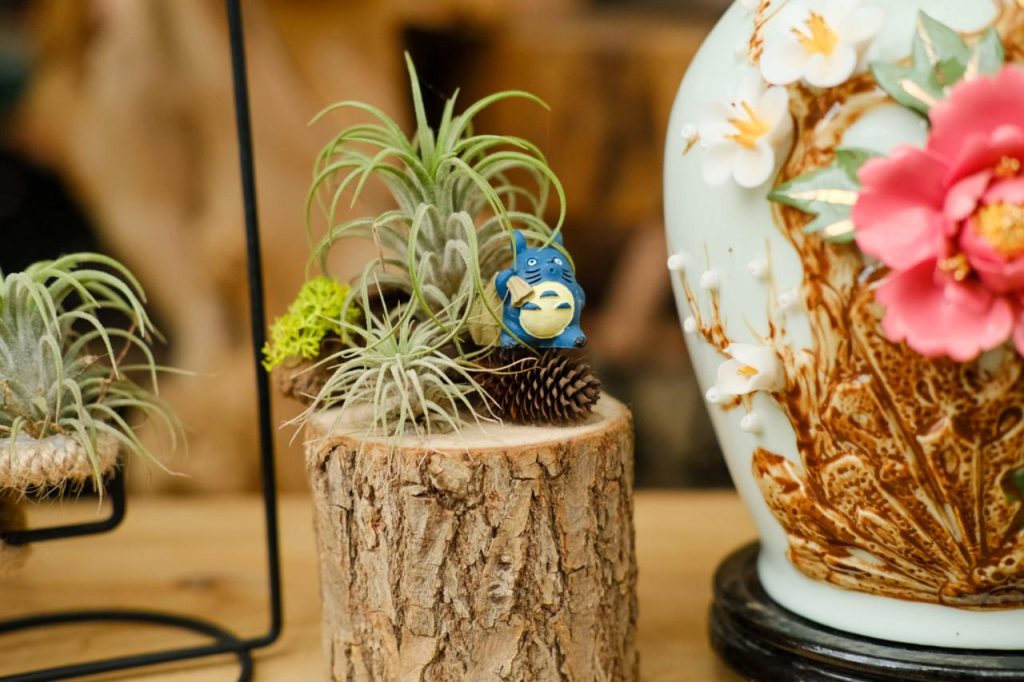
A removable mounting makes watering and inspection easier. Avoid wedging a plant so tightly into a shell or cup that water remains trapped around its base.
Flowering can be followed by offsets and gradual decline of the flowering mother rosette. Do not remove every unfamiliar growth as damage. Watch the offsets and use propagation guidance for the identified plant before separating them.
When a plant deteriorates, review the mounting, water, light and temperature together. A photograph showing only the dry outer tips may miss the more useful evidence at the hidden base.
Images
Related reading: General feeding guidance for comparison.
References
Horticultural references checked on 29 October 2026.